If you just found a tiny, fragile bird on the ground and you're not sure what to do, here's the short answer: If you just found a tiny, fragile bird on the ground and you're not sure what to do, here's the short answer: keep it warm, do not feed it or give it water, put it somewhere quiet, and call a licensed wildlife rehabilitator as fast as you can. That's the core of it. Everything else in this guide fills in the details so you can do those steps correctly and avoid the mistakes that most well-meaning people make in the first 30 minutes.
How to Care for a Newborn Bird Right Now
Marcus Holloway
23 Mar 2026
Quick triage: figuring out what you're actually dealing with
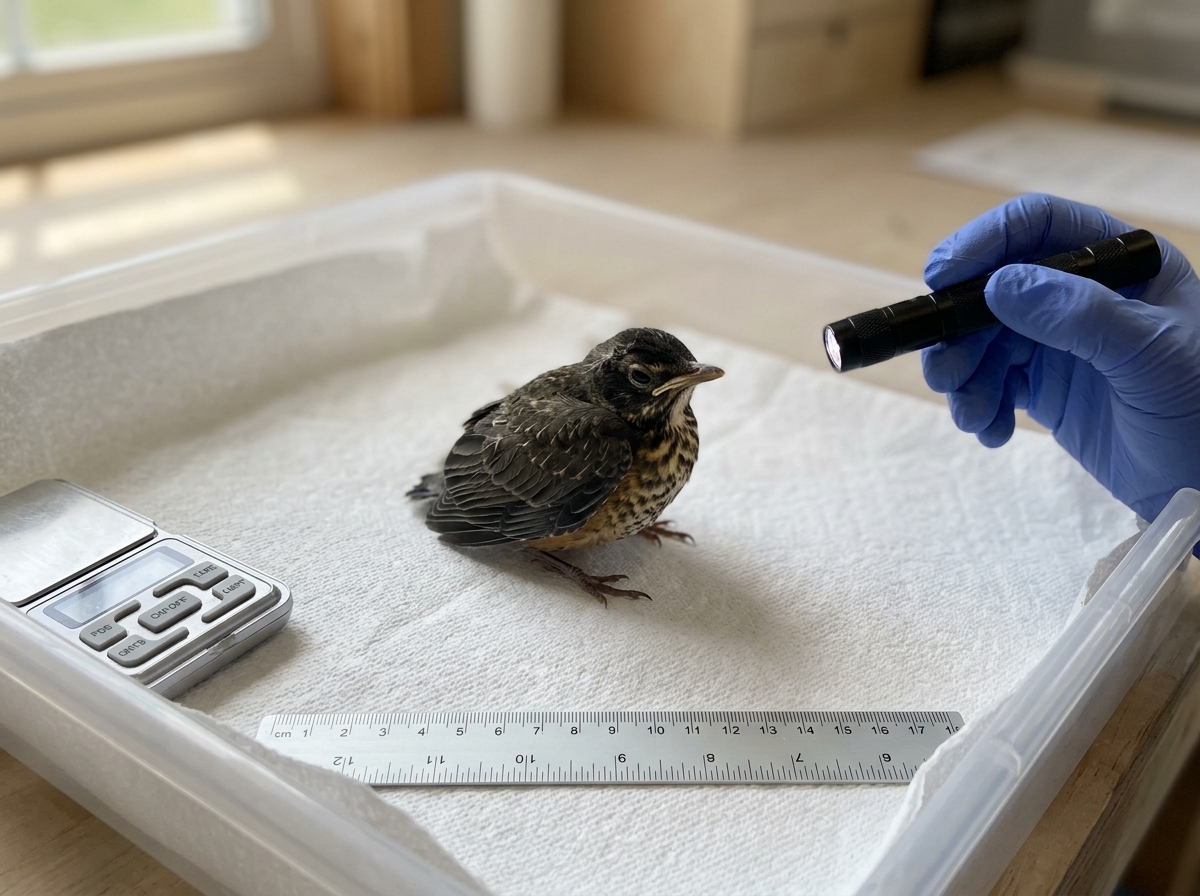
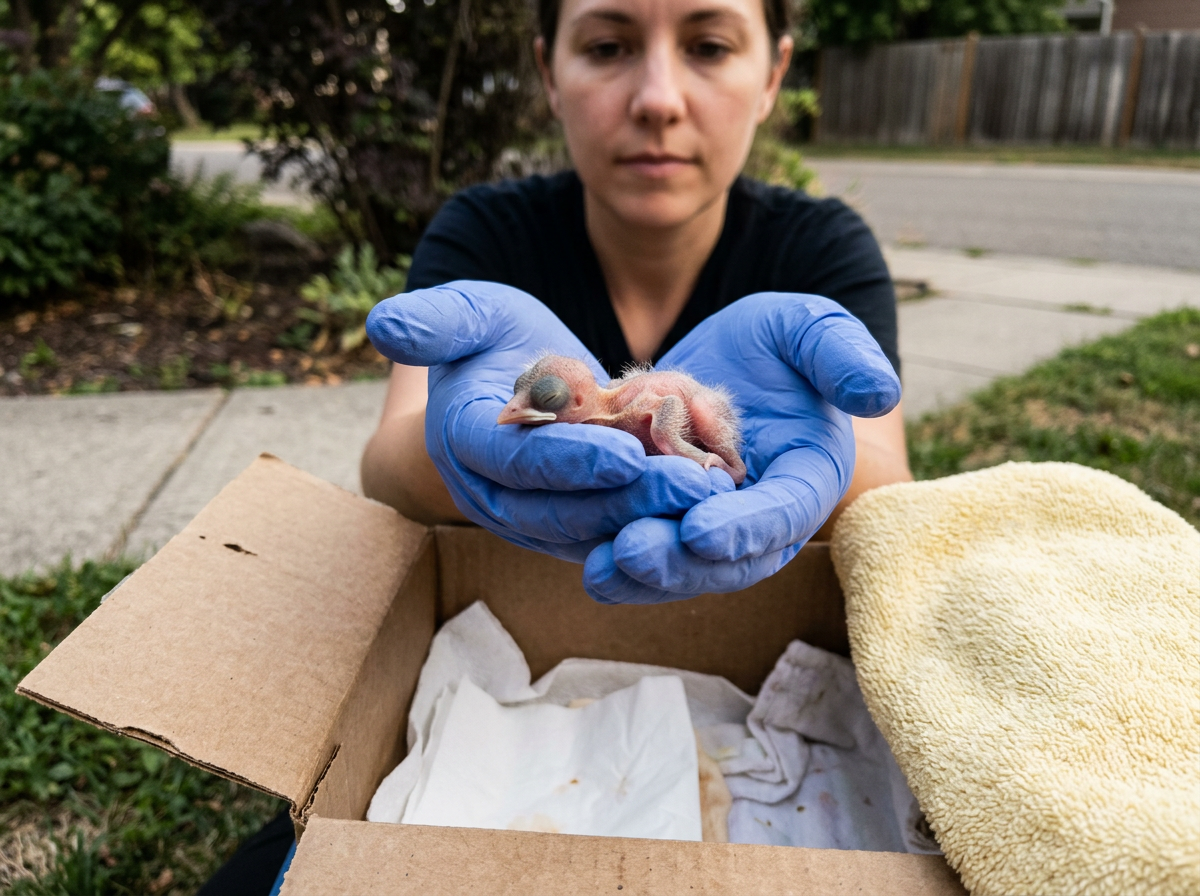
Before you do anything else, look closely at the bird. The stage of development changes everything about what you should do next. Most people use the word "newborn" loosely, but there are real differences between a hatchling, a nestling, and a fledgling, and getting this right is step one.
| Stage | What it looks like | Eyes open? | Can it be on the ground safely? |
|---|---|---|---|
| Hatchling | Completely bare skin, maybe a little sparse down, very small | No (closed) | No, needs immediate help |
| Nestling | Patchy down and developing pin feathers, not yet fully covered | Sometimes | No, needs to go back to nest or get help |
| Fledgling | Fully or nearly fully feathered, may have a short tail | Yes | Often yes, parents may be nearby |
A hatchling or nestling on the ground almost always needs help. These birds cannot regulate their own body temperature, cannot feed themselves, and are completely dependent on their parents for survival. A fledgling is a different story. Fledglings are supposed to be on the ground, hopping around awkwardly while their parents teach them to fly. They look vulnerable, but they're usually fine. Picking up a healthy fledgling is one of the most common unnecessary interventions people make.
Ask yourself these questions before touching the bird at all. Is it featherless or covered only in wispy down? Are its eyes closed? Is it visibly injured, bleeding, or being attacked by a predator? Is it cold and limp? If the answer to any of those is yes, it needs your help right now. If it's fully feathered, alert, and moving around on its own, watch from a distance for 60 to 90 minutes to see whether a parent comes to feed it before you intervene.
Do's and don'ts before you do anything else
This is where most people accidentally make things worse. The instinct to help is good, but a few common actions are genuinely dangerous for the bird. Read this section before you pick it up.
Do these things
- Handle the bird as little as possible. Use gloves or a cloth if you can, and limit contact to what's necessary.
- Keep it warm immediately. Warmth is the single most important thing you can provide right now.
- Put it in a small, secure container lined with paper towel or a coffee filter.
- Keep it in a quiet, dark area away from children, pets, and noise.
- Call a licensed wildlife rehabilitator or avian vet as soon as the bird is contained.
- If the nest is visible and intact, try gently placing a nestling or hatchling back in it. The parent will not reject it because you touched it, that's a myth.
Don't do these things
- Do not feed the bird anything. This applies to bread, worms, water, milk, fruit, seeds, and everything else. Feeding the wrong thing, or feeding a cold bird before it's warmed up, can cause the food to ferment in the crop and kill it.
- Do not squirt or drip water into the bird's mouth. Fluids can enter the airway and cause aspiration, which is fatal.
- Do not put a water bowl in the container. Baby birds can drown easily.
- Do not keep it in a glass tank or sealed container with no airflow.
- Do not try to cuddle, comfort, or handle it more than necessary. Human contact is stressful for wild birds.
- Do not put it outside thinking the parents will come back if it's cold, injured, or truly abandoned.
How to keep a newborn bird alive right now: the first steps
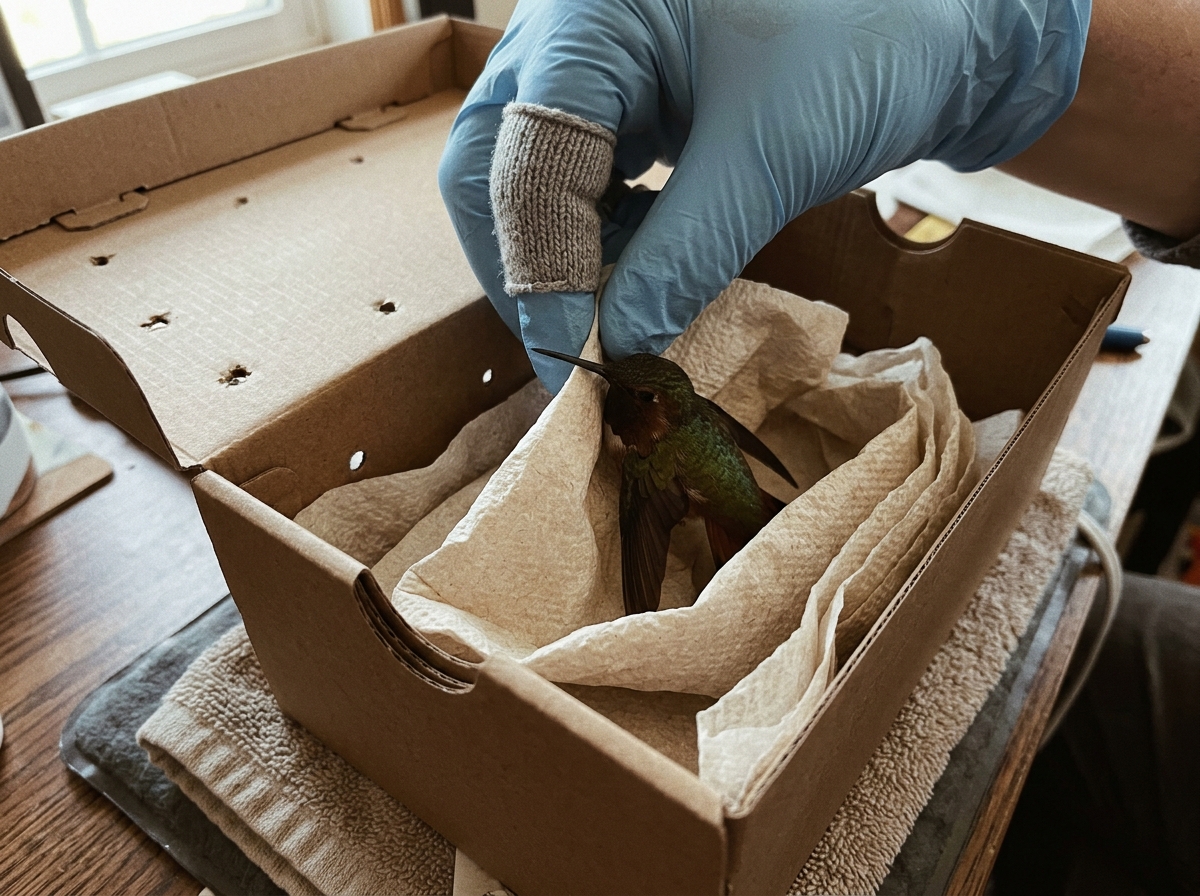
Your job in the first hour is stabilization, not rehabilitation. You're not trying to raise this bird. You're trying to keep it alive long enough to get it to someone who is trained and permitted to do that. These steps will give it the best chance.
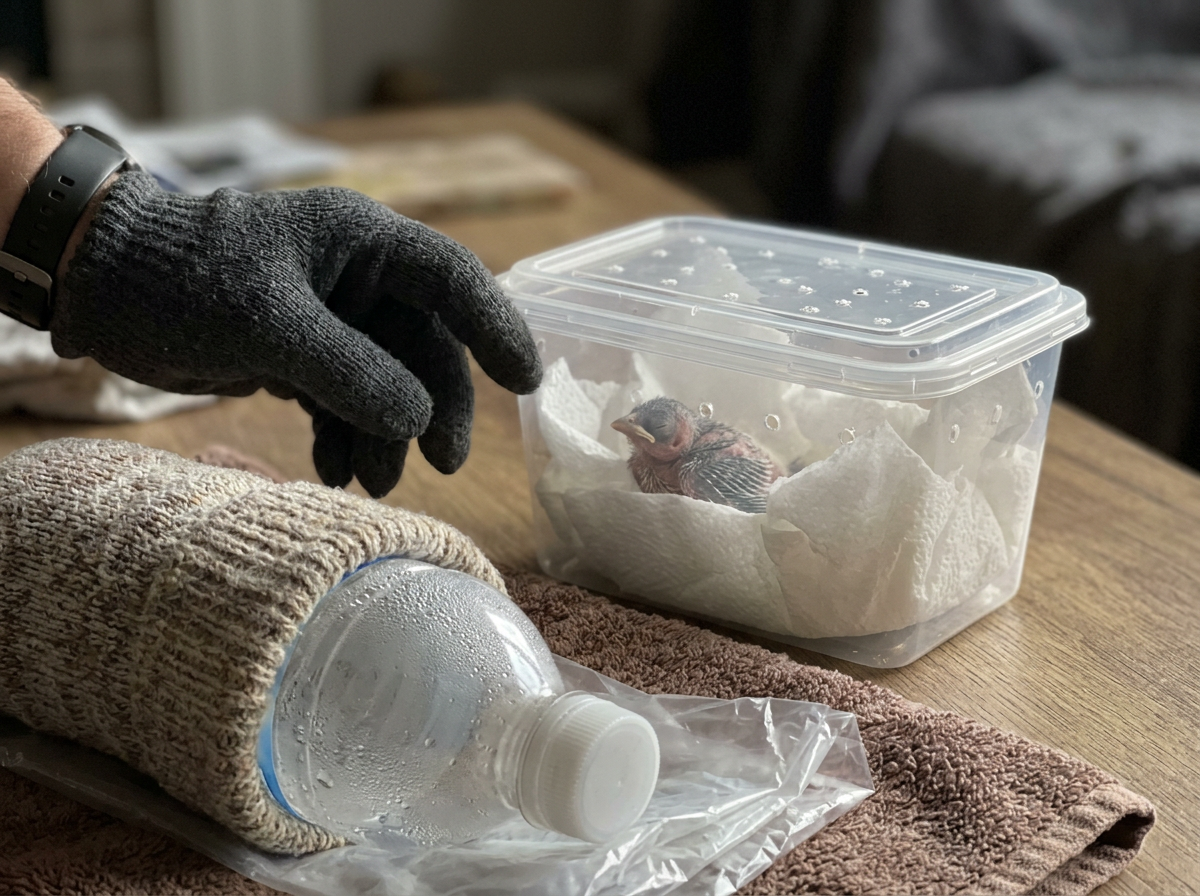
- Contain the bird. Use a small cardboard box or a clean plastic container with ventilation holes poked in the lid. Line the bottom with paper towels or a coffee filter. Do not use terry cloth or loose fabrics where tiny toes can get caught.
- Provide warmth. Place a heating pad set to LOW under one half of the container only, so the bird can move away from the heat if it gets too warm. Alternatively, fill a clean sock with dry rice, microwave it for about 60 seconds, and place it next to (not under) the bird. Wrap the container in a small towel for insulation.
- Cover the container. Drape a light cloth or towel over the top to reduce stress and help retain warmth. Leave some airflow.
- Put it somewhere quiet. A bathroom shelf, a closet, or any room away from activity. Keep pets and kids away completely.
- Call for help immediately. Search for a licensed wildlife rehabilitator in your area, or contact your local animal control, humane society, or an avian vet. Do not wait to see if the bird improves on its own.
The order here matters. Warm the bird first. A cold bird cannot digest food, and its body systems start to shut down quickly. Warmth comes before everything except containment. Once it's warm and contained, you can focus on making calls.
Feeding and hydration: what to know by bird stage
do not feed the bird or give it water This isn't overly cautious advice. It's based on the reality that the wrong food or incorrect feeding technique causes irreversible harm, including metabolic bone disease, impaired feather growth, and aspiration death, so for beginners, start with the basics.
Nestlings and hatchlings
Hatchlings and nestlings are the birds people often call "newborns." In the wild, these birds are fed by their parents every 15 to 30 minutes from sunrise to sunset, and the diet is highly species-specific. Songbird parents bring insects. Pigeons and doves feed their chicks "crop milk," a secretion unique to that family. Raptors eat warm, fresh meat in carefully sized pieces. There is no one food you can give a nestling at home that is safe across species. Even experienced wildlife workers need to know the species before feeding.
If you cannot get the bird to a rehabilitator within a few hours and a professional has guided you to attempt emergency feeding, nestlings may need food as often as every 30 minutes during daylight hours. But this should only happen under direct instruction from a rehabilitator, not from a general internet guide. The bird's digestive system must be warm and functioning before any food goes in.
Fledglings
Fledglings are a step closer to independence, but they still should not be fed by untrained people without guidance. If you've confirmed a fledgling genuinely needs help (it's injured, clearly emaciated, or the parents are confirmed dead), the same rule applies: call a rehabilitator before feeding anything, especially if you’re trying to care for fledglings.
What not to feed, ever
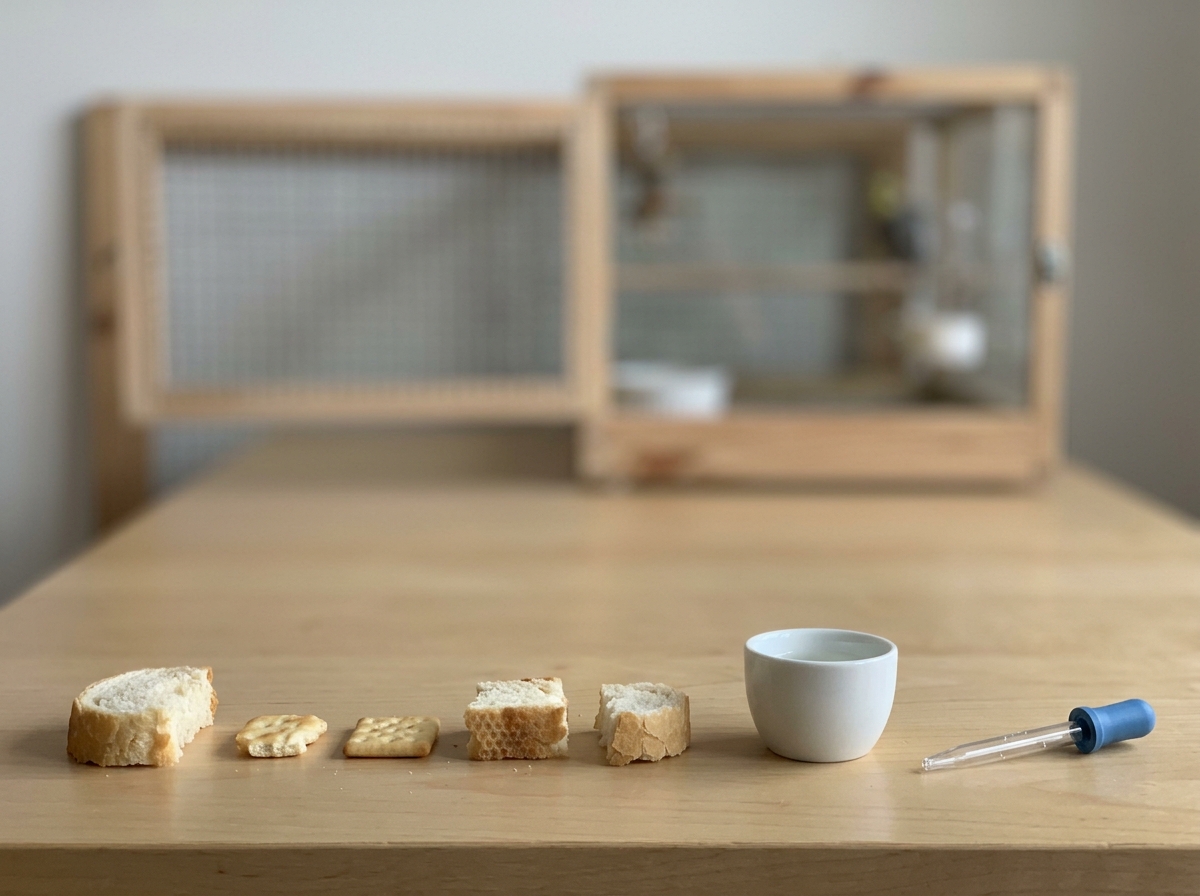
- Bread, crackers, or any baked goods
- Cow's milk or any dairy product
- Water squirted directly into the mouth
- Worms dug from the garden without professional guidance
- Bird seed (not appropriate for most baby birds)
- Human food of any kind
- Cat or dog food without explicit rehabilitator direction
Setting up a temporary safe space
The container you create doesn't need to be elaborate. It needs to be warm, dark, quiet, ventilated, and escape-proof. That's it. Here's what works and what to avoid.
Container and bedding
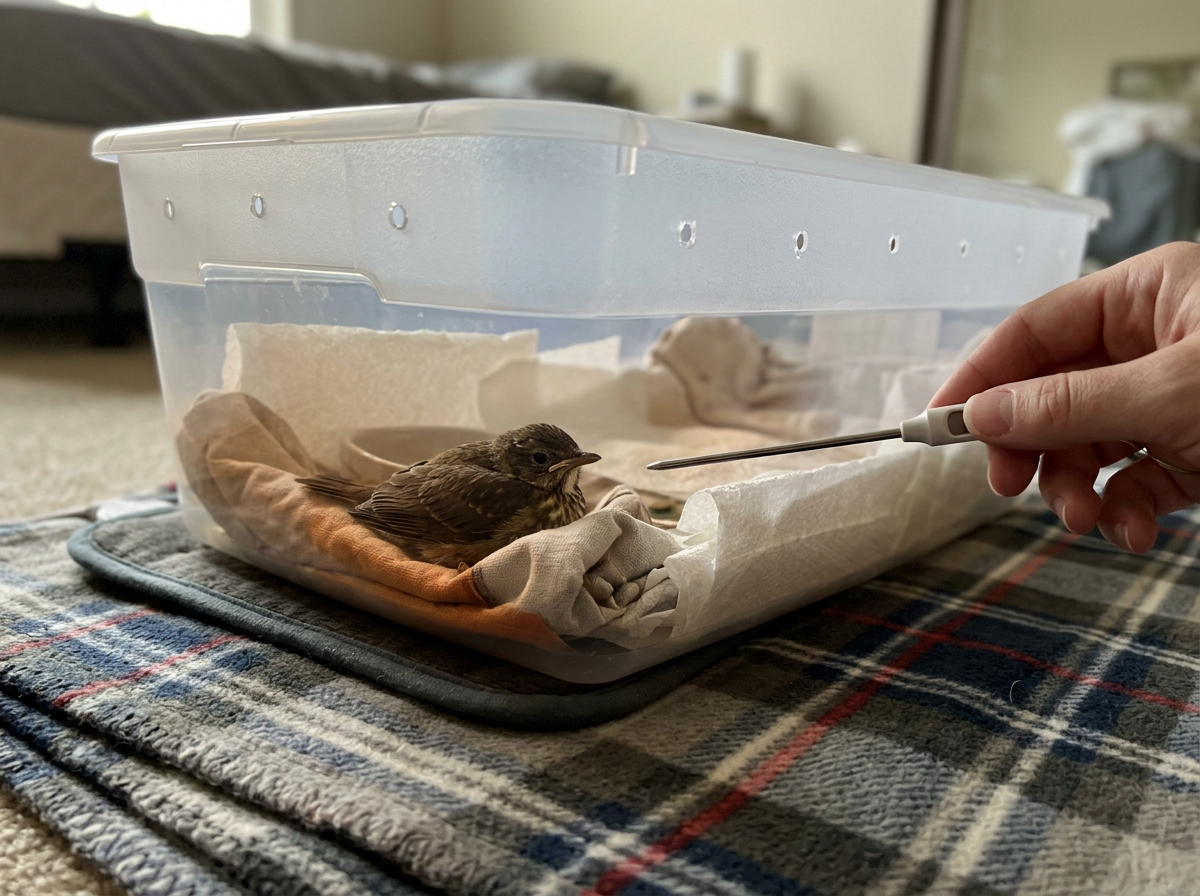
A small cardboard box or plastic food container with a secure lid works well. Poke several small holes in the lid for airflow. Line the bottom with paper towels or a coffee filter, replacing them when soiled. Avoid materials with loops or fibers that can tangle around tiny feet and legs. If the bird is very small and round, you can shape the paper towel into a shallow nest cup so it's nestled and supported rather than lying flat.
Temperature
Tiny, completely featherless chicks need temperatures around 100°F (37.8°C). Larger chicks with some feathering do well around 90 to 95°F (32 to 35°C). You don't need a thermometer to approximate this. A heating pad on its lowest setting under half the container, or a warm rice sock next to the bird, will usually get close enough. Always leave the bird room to move away from the heat source. Direct contact with a heating pad, even on low, can cause burns.
Humidity and ventilation
Aim for humidity around 50 to 70 percent if you have a way to measure it. In practice, this means don't keep the bird in a bone-dry environment like next to a heat vent or in a sealed glass tank. A lightly covered cardboard box in a normal indoor space is usually adequate. The ventilation holes in the lid matter, both for fresh air and to prevent the space from getting too humid from the bird's respiration.
Watching for signs of stress and tracking condition
Once the bird is warm and contained, check on it every 20 to 30 minutes without handling it. You're looking for whether it's improving, stable, or declining. Here's what to watch for.
Signs the bird is doing okay (relatively)
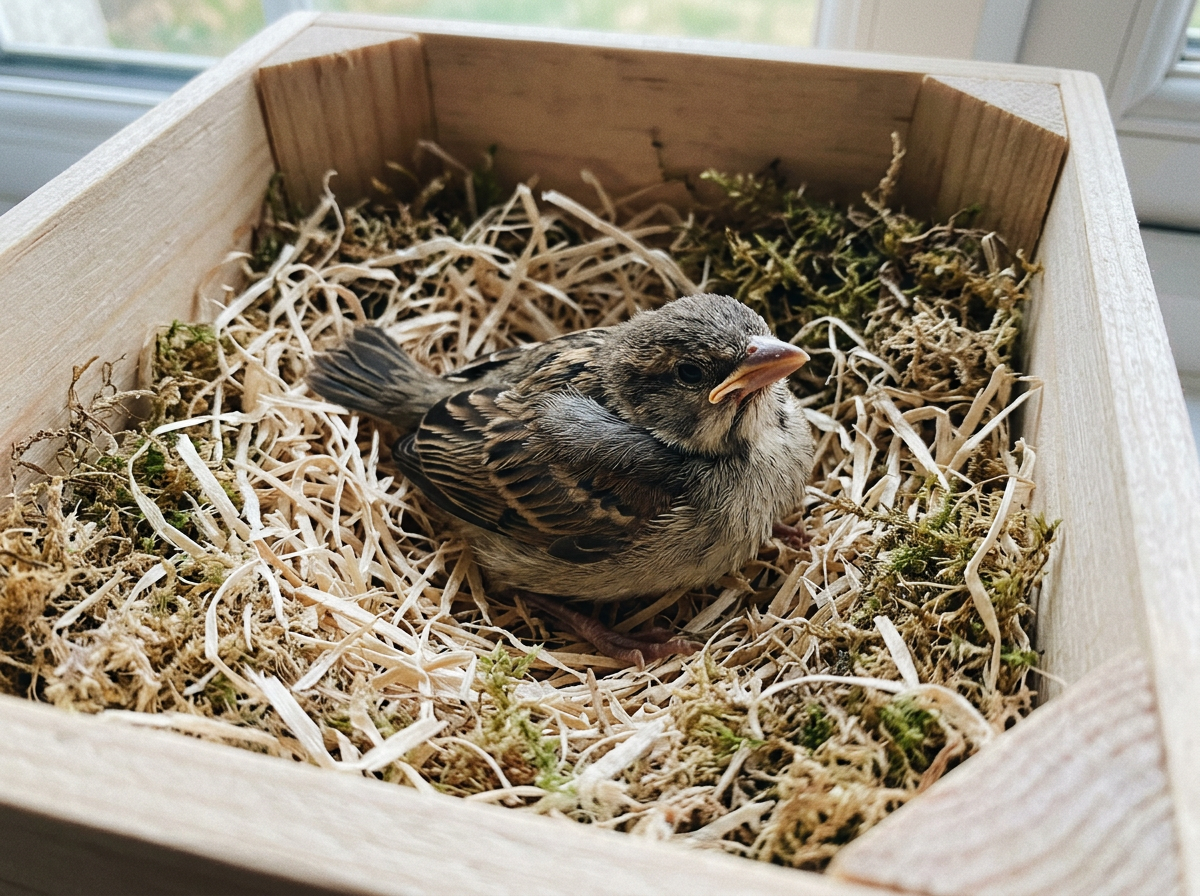
- It's holding its head up, even weakly
- It responds to your presence by opening its mouth (gaping), which is a feeding reflex
- It's warm to the touch and not limp
- It's breathing without labored effort or clicking sounds
Red flags that mean get to a vet or rehabber immediately
- Bleeding that won't stop
- A wing or leg held at an abnormal angle (possible fracture)
- The bird is limp, unresponsive, or has its eyes closed and won't rouse
- Labored or open-mouth breathing
- The bird is cold and not warming up after 20 minutes of supplemental heat
- Visible injuries from a cat or dog attack (even small punctures from claws are serious and often fatal without antibiotics)
Cat and dog attack wounds deserve a special note. Even a brief grab from a cat leaves bacteria on the skin that can kill a bird within 24 to 48 hours without treatment. If the bird was in a cat's or dog's mouth, go straight to an emergency animal hospital or wildlife clinic. Don't wait.
The standard expectation for home stabilization is 24 to 48 hours at most before transferring the bird to a licensed wildlife rehabilitator. Trying to raise a wild bird at home for longer than that without professional guidance almost always results in harm, even with good intentions. Improper diet over just a few days can cause permanent developmental problems.
When to call a wildlife rehabber or vet, and how to transport safely
The answer to when to call is: right now, as soon as the bird is contained. You don't need to wait until you're sure it needs help. Wildlife rehabilitators are trained to talk you through exactly what you're looking at, and most have hotlines or email contacts for this reason. In the U.S., the Fish and Wildlife Service and most state wildlife agencies maintain directories of licensed rehabilitators. Your local humane society or animal control office can also connect you quickly.
If the bird is bleeding severely or has been attacked by a cat or dog, skip the rehabilitator search and go directly to the nearest emergency animal hospital or avian vet. Severe trauma needs immediate medical attention, and a general emergency vet can stabilize the bird until it can be transferred to a rehabilitator.
How to transport the bird safely
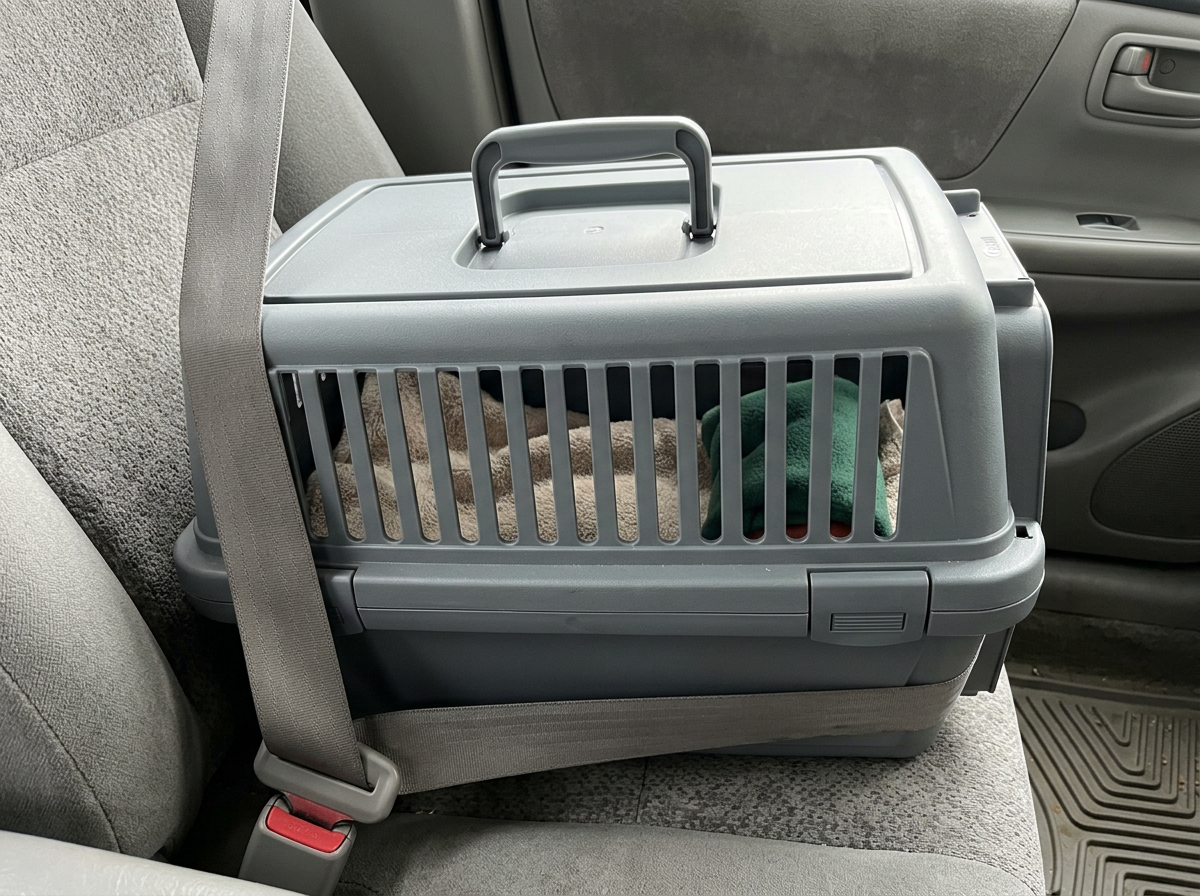
- Keep the bird in the same small, covered container you've been using. Do not transfer it to a bigger box for the drive.
- Maintain warmth during transport. Keep the heating pad or rice sock in place, or place the box on the car seat in direct sunlight if the weather is warm enough.
- Keep the car quiet. No loud music, no AC blasting directly at the bird.
- Drive smoothly. Sudden stops and starts are stressful.
- Do not open the box during transport to check on the bird. Resist the urge.
- If the drive is longer than 20 minutes, confirm with the rehabilitator that the bird doesn't need anything specific before you leave.
It's worth knowing that in most of the U.S., keeping a wild bird in your home beyond emergency stabilization requires a federal or state permit. Licensed wildlife rehabilitators hold those permits. Your role is stabilization and handoff, and doing that well is genuinely one of the most helpful things you can do for the bird.
If you want to go deeper on specific developmental stages, there's more detail available on caring for nestlings specifically, as well as guidance for fledglings and what changes once a bird starts developing feathers. But for right now, in the next hour, the steps above are what matter most: contain, warm, call, transport.
FAQ
How do I tell if I found a hatchling, a nestling, or a fledgling when the bird is very small?
Use two quick checks, feather coverage and eye status. Hatchlings are usually featherless or only thin down and often have closed eyes, nestlings have more visible down and developing feathers but still cannot perch or hop well, fledglings are typically fully or mostly feathered, able to hop, and alert enough to look around. If the bird is moving actively and fully feathered, it most likely falls closer to fledgling range, so watch from a distance first.
Should I put the baby bird back in the nest if I can find it?
Only consider returning it if you are sure the nest was disturbed and you can reach the exact nest location without causing further harm. If the chick is cold, limp, injured, or has been taken by a cat or dog, prioritize warming and medical help instead of trying to relocate it. If you cannot clearly identify the nest, it is safer to call a rehabilitator and transport the bird for guidance.
Where should I take it, wildlife rehabilitator, emergency vet, or humane society?
For a cat or dog mouth injury, severe bleeding, or obvious trauma, go to the nearest emergency animal hospital or avian-capable urgent clinic first. For most other grounded hatchlings or nestlings that need stabilization, call a licensed wildlife rehabilitator right away and follow their transport instructions. Humane societies and animal control can usually route you to the correct licensed rehab option if you cannot find one quickly.
What temperature should I aim for exactly, and how can I avoid overheating?
Aim roughly for 100°F (37.8°C) for completely featherless chicks and 90 to 95°F (32 to 35°C) for partially feathered chicks. Avoid overheating by using indirect heat, like a heating pad under part of the container on the lowest setting, or a warm rice sock kept next to the bird, and always confirm the bird can move away from the heat.
Can I use a heat lamp, brooder, or bathroom towel to keep it warm?
Heat lamps can create hotspots and drying, and towels alone usually do not provide stable warmth plus safe ventilation. The safer approach is a small, escape-proof container that is warm-dim-dark, with ventilation holes and gentle, indirect heat from below or beside. If you do not have a reliable way to warm the whole enclosure without hotspots, stick with a warm rice sock or heating pad under half the container.
How often should I check on the bird, and should I handle it to see if it is breathing?
Check every 20 to 30 minutes without handling. You are assessing whether it is improving, stable, or declining by posture and responsiveness, not by repeated lifting. If it seems to be getting worse, call the rehabilitator immediately for next steps rather than trying repeated physical checks.
Is it ever okay to give water to a newborn bird?
No. Do not give water or attempt to offer food. Even if the bird seems thirsty, the risk of aspiration and improper intake is high for very young birds, and digestion requires a properly warmed body. If a professional directs emergency feeding, they will also instruct how to prevent aspiration and what to feed for the specific species.
What if I cannot reach a rehabilitator right away and I need to keep it alive overnight?
Stabilize only, keep it warm, dark, quiet, ventilated, and do not feed unless a licensed rehabilitator explicitly instructs you during a live conversation. Home care longer than a day without professional direction often leads to irreversible developmental and dietary problems. Prioritize finding an emergency clinic if the bird declines or if there are signs of infection or attack wounds.
Do I need to disinfect the container or my hands before handling the bird?
Yes, clean handling helps prevent transferring pathogens, especially if the bird was exposed to predators or dirty ground. Wash hands thoroughly before and after, and keep the bird separated from pets. Replace soiled paper towels or filters in the container, and do not reuse materials with loops or fibers that could snag tiny legs.
What are the most common mistakes that happen in the first 30 minutes?
The big ones are feeding too early, giving the wrong type of food, warming after attempting feeding, overhandling, and using unsafe heat sources or bedding that tangles. Another frequent mistake is treating a healthy, fully feathered fledgling as if it needs feeding, instead of watching from a distance to confirm whether parents return.
Next Article
How to Care for a Hatchling Bird Step by Step
Step by step humane care for a hatchling bird: warmth, safe feeding, hydration checks, and when to call a rehabber.