If you're holding a tiny, featherless bird right now and trying to figure out what to do, here's the short answer: keep it warm, keep it quiet, and contact a licensed wildlife rehabilitator as fast as you can. That's the core of it. But I know you need more than that, so this guide walks you through every step in order, from the first five minutes to the days ahead. how to take care of a newly hatched bird. how to take care of a little bird
How to Care for a Newborn Featherless Bird: Step-by-Step
Marcus Holloway
23 Mar 2026
What 'no feathers' usually means (and how to read the situation)
A featherless or nearly featherless baby bird is called a hatchling or nestling, depending on its exact stage. Hatchlings have just broken out of the egg and are completely bare. Nestlings are a few days older and may have a few fuzzy pin feathers poking through, but they're still mostly naked and helpless. Both are at the most vulnerable stage of a bird's life.
You can tell you have a nestling or hatchling if the bird has its eyes closed (or barely open), has no real feathers or only sparse tufts, and can't stand or grip your finger. If the bird is fully covered in feathers and hopping around, that's a fledgling, and the care approach is completely different. This article focuses on the truly featherless or near-featherless chick.
Before assuming the worst, ask yourself: could the nest be nearby? Nestlings belong in the nest. If you can see or locate the original nest and it's reachable, placing the chick back is almost always the right first move. The old myth that a parent bird will reject a chick you've touched is just that, a myth. If the nest is destroyed, you can fashion a substitute from a small container lined with dry grass or leaves, attach it near the original spot, and watch from a distance to see if the parents return within an hour or two.
If the nest is gone and the parents don't come back, if the chick is injured, or if the chick is clearly cold and weak, then you move into rescue mode. The same applies if you're dealing with a pet bird chick that has been rejected by its parents. The immediate steps are similar, but a pet-bird chick (like a parrot or cockatiel) will eventually need species-specific care that wild-bird guidance can't fully cover.
Do this first: safety, containment, and keeping stress low
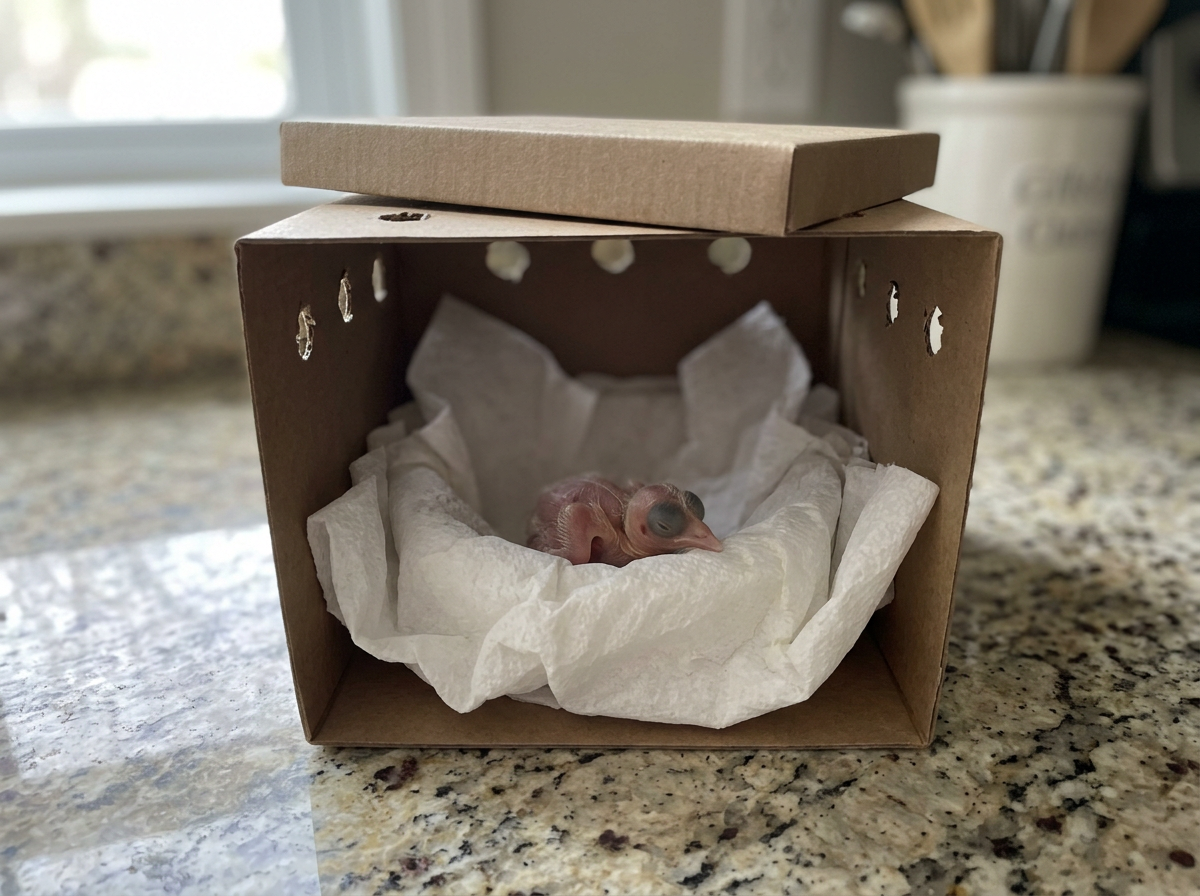
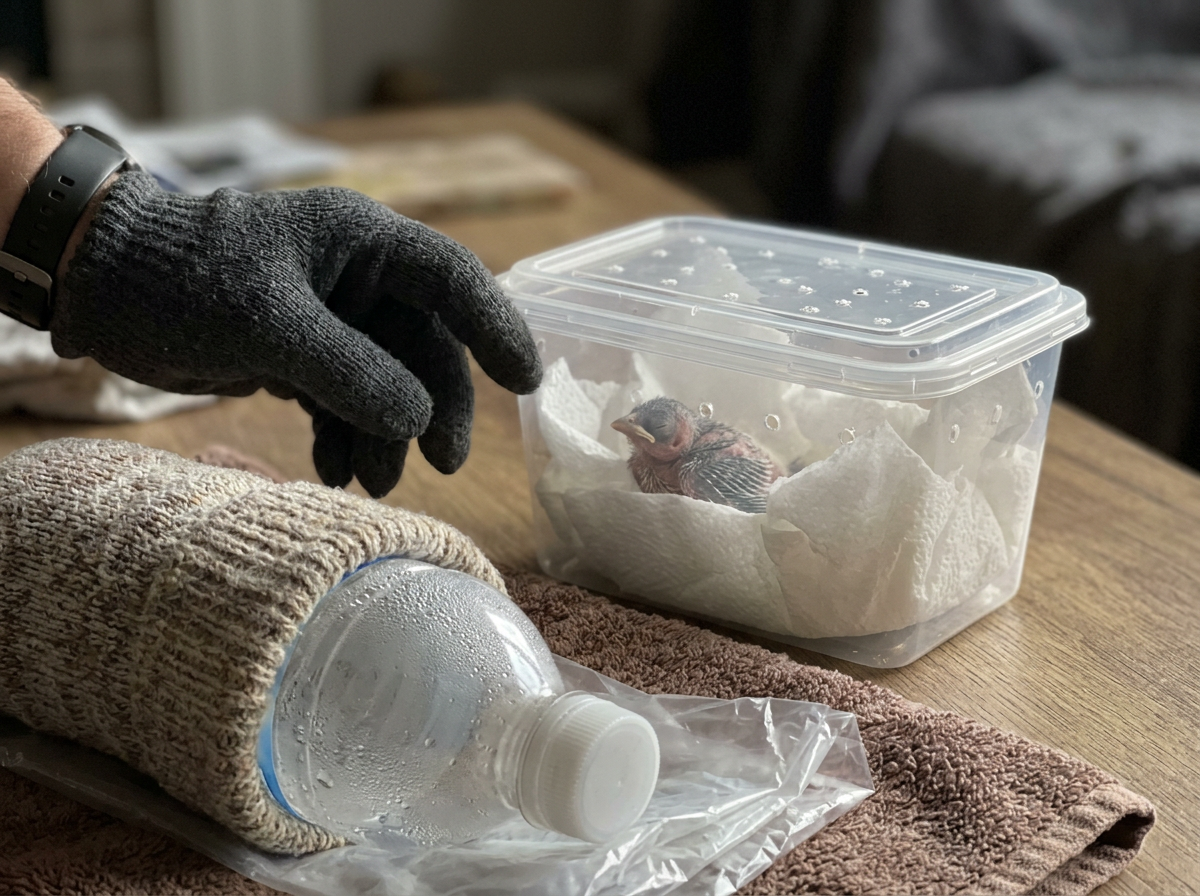
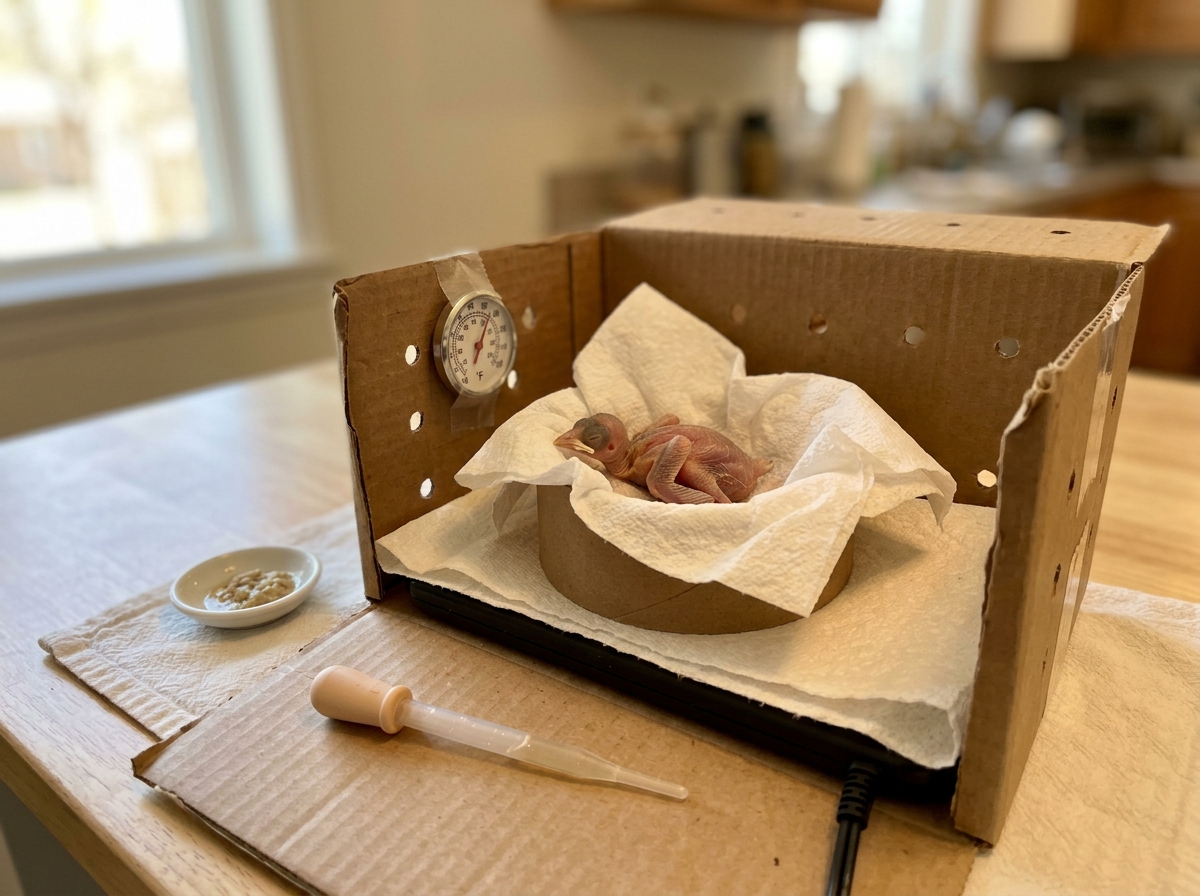
Your first job is containment. Find a small cardboard box or a container with ventilation holes. Line the bottom with a soft cloth or paper towels, making a shallow cup shape in the center so the chick can nestle in without tipping over. Don't use anything with loose threads or loops that tiny feet could get tangled in.
Put the lid on or partially cover the box to keep it dark and quiet. Darkness reduces stress significantly in baby birds. Place the box somewhere away from pets, children, loud noise, and direct sunlight. Keep handling to an absolute minimum. Every time you pick the chick up, you're adding stress to an already fragile animal.
As soon as the bird is contained and warming up (more on that in a moment), your next call should be to a licensed wildlife rehabilitator or an avian vet. Do this before you attempt to feed or do anything else. They can talk you through what to do for your specific situation, including whether to hold off on food entirely until the bird is in their hands.
Quick containment checklist
- Find a small cardboard box with ventilation holes
- Line it with a soft cloth or paper towels shaped into a shallow nest cup
- Place the chick gently in the center of the cup
- Partially cover or close the box to keep it dark
- Set it somewhere warm, quiet, and out of reach of other animals
- Call a licensed wildlife rehabilitator or avian vet immediately
Warmth and temperature targets for featherless chicks
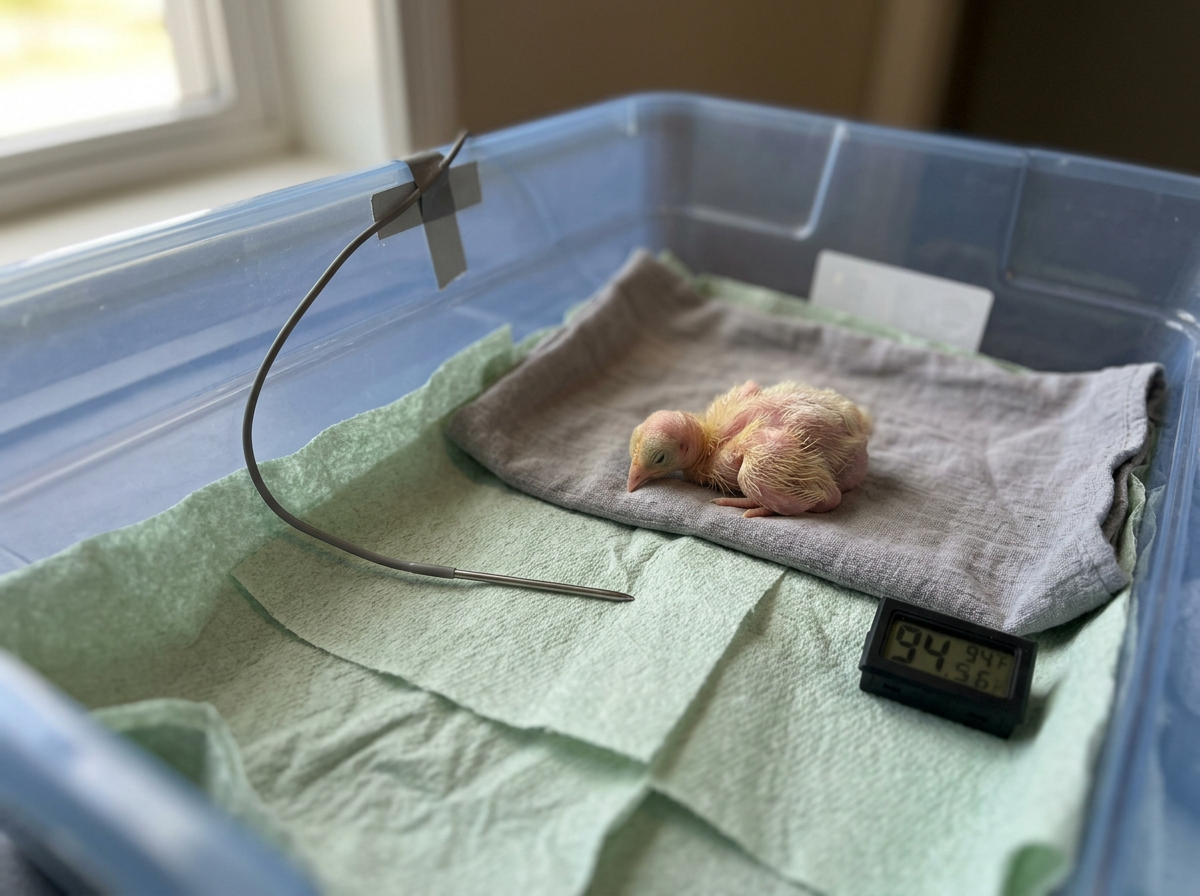
A featherless chick cannot regulate its own body temperature. This is the most urgent physical problem you need to solve. Most baby birds brought in for rescue are already hypothermic, and warming them up before anything else is the priority. A chick that's cold is also not ready to be fed.
The target ambient temperature for a hatchling or young nestling is between 85°F and 95°F (roughly 29°C to 35°C). Slightly older nestlings with some pin feathers can tolerate the lower end of that range, around 85°F to 90°F. You're aiming for the box environment to be in that range, not the bird's direct skin contact with a heat source.
The safest way to provide heat is to place a heating pad set to its lowest setting under half of the box, not under the whole thing. This creates a temperature gradient so the chick can move toward or away from the warmth as needed. If the chick can't move on its own, position it on the cooler side and check regularly. A warm rice sock, a zip-lock bag filled with warm (not hot) water wrapped in a thin cloth, or a hand warmer placed outside the box near the side also works in a pinch.
Never put the heat source directly against the bird. Thermal burns from direct heat contact are a real and serious risk, especially when the chick is too weak to move away. Check the box temperature with a thermometer if you have one, and check the chick regularly. A healthy, warm chick feels warm to the touch. A chick that's too hot will pant and hold its wings away from its body.
Feeding basics for newborn birds with no feathers
Here's where I have to be direct with you: feeding a featherless baby bird incorrectly can kill it. That's not meant to scare you, it's just the reality. Getting food into a cold bird's crop, feeding the wrong thing, or getting liquid into the airway are all genuine risks. This is why wildlife rehabilitators consistently say: don't feed the bird until you've talked to a professional, or until you have clear guidance for your specific situation.
That said, if you truly cannot reach a rehabber quickly and you know the bird is warm and alert enough to show a feeding response (gaping, meaning it opens its mouth and bobs its head), here's what you need to know.
What featherless chicks actually eat
In the wild, parent birds feed nestlings a diet that's mostly insects: soft-bodied, high-protein food. For emergency interim care of a songbird chick, a small amount of moistened commercial insectivore diet or puppy/kitten kibble soaked until very soft can work as a stopgap. Mealworms (live or dried and rehydrated) are another short-term option. These are imperfect substitutes, but they're far better than bread, crackers, cow's milk, or anything dairy-based, all of which can cause serious digestive harm.
The food pieces need to be tiny, soft, and easy to swallow. Think smaller than you think is necessary. Place the food gently at the tip of the beak and let the chick swallow it on its own rather than pushing it deep into the mouth. Watch for a crop bulge (a small lump at the base of the neck/chest) to know the food is going in correctly.
How often to feed
Featherless hatchlings and nestlings need to eat very frequently. Songbird chicks need feeding roughly every 15 to 20 minutes during daylight hours, from sunrise until around 10 p.m. Yes, that's every 15 to 20 minutes. This is a huge commitment, and it's one of the main reasons wildlife rehabilitators exist. If you're caring for the bird temporarily while waiting for transport, aim for at least every 20 to 30 minutes while the bird is awake and responsive.
Feed only when the bird is warm and showing a gaping response. If the chick is limp, unresponsive, or cold, focus on warming first. Never force food into a bird that isn't actively gaping, because the risk of getting food into the airway and causing aspiration is very high. A bird that inhales food can develop aspiration pneumonia, which is usually fatal in a chick this young.
What not to feed, ever
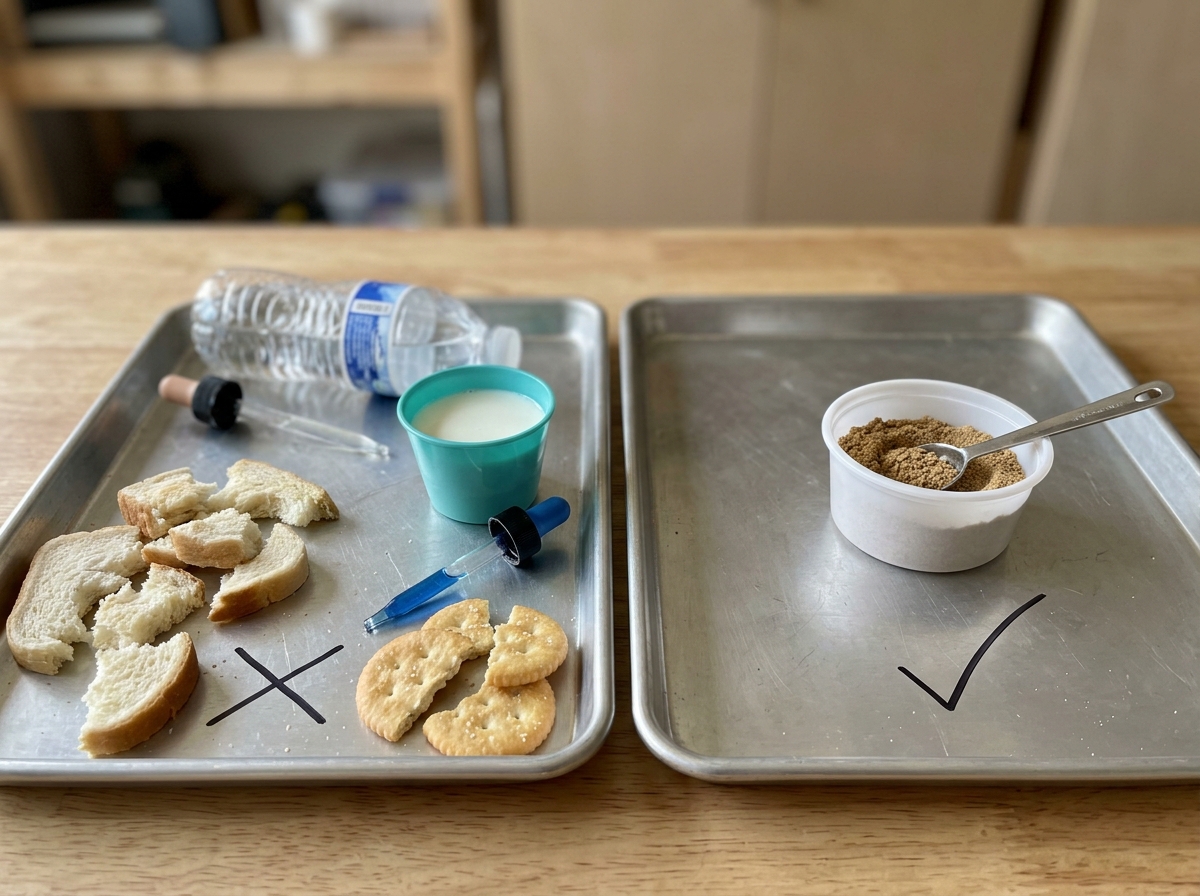
- Bread, crackers, or any grain-based human food
- Cow's milk or any dairy product
- Water dripped directly into the mouth (this can cause drowning)
- Fruit juice or sugary liquids
- Cat or dog food that hasn't been thoroughly soaked and softened
- Any whole seeds or hard food pieces
Hydration, droppings, and gentle monitoring
Baby birds do not drink water the way adult birds do. Their hydration comes from their food. This is critical to understand, because dripping water into a baby bird's mouth is one of the fastest ways to accidentally drown it. Never do this. If you're worried about dehydration, that's a conversation for a wildlife rehabilitator or avian vet, not a DIY fix.
That said, you can monitor hydration by watching the droppings and the bird's general condition. A healthy chick should produce droppings after most feedings. The droppings should have a white or chalky part (urates), a clear or slightly yellow watery portion (urine), and a small dark solid portion (feces). If you're not seeing any droppings, if the droppings are very dark and dry with no liquid portion, or if the chick's skin looks wrinkled or feels tacky rather than smooth, those are signs of dehydration that need professional attention.
Check the chick every 20 to 30 minutes while you have it in your care. You're looking for: breathing that looks steady and unlabored, a body that feels warm to the touch, clear eyes (if they're open), and a bird that responds when you approach with food. Any wheezing, clicking when breathing, discharge from the nostrils or eyes, or a crop that seems full and not emptying after a few hours are all signs you need veterinary help urgently.
Cleaning the chick
Keep cleaning minimal. If food ends up on the beak or around the face, you can gently wipe it off with a warm, damp cotton swab or corner of a cloth. Don't soak the chick or try to bathe it. Change the bedding in the box when it gets soiled, because sitting in waste can cause skin irritation and bacterial issues. That's really the extent of what you should be doing hygiene-wise at this stage.
Common mistakes that can seriously harm the bird
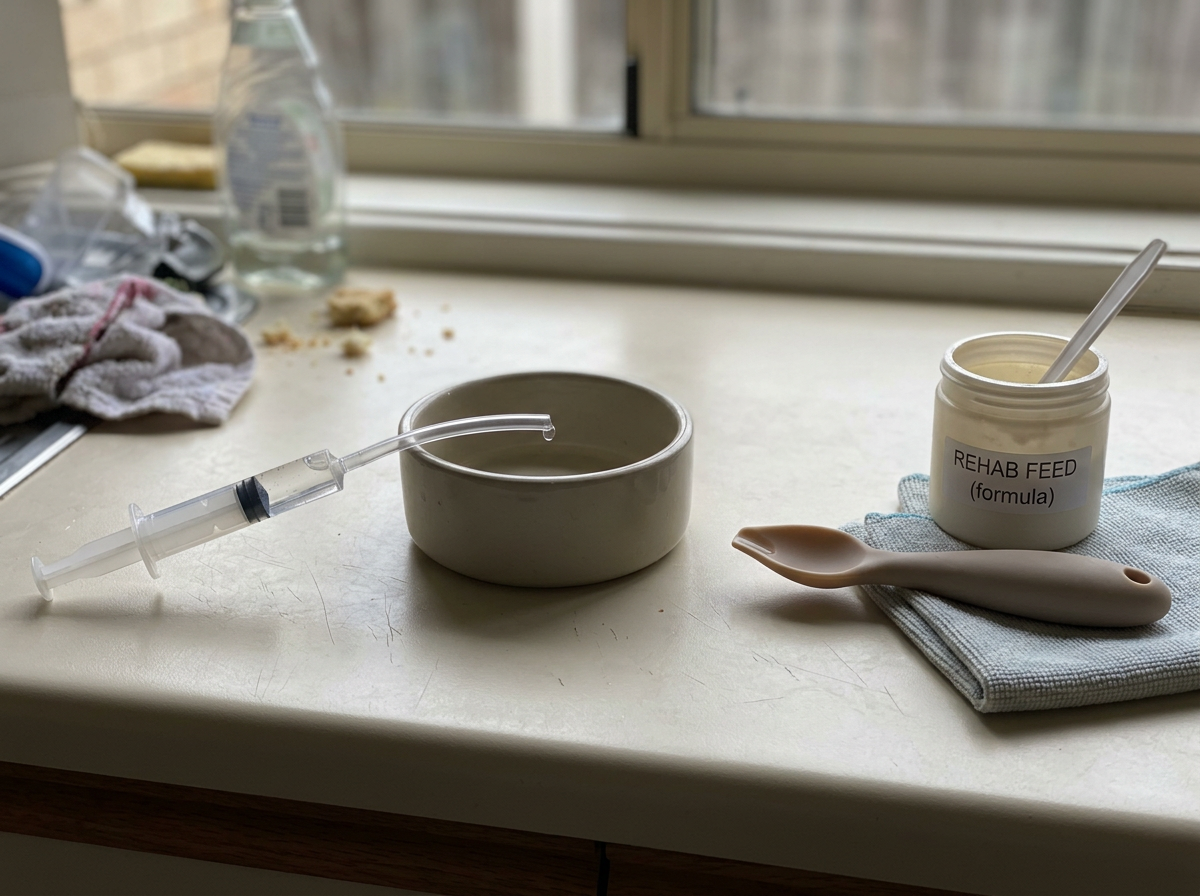
Most well-meaning people make the same handful of errors. Knowing what they are is just as important as knowing what to do right.
| Mistake | Why it's harmful | What to do instead |
|---|---|---|
| Feeding the wrong food (bread, milk, water) | Can cause digestive failure, aspiration, or drowning | Use soft insect-based food or wait for rehabber guidance |
| Feeding a cold bird | Cold digestion can cause fatal crop stasis or shock | Warm the bird to 85–90°F first, feed only when it gapes |
| Dripping water into the mouth | Can cause drowning or aspiration pneumonia | Never give liquid directly; hydration comes from food |
| Overfeeding | Can cause regurgitation, aspiration pneumonia, diarrhea | Feed small amounts, wait for the gaping response, watch the crop |
| Too much handling | Extreme stress weakens an already fragile chick | Minimize handling; keep the bird dark, warm, and quiet |
| Using a heat lamp or high-heat pad directly on the bird | Can cause thermal burns within minutes | Use low heat under half the box, never direct contact |
| Keeping the bird as a pet or getting too attached | Imprinting makes the bird unable to survive in the wild | Always work toward handing off to a licensed rehabilitator |
Imprinting deserves a special mention. Featherless chicks that are handled frequently by humans during their critical developmental window can imprint on people, meaning they'll identify as human rather than as their own species. This makes them unable to survive in the wild and often unable to live with other birds. It's not reversible. The best thing you can do for the bird's long-term survival is to minimize contact and get it to a professional as fast as possible.
When to get a wildlife rehabilitator or avian vet urgently
The honest answer is: you should be contacting a wildlife rehabilitator from the very beginning, not just when things go wrong. A featherless nestling or hatchling is a medical-level emergency that exceeds what most people can reasonably handle at home, no matter how careful they are. In the US, caring for most wild birds without a permit is also regulated by federal law, so getting a licensed rehabber involved is both the safest and the legally appropriate path.
That said, some situations need urgent professional attention right now, not in a few hours. Call immediately if you notice any of the following:
- The bird is limp, unresponsive, or unconscious
- There's visible bleeding, a broken or drooping wing, or any obvious injury
- The bird is gasping, clicking, or struggling to breathe
- The crop (the lump at the base of the neck) is still full after several hours with no food given
- There's discharge from the nostrils or eyes
- The bird has been cold for an extended period and isn't responding to warmth
- The skin looks very wrinkled, dry, or tacky (signs of significant dehydration)
- You're not able to get the bird warm within 30 minutes
To find a licensed wildlife rehabilitator near you, contact your state's fish and wildlife agency, search the National Wildlife Rehabilitators Association directory, or call a local wildlife sanctuary or nature center. Many areas have 24-hour wildlife hotlines. Your local humane society or animal control office can also point you in the right direction.
What to expect as the bird grows (and when to stop home care)
If you're in a situation where you must care for the bird for a short period before getting it to a rehabber, it helps to know what normal development looks like so you can tell if things are on track. how to care for a nestling bird
A newly hatched songbird starts completely bare and pink. Within the first few days, you'll see the dark pin feathers (which look like tiny quills) starting to push through the skin, usually along the wings and back first. By around 10 to 14 days old, many songbird species have enough feathering to start regulating their temperature a little better, though they're still far from independent. By three weeks, most have a full coat of juvenile feathers and are approaching the fledgling stage, where they begin to perch, hop, and start learning to fly.
Home care should be a temporary bridge, never a long-term plan. The moment a licensed rehabilitator is available, the bird should be in their care. They have the training, permits, proper nutrition, and multi-bird socialization that genuinely featherless chicks need to develop into birds that can survive in the wild. If you're caring for a pet-bird chick (like a parrot or finch) rather than a wild bird, an avian vet is your best resource for species-specific hand-feeding formulas and weaning schedules.
Once a bird reaches the fledgling stage, it's mobile, loud, and needs a completely different kind of support. At that point, your role shifts again, and you'll want to read up on how to care for fledgling bird to understand what the next phase looks like. how to care for fledgling bird The goal from day one is always to give this bird the best possible chance at living a full wild life, and that means getting it into expert hands as quickly as you can.
FAQ
Can I feed a featherless baby bird right away if I found it on the ground?
Yes, but only if it is fully warmed and actively showing a feeding response (gaping). If the chick is cold, feeding attempts are much more likely to lead to aspiration or crop problems, so your first step is always heating the box to the target range before you offer food.
What is the safest way to provide heat without overheating the chick?
Avoid heating only with a hot surface or placing the bird directly on a heat source. Use a low heating pad under half the container to create a temperature gradient, and confirm your goal by checking the box temperature with a thermometer if possible.
Is there a specific emergency food I can use if I cannot reach a rehabilitator immediately?
Mealworms and rehydrated insects can be an interim option, but “soft” needs to mean tiny, easily swallowed pieces, not sloppy liquid. Do not use bread, crackers, or anything dairy-based, and never give a dry kibble chunk or anything that expands in the throat.
How can I tell if the chick is dehydrated, and can I give it water by mouth?
Do not put water drops, syringes, or dripping water into the mouth. Instead, judge hydration by droppings after feedings (white or chalky urates plus urine portion). If you see no droppings, very dry dark droppings, wrinkled skin, or tacky skin, treat it as dehydration and get professional help urgently.
What signs mean the problem is more than just hunger and it needs urgent veterinary help?
If the crop stays full without emptying over a few hours, or the chick seems too weak to process food, treat that as an urgent sign of trouble rather than “normal digestion.” Also seek help if you notice wheezing or clicking breaths, nostril or eye discharge, or a chick that cannot stay warm.
How much should I handle the bird while I wait for help, and is support different from feeding?
Generally, no. If you must temporarily hold the chick, support the body with minimal movement, avoid rubbing the skin, and keep handling brief. The article emphasizes minimizing contact because frequent handling can trigger stress and, for some species, increase the risk of imprinting.
If I cannot tell whether it is a hatchling or nestling, how do I decide what to do first?
Focus on the immediate needs: warmth and containment. If you are unsure whether it is a hatchling versus a nestling, use function over labels, eyes (closed or barely open), ability to grip, and whether it can stand. Feeding and warmth decisions hinge on readiness, not on your best guess of age.
Do I really need to involve a wildlife rehabilitator if the chick seems okay after warming?
Yes, because in many places wild bird care is regulated and rehabbers are trained to use species-appropriate nutrition. As a practical decision aid, contact a rehabilitator immediately for any featherless chick, even if you think it will be fine after feeding.
What should I do if I put the chick back in the nest, but the parents do not return?
Do not rely on the parents returning quickly if the nest is compromised, or if the chick is injured or cold. Watch from a distance only after you place it back in a reachable nest, and if the parents do not return within an hour or two, shift to rescue mode and professional guidance.
What should I do if the chick is not gaping when I offer food?
If the chick is not feeding, is limp, or is cold, stop attempts and recheck warmth and responsiveness. Force-feeding and trying to “make it eat” raises the risk of food entering the airway, which can be fatal in young chicks.
Next Article
How to Care for a Newborn Bird Right Now
Emergency steps to care for a newborn bird now: triage, safe warmth, correct feeding, housing, and when to get help.