If you've found a hatchling bird today, here's the most important thing to know right away: the best thing you can do in the first few minutes is as little as possible. Pick it up gently, get it warm, put it somewhere quiet, and call a wildlife rehabilitator. That's the short version. The rest of this guide walks you through exactly how to do each of those steps safely.
How to Care for a Hatchling Bird Step by Step
Marcus Holloway
23 Mar 2026
The moment you find a hatchling: what to do first
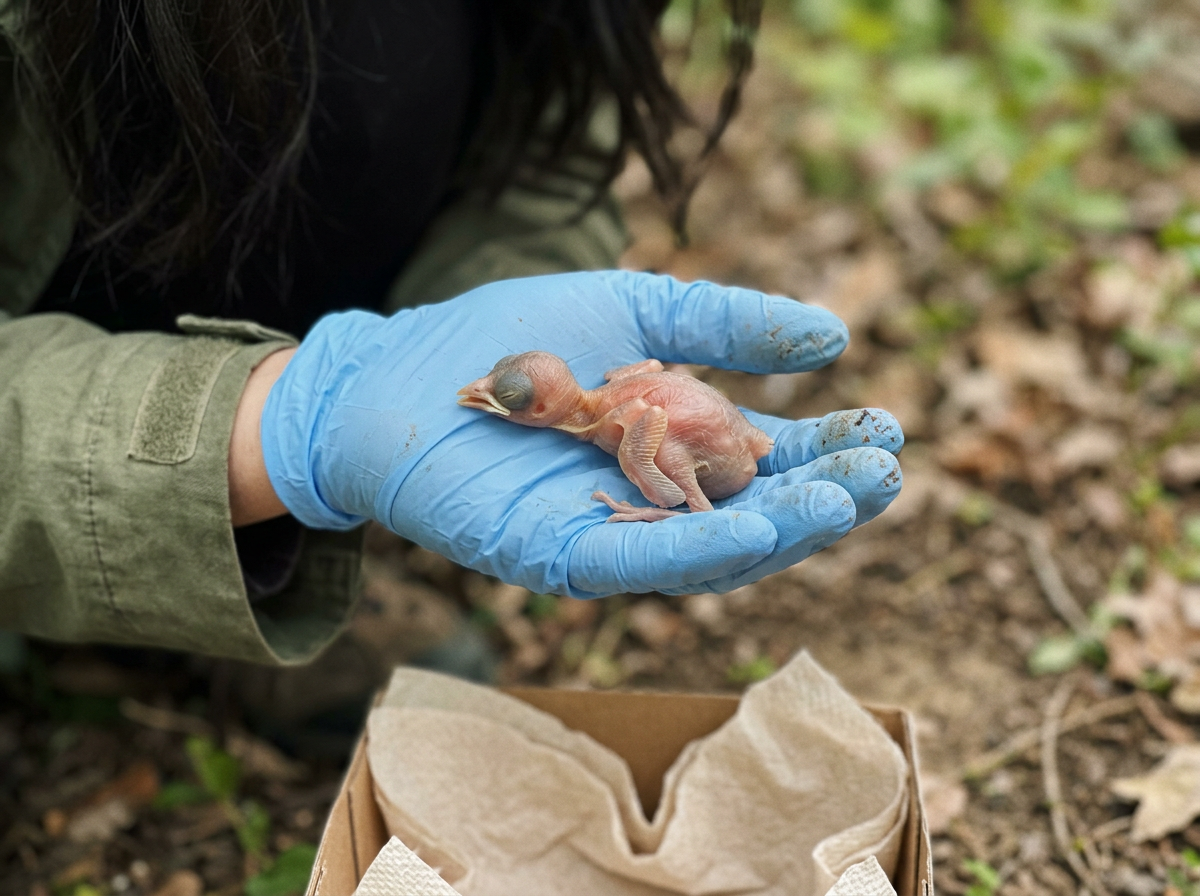
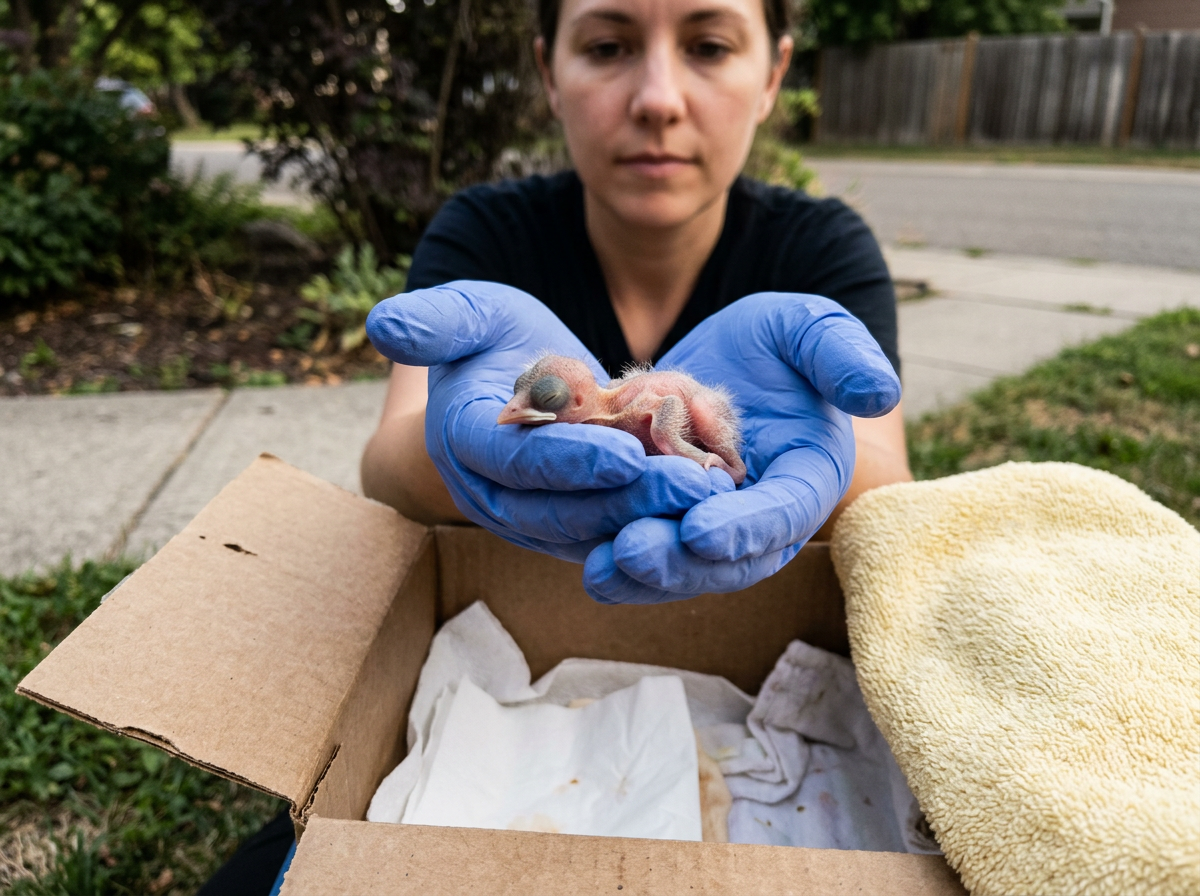
A hatchling is a baby bird that has just hatched and has no feathers, or only sparse ones. It's completely helpless and can go downhill fast if handled incorrectly or left exposed. The very first thing to do is get it out of immediate danger.
If it's on the ground, pick it up gently with gloved hands. Don't squeeze or cradle it tightly. Place it into a small container right away. Keep children and pets away from the area immediately. The more commotion around a hatchling, the more stress it experiences, and stress alone can be dangerous for a bird this fragile.
Before anything else, check whether the nest is nearby. If you can see an intact nest within reach, you can place the bird back in it. The myth that a parent will reject a baby because you've touched it is just that: a myth. Most birds have a weak sense of smell and will continue caring for the chick. If the nest is accessible and intact, use it.
Once the bird is contained, do not give it food or water. Do not try to keep it as a pet or delay calling for help. The National Wildlife Rehabilitators Association is clear on this: get the bird to a licensed wildlife rehabilitator as soon as possible, and don't keep it at home longer than necessary.
Quick triage: warmth, breathing, injuries, and whether it's truly orphaned
Before you call anyone, take thirty seconds to look the bird over. You don't need to handle it repeatedly. One calm observation is enough to tell you what kind of help it needs.
Is it breathing normally?
Watch the bird's chest and beak. Normal breathing is quiet and you won't notice it much. Concerning signs include open-mouth breathing, audible sounds when breathing, or the tail bobbing up and down with each breath. Any of these suggest respiratory distress, and the bird needs to see a vet or rehabilitator immediately, not in a few hours.
Check for visible injuries
Look for drooping wings, obvious wounds, blood, or signs of a cat or dog attack. A bird that has been in a cat's mouth needs professional care urgently, even if it looks fine. Cat saliva carries bacteria that can be fatal to birds within hours. Also watch for shivering or extreme lethargy. A healthy hatchling will be alert to sound and movement.
Is it actually orphaned?
This is worth pausing on, because many hatchlings that look abandoned are not. Parent birds often leave the nest briefly to find food and will return. If the nest is intact and the bird has just fallen out, the parents may still be active nearby. If it's safe to do so, observe from a distance for 30 to 60 minutes before assuming the parents are gone. Call for help right away if you're certain the parents are dead, not returning, or the bird is clearly sick or injured.
Check for dehydration
You won't be treating dehydration at home, but recognizing it helps you communicate urgency to a rehabilitator. Signs include sunken eyes, pale or tacky-looking mucous membranes around the mouth, and skin that stays tented when gently pinched rather than springing back. Many rescued wild birds that are injured or unwell are assumed to be dehydrated. This is another reason to get professional help quickly.
Setting up a safe temporary home
You need to give the bird a safe, warm, contained space while you're arranging transport or waiting for a callback from a rehabilitator. This doesn't need to be fancy.
The container
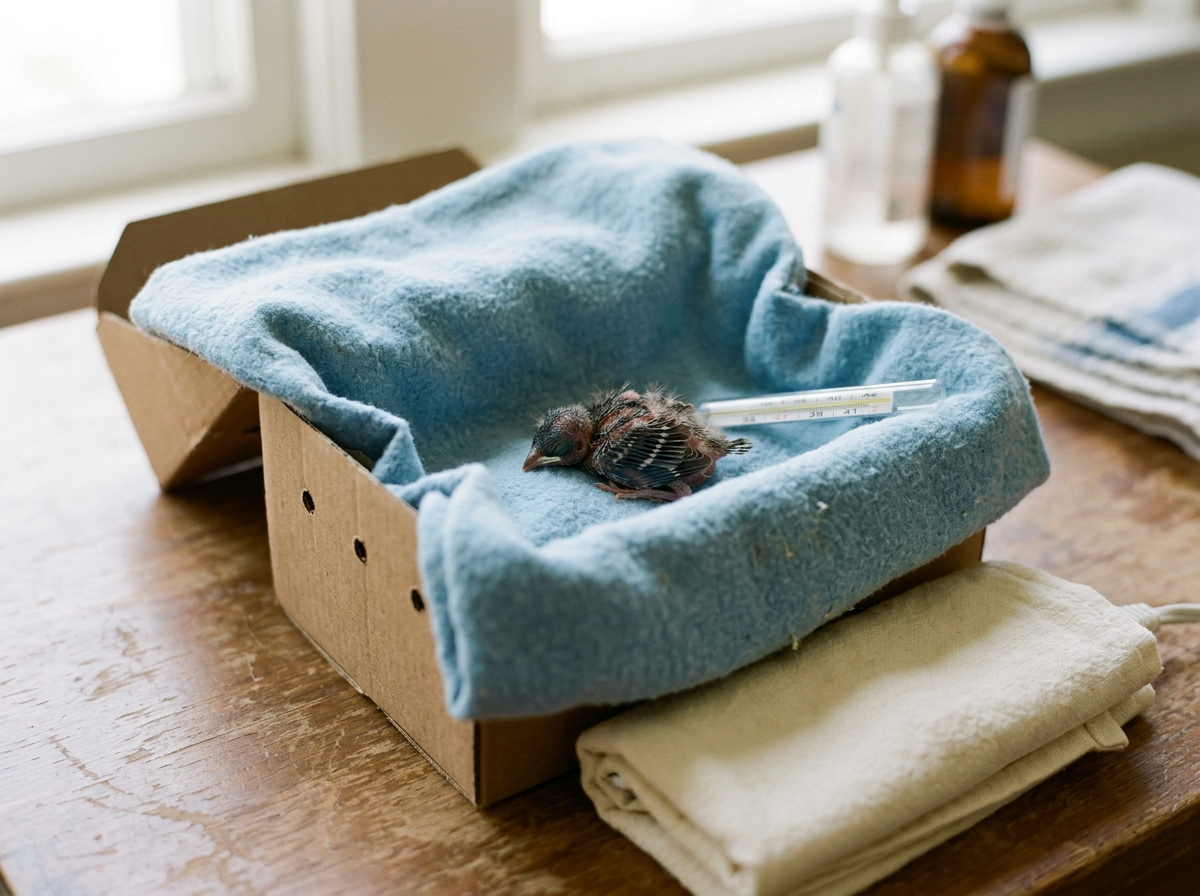
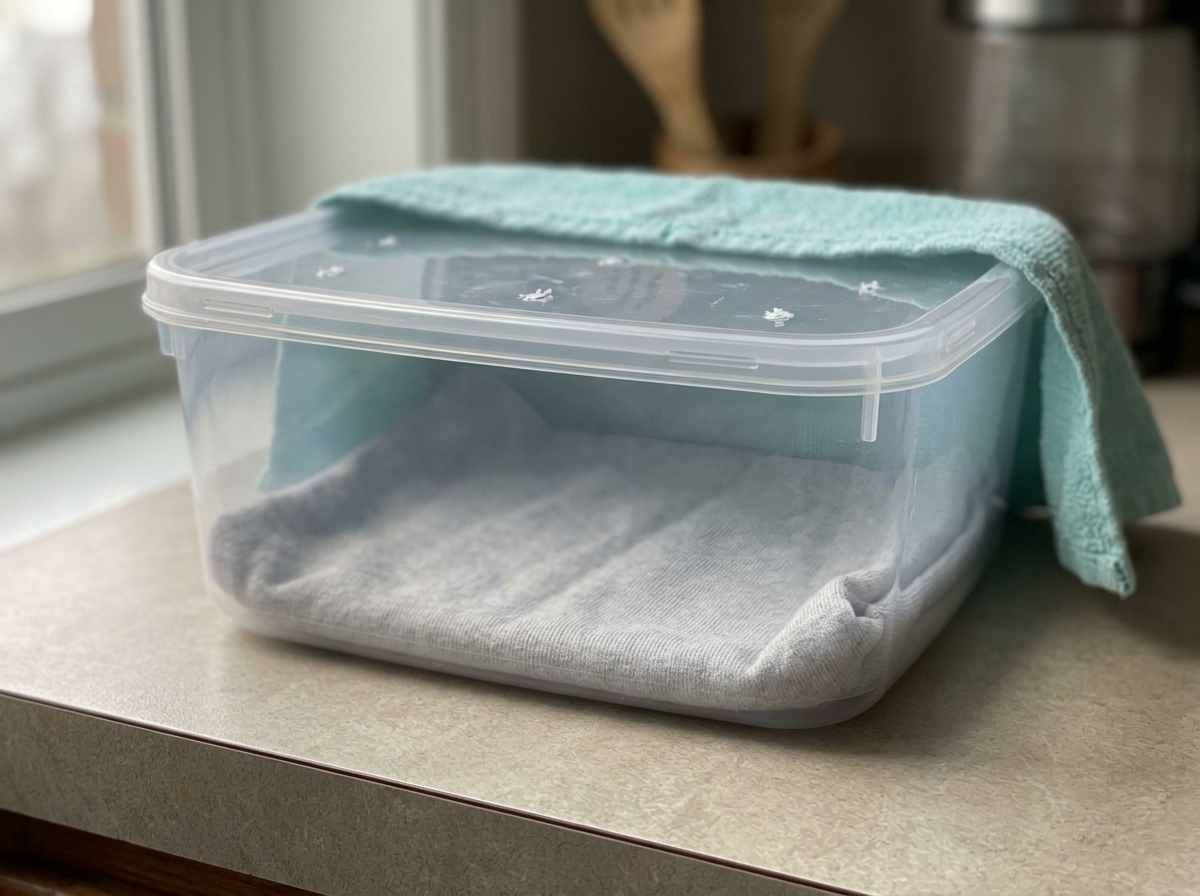
Use a small cardboard box or plastic container with a lid. Poke a few air holes in the lid or sides. Line the bottom with a clean, soft cloth (not terry cloth, which has loops that can tangle tiny feet or toes) or plain paper towels. The container should be just large enough for the bird to sit comfortably. A snug fit actually helps the bird feel more secure.
Cover the bird with a light towel or sheet, tape the container closed, and keep it somewhere quiet and dark. Darkness reduces stress significantly. Keep it away from noise, vibration, and any drafts.
The makeshift nest inside the container
If you need to create a nest substitute inside the container, use a small plastic container (like a berry basket or margarine tub) lined with shredded paper towels. Avoid cotton products, which can wrap around tiny feet. Gently tuck the bird's feet underneath its body when you place it in. This mimics the natural posture in a real nest and helps maintain body temperature.
Keeping it warm without overheating it
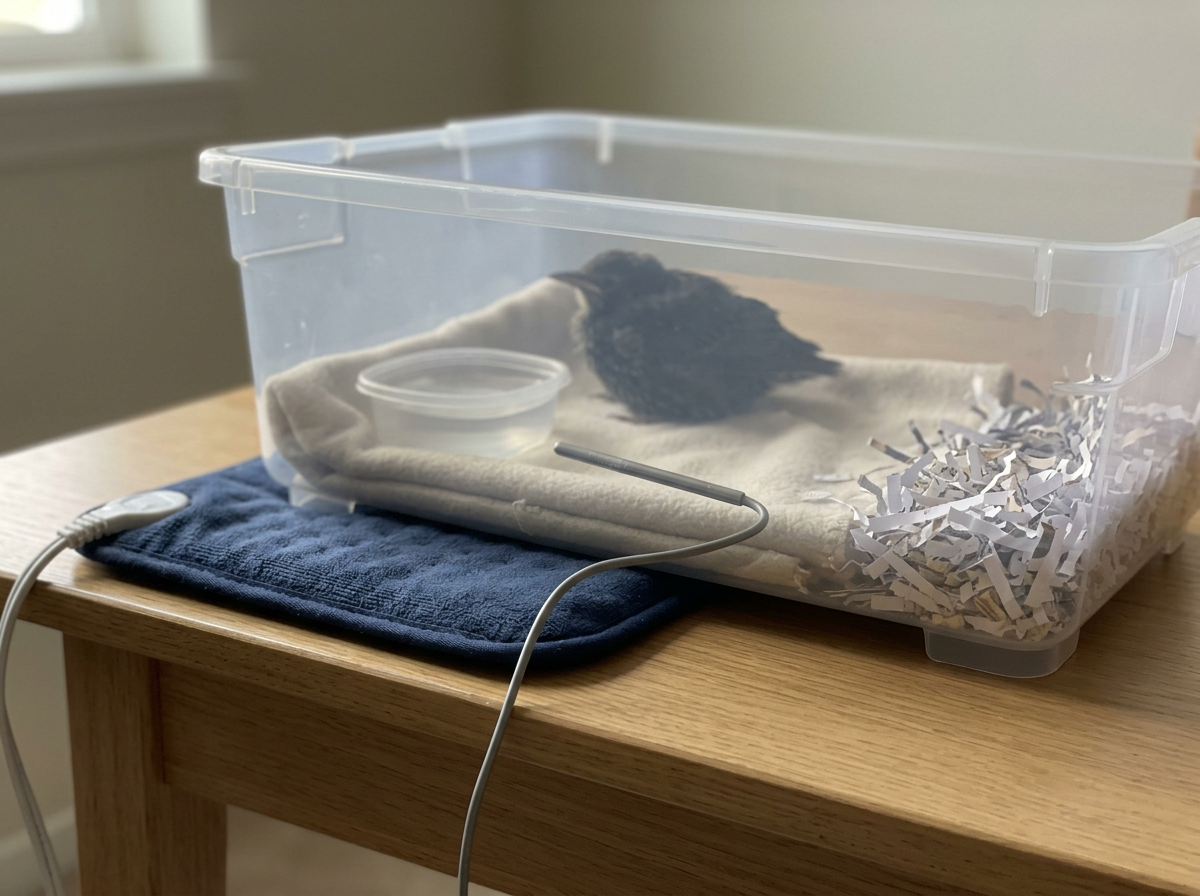
Warmth is critical. A featherless hatchling cannot regulate its own body temperature at all. Without supplemental heat, it can go into shock surprisingly fast, especially in air-conditioned rooms.
Place one end of the container on a heating pad set to its lowest setting. This creates a temperature gradient: the bird can move toward or away from the warmth as needed. Never place a heating pad under the entire container, and never use a high heat setting. Alternatively, fill a sock or small bag with dry rice, heat it briefly in the microwave until it's warm (not hot), and place it inside the container next to the bird. Make sure it's not too hot to hold comfortably in your own hands before putting it near the bird.
One important warning: if you're using any kind of water-based heat source, make sure it can't leak. A wet hatchling will chill rapidly, which is exactly what you're trying to prevent. A rice sock or a commercial heat pack wrapped in a cloth is safer than a hot water bottle for this reason. Aim to maintain humidity around 50 to 70 percent in the container if possible, as this helps reduce dehydration.
Feeding: what's safe, what isn't, and when to feed
The rule for a hatchling in temporary care is simple: do not feed it, and [do not give it water](/newborn-bird-nursing/how-to-take-care-of-a-newborn-bird-without-feathers) This is not a guideline to bend.
Hatchlings have specific dietary needs that vary enormously by species. Feeding the wrong food, even something that seems gentle like bread or milk, can cause severe diarrhea, dehydration, and malnutrition. Baby birds also do not drink water the way mammals do. Dripping or forcing water into a hatchling's mouth is a choking hazard and can cause aspiration, where liquid enters the lungs.
Even if you know what species the bird is, a hatchling needs to be warmed and stabilized before any feeding attempt, and that feeding should be guided by a rehabilitator who can confirm the bird's condition and give you species-appropriate instructions. Until you've spoken to a professional, keep the food and water away.
If for some reason you truly cannot reach a rehabilitator within 24 hours, contact a wildlife center directly for temporary care instructions before attempting anything on your own, using guidance like how to care for fledgling bird. Some centers can walk you through an emergency feeding protocol if the situation calls for it.
What never to feed a hatchling bird
- Bread or bread products of any kind
- Cow's milk or any dairy product
- Water dripped or forced into the mouth
- Worms, insects, or seeds without rehabilitator guidance
- Human food of any kind
Hydration, droppings, and what to watch for
While you're waiting for professional help, you can monitor the bird's condition without touching it much. Droppings are one of the best indicators of how a bird is doing.
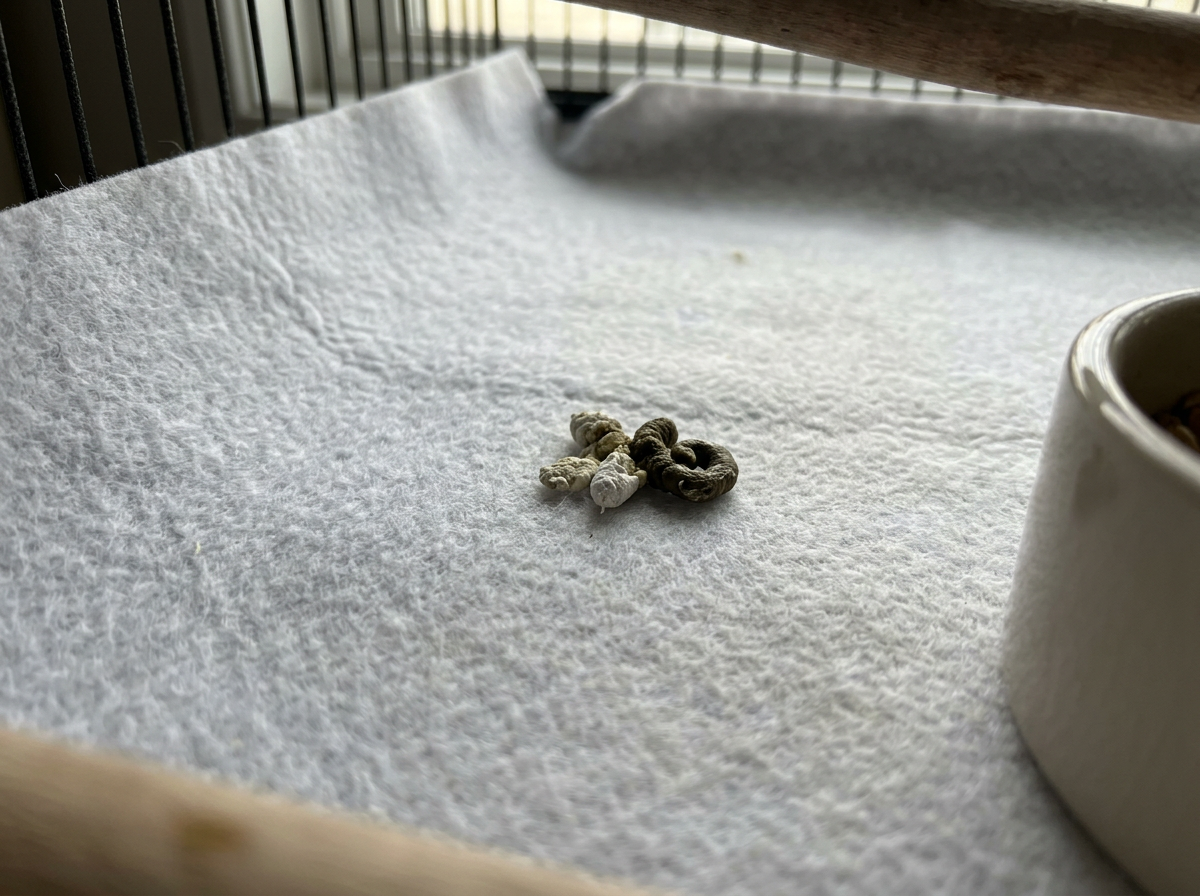
A bird's droppings have three parts: the solid fecal component, the white or chalky urates, and a small amount of clear liquid urine. Healthy urates should be white or off-white. If they look yellow, green, or rust-colored, that can indicate dehydration, disease, or injury. Watery droppings on their own can be caused by stress, which is common in a rescued bird, so one watery dropping isn't necessarily alarming. A pattern of watery or discolored droppings is worth flagging to your rehabilitator.
When you transport the bird, leave any droppings in the container rather than cleaning them out. Take a photo if you can. A rehabilitator or avian vet can use this information during their initial assessment, and it saves time when every minute matters for a fragile hatchling.
Handling limits and stress reduction
Once the bird is in its container, leave it alone. Don't keep opening the lid to check on it, don't let curious family members look at it repeatedly, and don't try to comfort it by holding it. Stress is a genuine medical concern for hatchlings. The dark, quiet, warm environment you've created is doing more good than any amount of gentle handling.
After any handling, wash your hands thoroughly. Wash any cloth, jacket, or item that came into contact with the bird. Wild birds can carry parasites and bacteria that can transfer to pets or humans, so basic hygiene is part of responsible temporary care.
When to call a wildlife rehab or avian vet, and how to transport safely
The honest answer is: call as soon as you have the bird contained and warm. You don't need to wait to see how it does. Hatchlings are high-risk, and the sooner you connect with a licensed wildlife rehabilitator, the better the bird's chances. You can find one through the National Wildlife Rehabilitators Association directory, your state's fish and wildlife agency, or by searching online for wildlife rehabilitation in your area.
Call immediately if you see any of these signs
- Open-mouth breathing or audible sounds while breathing
- Tail bobbing with each breath
- Drooping wings or inability to hold the head up
- Shivering or extreme lethargy
- Visible wounds, bleeding, or signs of a cat or dog attack
- You are certain the parents are dead or not returning
Before you transport
Call ahead to the rehabilitator or wildlife center before you drive over. They may have specific instructions, or they may refer you to a closer facility. Showing up without calling first can slow things down. Confirm the address, their hours, and whether they're currently accepting birds.
During transport
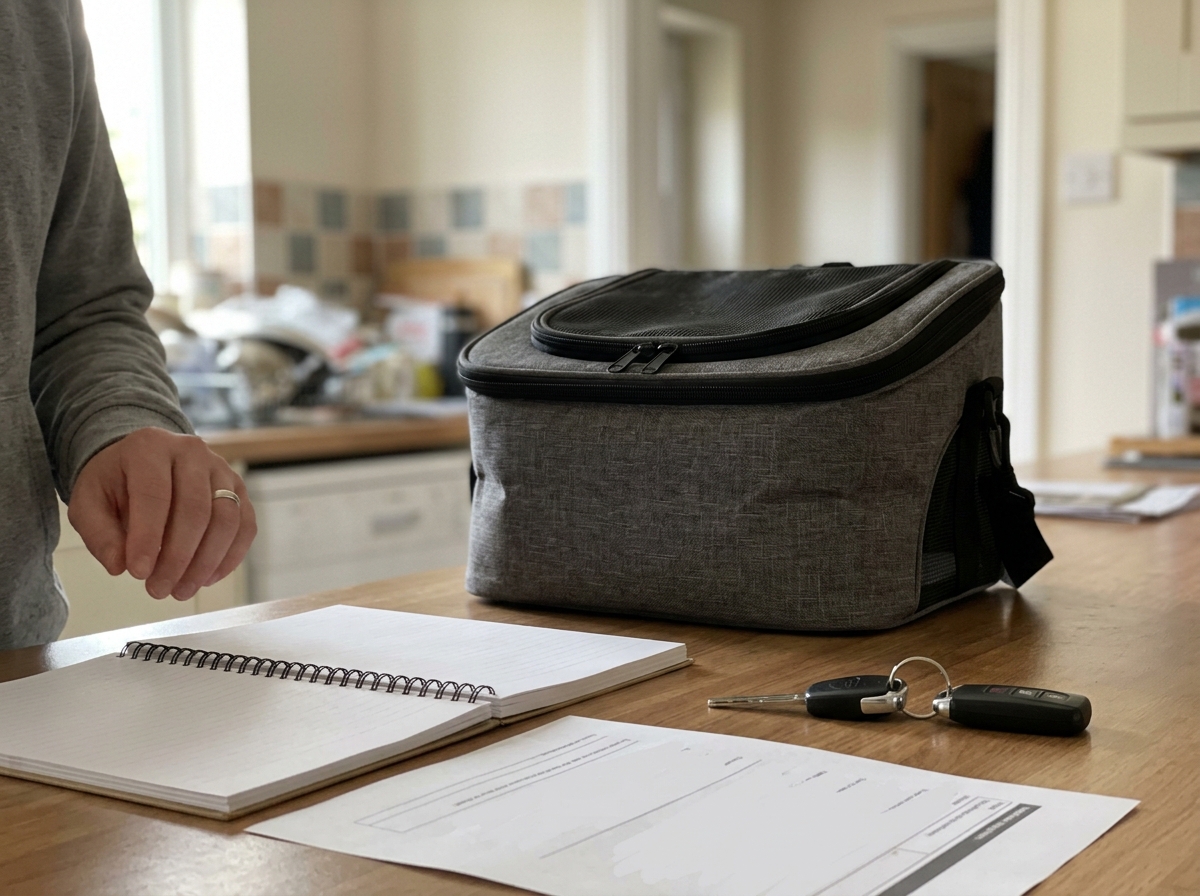
Keep the container closed and placed on the seat or floor of the car without tipping. If you're using a rice sock or heat pack for warmth, reheat it just before you leave and place it back in the container. These heat sources typically hold temperature long enough for a local transport. Keep the car at a comfortable temperature, and avoid air conditioning blowing directly on the container. The bird should travel in darkness and quiet. Don't open the container to check on it while driving.
| Situation | What to do | Urgency |
|---|---|---|
| Hatchling on the ground, nest visible and reachable | Return bird to nest; observe from distance | Low, but monitor |
| Hatchling on the ground, no nest found, parents seem present | Make temporary nest nearby, observe 30-60 min, then call rehab | Moderate |
| Hatchling with open-mouth breathing or audible wheezing | Contain, keep warm, call rehab or vet immediately | High |
| Hatchling after cat or dog contact | Contain, keep warm, call rehab immediately even if no visible wound | High |
| Hatchling with drooping wings, shivering, or lethargy | Contain, keep warm, call rehab immediately | High |
| Parents confirmed dead or not returning | Contain, keep warm, transport to rehab as soon as possible | High |
Finding a hatchling bird is stressful. It's small, it looks fragile, and the instinct to do something feels overwhelming. But the most useful thing you can do is keep it warm, keep it quiet, and get it to a professional quickly. Temporary care at home buys time. It doesn't replace the expertise, equipment, and species-specific knowledge that a licensed wildlife rehabilitator brings. You've done your part by getting it safe. Let them do theirs.
FAQ
What should I do if the hatchling is in a nest and I can’t reach it safely?
If the nest is out of reach or the area is unsafe, do not climb or disturb more than necessary. Instead, contain the chick where it is (warm, dark box nearby, minimal handling), then call a wildlife rehabilitator right away and describe the location and height so they can advise the safest recovery approach.
Can I put the hatchling back if I touched it, or if I handled the nest?
If the nest is intact and reachable, returning the chick is generally the best option, even if you touched it. However, if the nest looks crushed, the eggs are exposed, or the parents are clearly absent, focus on temporary warmth and containment and contact a rehabilitator, since “fixing” a damaged nest at home is risky.
Should I cover the bird with a towel completely, or keep part of it uncovered for airflow?
Cover the container and keep the environment dark, but avoid sealing the bird into a fully airtight space. Use a small box with ventilation holes, and ensure the towel or sheet is light enough that you are not pressing directly onto the hatchling’s body, which can increase overheating and stress.
How do I know what temperature is “safe” for the heating setup?
Use a heat source that creates a warm end and a cooler end in the container, then check safety by touch: you should be able to hold your hand near the warm end without discomfort. If the bird seems overheated (extreme panting, unusual lethargy, or worsening responsiveness), stop using the heat source and call for guidance immediately.
What if the hatchling is wet or I accidentally make it damp while handling it?
Drying matters because a wet hatchling loses heat quickly. Use gentle blotting only if absolutely necessary to stop it getting colder, then return it to the warm, humidified container setup and get professional help. Avoid forcing water off the bird with blowing or soaking.
Is it okay to place the hatchling on a different surface, like a sock or my own clothing?
It’s better to keep the nest substitute and lining simple and clean (plain paper towels or soft cloth without loose loops). Avoid anything that sheds lint, has strong detergent residue, or can wrap around toes. Your goal is secure footing plus warmth without snag hazards.
How long can I wait before calling a rehabilitator if the bird seems okay?
Call as soon as you have it contained and warmed, even if it looks calm. Hatchlings can decline quickly, and delayed contact can reduce survival chances. If you truly cannot reach someone immediately, contact a wildlife center for temporary care guidance rather than “waiting it out.”
Do hatchlings ever need water even if they won’t “drink like mammals”?
Do not offer water or drip water into the mouth under any circumstance. Hatchlings can aspirate liquid into the lungs, which can rapidly cause respiratory failure. If the bird may be dehydrated, your role is observation and getting professional care, not hydration at home.
Should I feed the hatchling if it’s hungry or if it opens its mouth?
No. Mouth opening or begging can happen from stress or natural behavior, but the wrong food can cause severe digestive problems. Species diets vary dramatically, and even correct food given too early can be dangerous if the bird is chilled or ill. Keep food away until a rehabilitator instructs you.
How do I transport the hatchling if I have to drive a long distance?
Plan for consistent warmth without tipping. Keep the container closed and in darkness, avoid direct airflow from air conditioning, and reheat a rice sock or heat pack shortly before departure. If the trip is long, call ahead to confirm how to maintain temperature and whether they want you to arrive sooner for assessment.
What droppings are considered normal, and what pattern is most concerning?
Normal droppings include dark fecal matter, white or off-white urates, and a small amount of clear urine. Yellow, green, or rust-colored urates are a red flag, and a repeated pattern of watery droppings or discoloration across multiple stools should be reported to the rehabilitator, since stress alone may not explain it.
Is there anything I should do to prevent spreading germs to my pets and family?
Yes. After any contact, wash hands thoroughly, and wash any fabric that touched the bird. Keep pets away from the container and discard or isolate used materials. If a pet was in direct contact with the bird or container, tell the rehabilitator because it can affect biosecurity guidance.
Next Article
How to Care for a Nestling Bird: Immediate Steps and Feeding
Step-by-step care for an orphaned nestling bird: warm housing, safe handling, feeding schedule, and rehab guidance.