If you've just found a newly hatched bird and you're not sure what to do, here's the short answer: keep it warm, keep it quiet, and get it to a licensed wildlife rehabilitator as fast as you can. Everything else you do in the next hour or two is about keeping that bird alive until a professional can take over. This guide walks you through exactly that, step by step.
How to Take Care of a Newly Hatched Bird Right Now
Marcus Holloway
23 Mar 2026
First, figure out if it actually needs your help
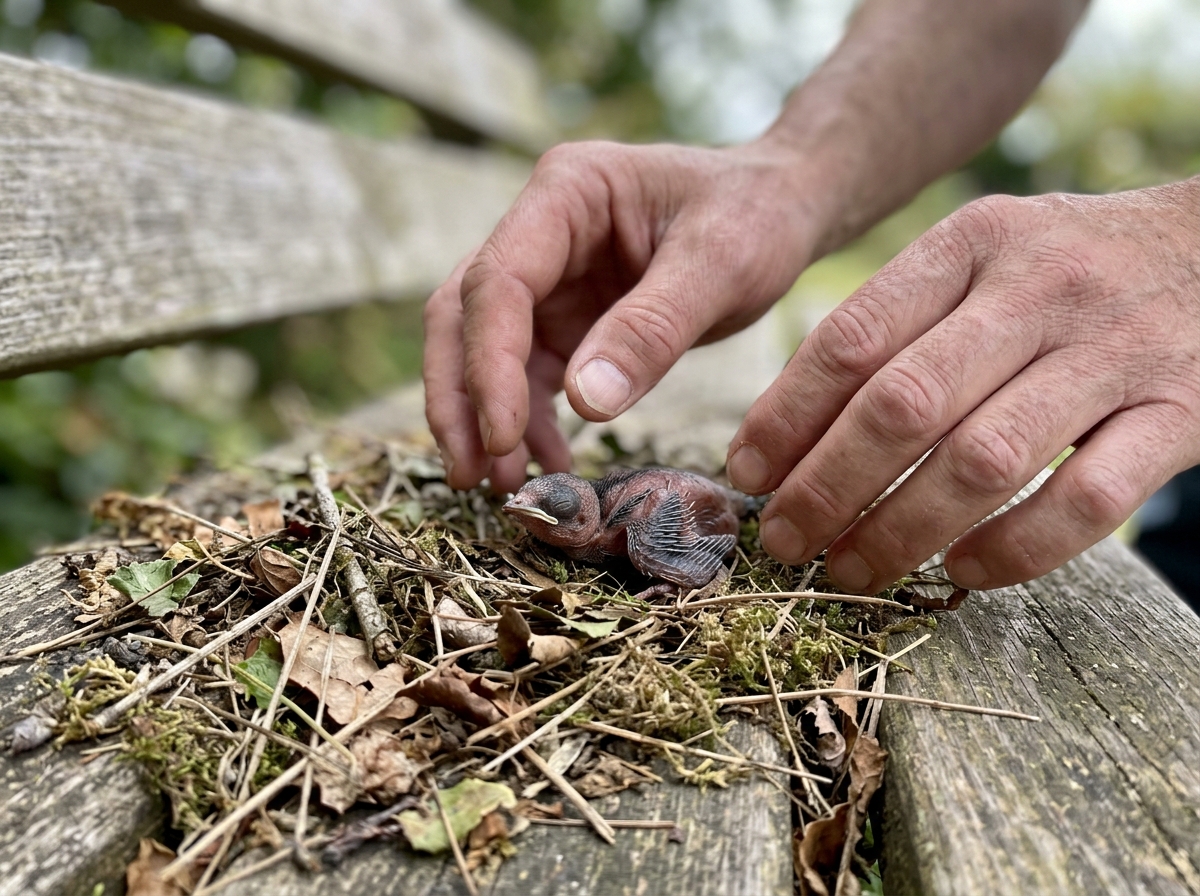
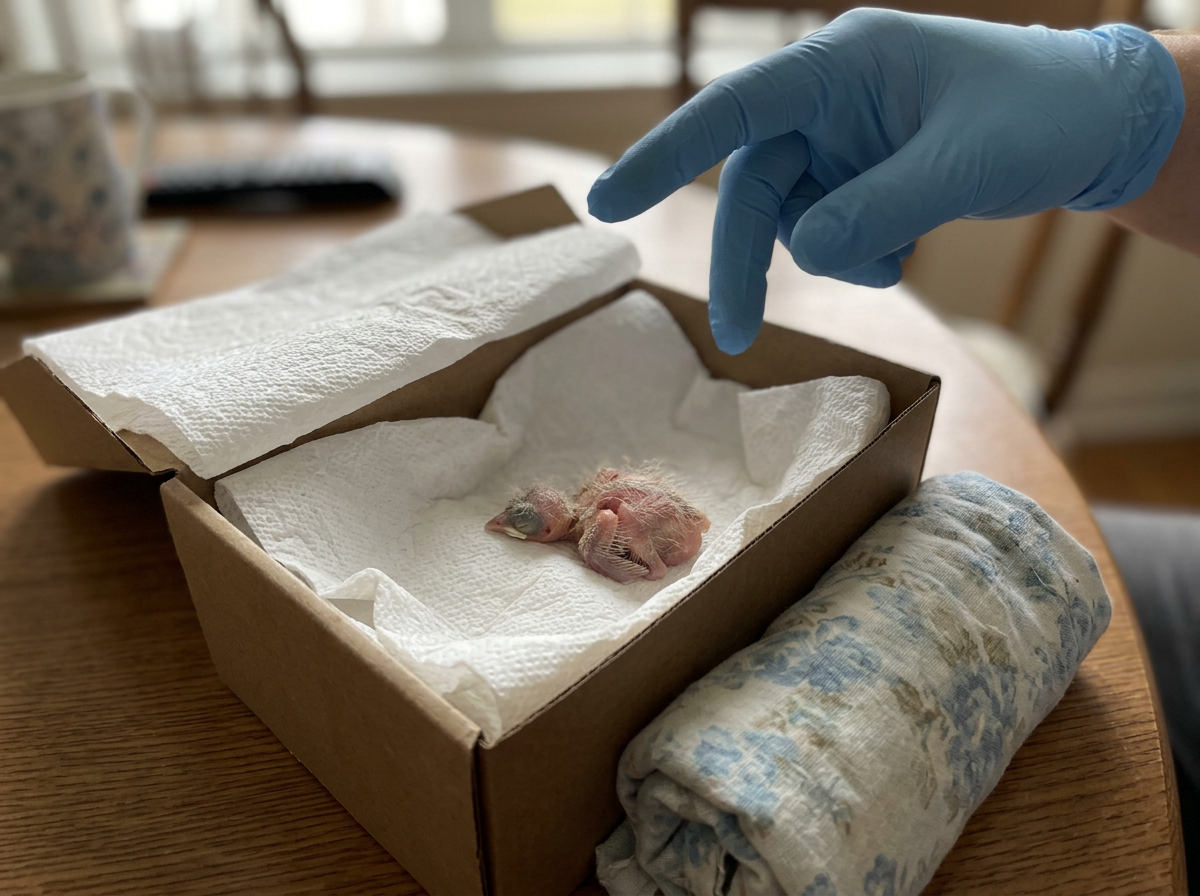
Not every baby bird you find on the ground is in danger. Before you pick it up, take a close look. A newly hatched chick, sometimes called a hatchling, is unmistakable: it's tiny, featherless or nearly so, its eyes are closed, and it has no ability to move around on its own. If that's what you're looking at, yes, it needs help right away. how to care for a nestling bird
A fledgling is a completely different story. Fledglings are older birds that have left the nest on purpose. They're usually fully feathered, have their eyes open and look alert, and hop around. Their parents are almost always nearby, still feeding them. Picking up a fledgling is usually the wrong move. If you're not sure whether what you found is a hatchling or a fledgling, our guides on how to care for a fledgling bird and how to care for a nestling bird can help you identify exactly what stage you're dealing with.
The U.S. Fish & Wildlife Service puts it simply: a baby bird likely does not need your help unless it is The U.S. Fish & Wildlife Service puts it simply: a baby bird likely does not need your help unless it is [featherless](/newborn-bird-nursing/how-to-take-care-of-a-newborn-bird-without-feathers) or has its eyes closed. Those two signs indicate a very young bird that cannot survive without intervention. or has its eyes closed. Those two signs indicate a very young bird that cannot survive without intervention. If the bird you found matches that description, keep reading.
Also check the immediate area for a nest. If you can see it and safely reach it, gently place the chick back in it. The myth that a parent will reject a chick you've touched is just that, a myth. Birds have a very limited sense of smell and will not abandon a chick simply because a human handled it.
Set up a safe, warm emergency nest right now
Warmth is the single most important thing you can provide a newly hatched chick. These birds have no ability to regulate their own body temperature. A cold chick will deteriorate fast, so getting the temperature right is your first priority.
Choosing the right container
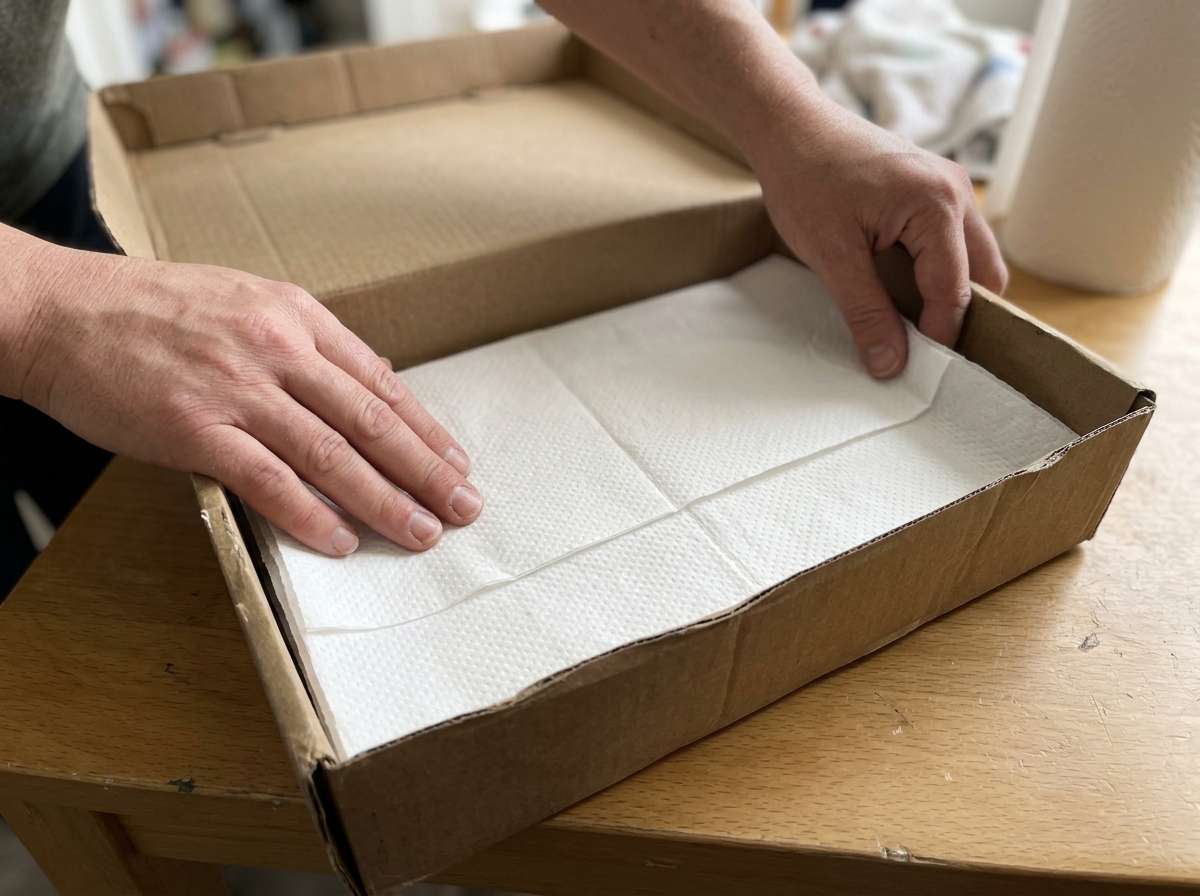
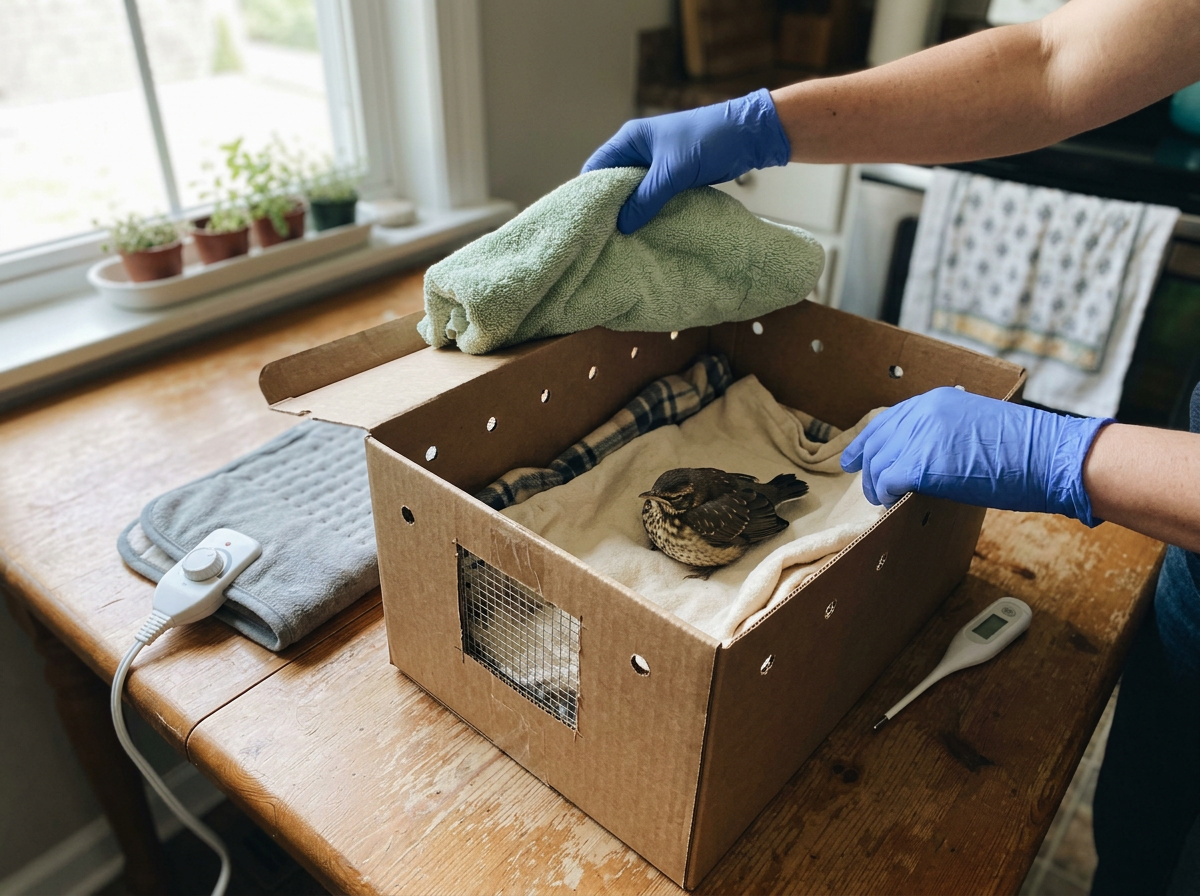
A small cardboard box works well. It's breathable, easy to work with, and easy to replace. Avoid glass tanks or sealed plastic containers because they trap moisture and limit airflow. Poke several small holes in the sides of the box for ventilation, but keep the box mostly closed to hold in warmth. A shoebox with a lid is a classic choice that works perfectly.
Lining the nest
Line the bottom of the box with a soft, non-fraying material. Paper towels are ideal because they're absorbent and won't catch tiny toes the way loose fibers or terrycloth towels can. Avoid anything with large loops or loose threads. You can shape the paper towels into a shallow cup to mimic a nest and keep the chick from rolling around.
Getting the temperature right
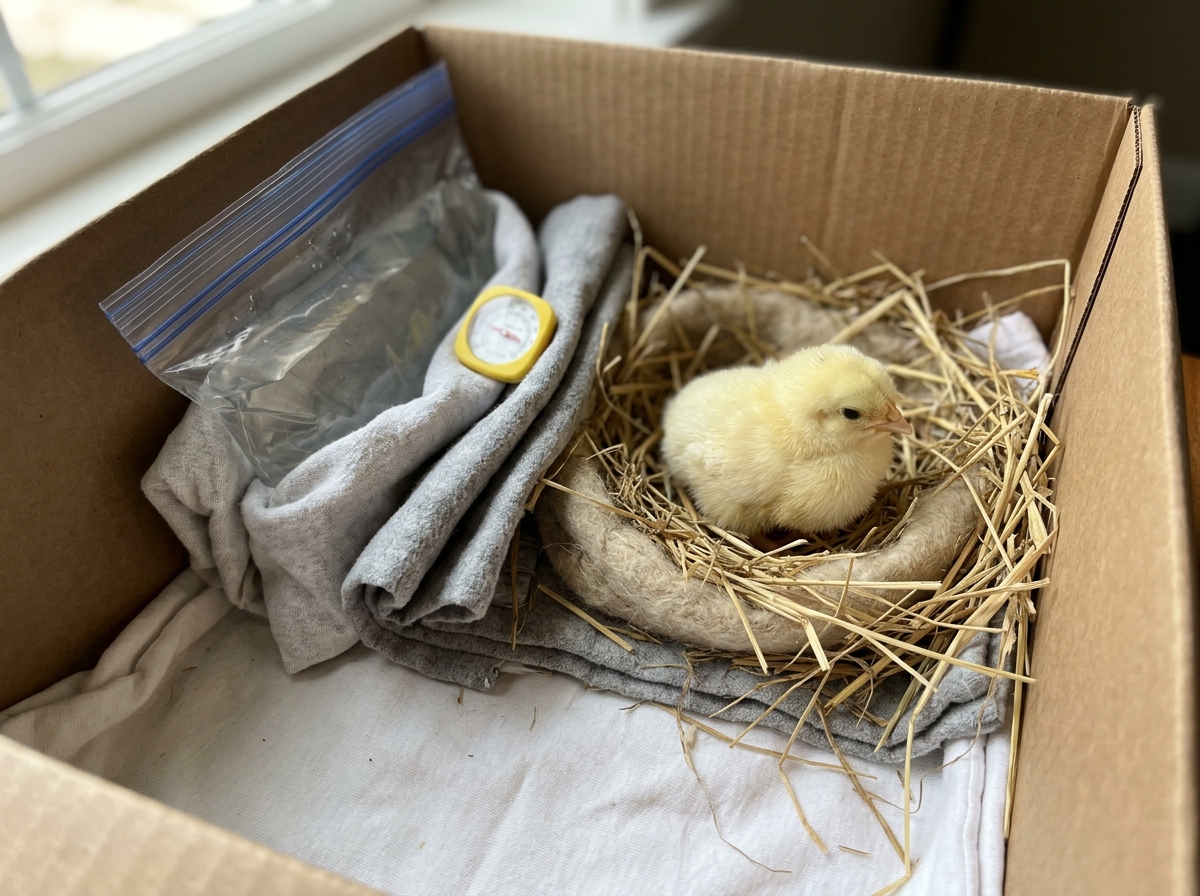
Tiny, completely featherless chicks need an environment around 100°F (37.8°C). Larger chicks with some feathering do well at 90 to 95°F (32.2 to 35°C). You don't need a thermometer to get started, but it helps. The practical way to create warmth without burning the bird is to place a heating pad set on LOW under only half the box. This gives the chick a warm side and a cooler side, so it can move away from the heat if it gets too hot. Never place the heating pad directly on the floor of the container with the bird sitting on it, and never use a high heat setting.
If you don't have a heating pad, a zip-lock bag filled with warm (not hot) water wrapped in a thin cloth works as a temporary substitute. A desk lamp positioned nearby can also add gentle warmth, but monitor closely to avoid overheating. Humidity around 50 to 70 percent helps prevent dehydration, so placing a small damp (not wet) paper towel in a corner of the box, away from the chick, can help if you're in a dry environment.
Location and safety
Put the box somewhere warm, dark, and quiet. A bathroom counter or a closet shelf away from foot traffic works. Keep it away from air conditioning vents, open windows, and drafts. If you have pets, make sure the box is completely inaccessible to them. A cat or dog can stress a bird to death even without direct contact, just by being in the same room.
How to handle the bird (and when not to)
The most important handling rule is: handle as little as possible. Every time you pick up the bird, you stress it. Stress burns energy the bird doesn't have to spare. Once you've placed it in the warm box, leave it alone.
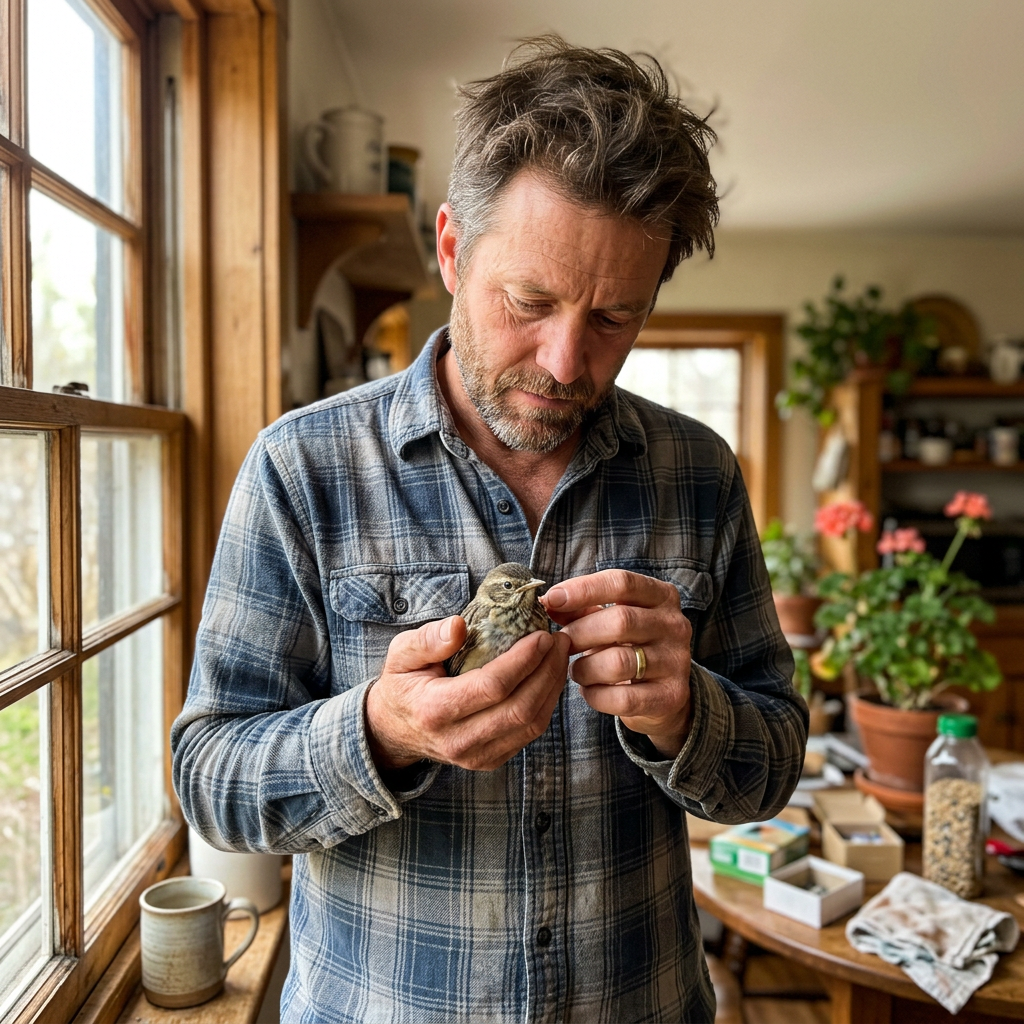
When you do need to handle it, wash your hands first. Use a small piece of cloth or tissue to gently cradle the chick in your palm. Support its entire body and don't squeeze. Newly hatched chicks are fragile and their bones and organs are not well protected. Keep your movements slow and deliberate.
- Do wash your hands before and after handling.
- Do support the whole body when you pick it up.
- Do minimize the number of people handling the bird.
- Don't let children handle it unsupervised.
- Don't talk loudly or make sudden movements near the box.
- Don't try to 'comfort' the bird by holding it against your body for extended periods. Your heartbeat and body warmth feel wrong to a wild bird and add stress.
- Don't show the bird to curious pets, even briefly.
Feeding basics, and when not to feed at all
This is where most well-meaning people accidentally cause serious harm, so read this section carefully.
The safest rule is: do not feed or give water to a newly hatched bird unless a licensed wildlife rehabilitator has specifically told you what to give and how to give it. Multiple wildlife organizations are explicit about this. The Bi-State Wildlife Hotline states it bluntly: until you have professional instructions, do not feed or water the bird.
The reason is anatomy. A baby bird's airway and esophagus are positioned in a way that makes it very easy to accidentally get liquid into the lungs instead of the stomach. This is called aspiration, and it can kill a chick within minutes or hours. The Toronto Wildlife Centre specifically warns that trying to force-feed food or water can put liquid directly into the lungs. Even experienced people make this mistake.
You should also know that baby birds do not drink water the way adult birds or mammals do. Trying to drip water into a chick's mouth is almost always harmful, not helpful.
If the chick is gaping (opening its beak wide and begging), that's a sign it's alert and responsive, which is good. But it still doesn't mean you should feed it without guidance. A chick that is too cold, too weak, dehydrated, or injured will often stop gaping, which is a warning sign, not an invitation to try harder to get food in.
If you've already been in contact with a wildlife rehabilitator and they've told you to offer something specific, follow their instructions exactly. Common interim foods rehabilitators sometimes suggest include small amounts of moistened dog or cat food, but species vary enormously in what they can eat, and the wrong food causes as much harm as the wrong feeding technique. When in doubt, wait.
Hydration, cleanliness, and basic supportive care
Hydration is important, but again, giving water directly is dangerous. The best way to manage hydration for a newly hatched chick is to maintain appropriate humidity in the enclosure, around 50 to 70 percent, which slows dehydration without putting the bird at aspiration risk. A damp paper towel placed at the side of the box (not under the chick) can help raise humidity slightly.
Keep the nest lining clean. If the chick defecates, gently remove the soiled paper towel and replace it with a fresh piece. Baby birds eliminate frequently, and a dirty nest creates infection risk. You don't need to clean the bird itself unless it has something foreign on its feathers or skin, in which case a slightly damp cotton swab can be used carefully to remove obvious debris. Don't bathe the bird or get it wet.
Keep noise low. Keep lights dim. Keep interference minimal. The bird's only job right now is to stay warm and conserve energy until it gets to someone qualified to help it.
Watch for these warning signs
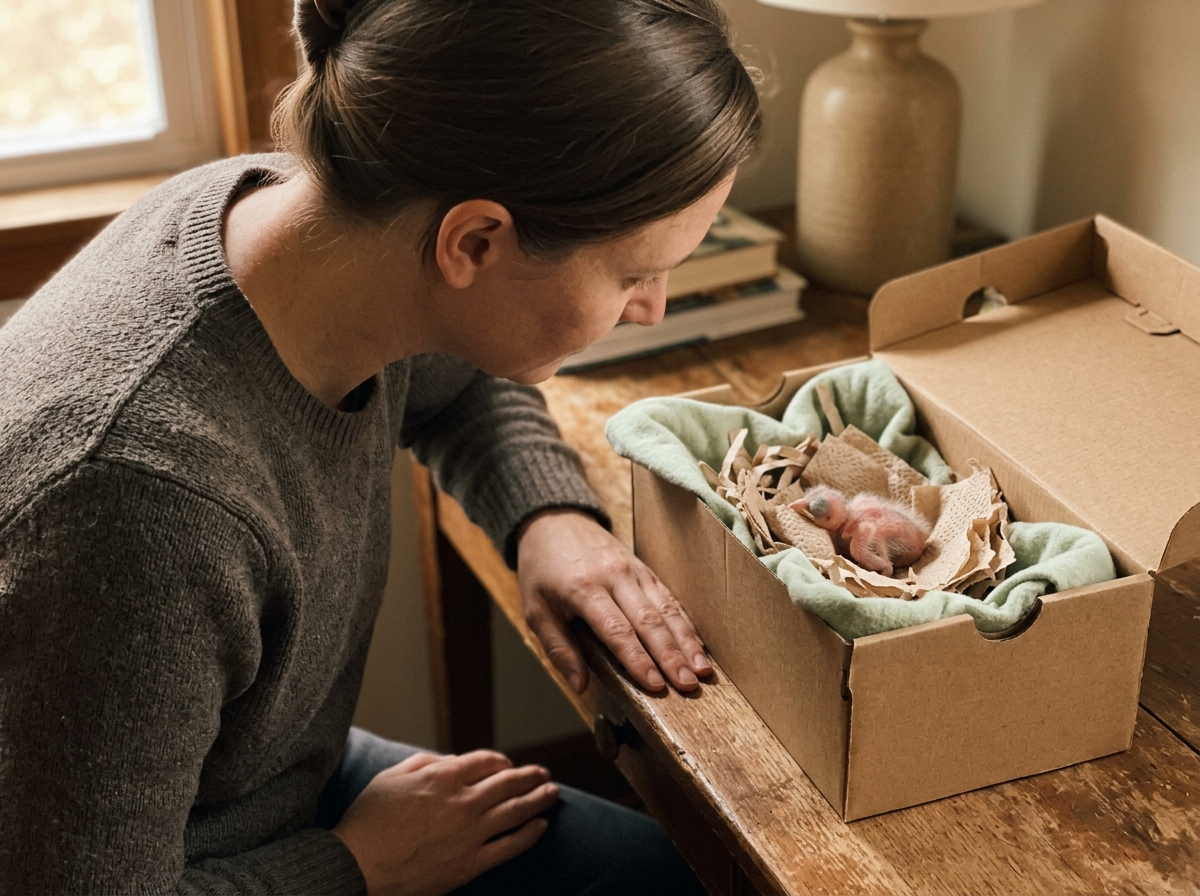
Check on the bird gently every 30 to 60 minutes. You're not trying to interact with it, just observe. Here are the signs that something is going wrong and you need to move faster to get professional help.
| Warning Sign | What It May Indicate | What to Do |
|---|---|---|
| Lying flat and unresponsive | Hypothermia, shock, or critical condition | Prioritize warmth immediately; contact a rehabilitator urgently |
| Labored or open-mouth breathing | Respiratory distress, infection, or aspiration | Get to a vet or rehabilitator immediately |
| Puffed up and shivering | Too cold; hypothermia | Check heat source; increase warmth carefully |
| Panting or holding wings away from body | Overheating | Remove bird from direct heat source; cool the environment slightly |
| No droppings after 1 hour | Dehydration, GI distress, or stress | Contact a rehabilitator for guidance |
| Green or dry droppings | Dehydration or illness | Contact a rehabilitator promptly |
| Visible wounds, swelling, or blood | Injury (cat attack, fall) | Treat as urgent; seek veterinary care right away |
| Crop (throat pouch) not emptying between feedings (if you've been instructed to feed) | Crop stasis, usually from being too cold | Stop feeding; warm the bird; call your rehabilitator |
A healthy, warming chick will be relatively still but not completely limp, may gape occasionally, and will feel warm (not cold) to the touch after 20 to 30 minutes in the warm box. If the bird feels cold even after you've set up the heat source, prioritize getting more warmth to it before anything else.
How to find a wildlife rehabilitator and what happens next
Getting the bird to a licensed professional is the goal, and you should start making calls while the bird is warming up in its box. Don't wait until it looks worse to start looking for help.
How to find help fast
- Animal Help Now (ahnow.org) is a U.S.-wide service specifically designed to connect you with nearby wildlife rehabilitators for injured or orphaned wildlife emergencies. It's one of the fastest ways to find someone local.
- Search your state's fish and wildlife agency website. Most states maintain a directory of licensed wildlife rehabilitators. In many states, caring for migratory birds requires a Federal Migratory Bird Rehabilitation permit, so the rehabilitator needs to be properly licensed.
- Call a local veterinary clinic. Not all vets treat wildlife, but many can refer you to someone who does, or provide emergency stabilization.
- Search for 'wildlife rehabilitator near me' or 'bird rescue [your city]' to find local organizations.
- If it's outside business hours, many wildlife hotlines have after-hours contacts. Try the National Wildlife Rehabilitators Association (NWRA) or your state's wildlife agency for a 24-hour contact.
What to tell them when you call
When you reach a rehabilitator or vet, be ready to describe the bird clearly. Tell them where you found it (exact location and circumstances), what it looks like (featherless, eyes open or closed, approximate size), whether it has any visible injuries, what you've done so far, and how long you've had it. This information helps them prioritize and give you accurate interim guidance while you arrange transport.
Transporting the bird
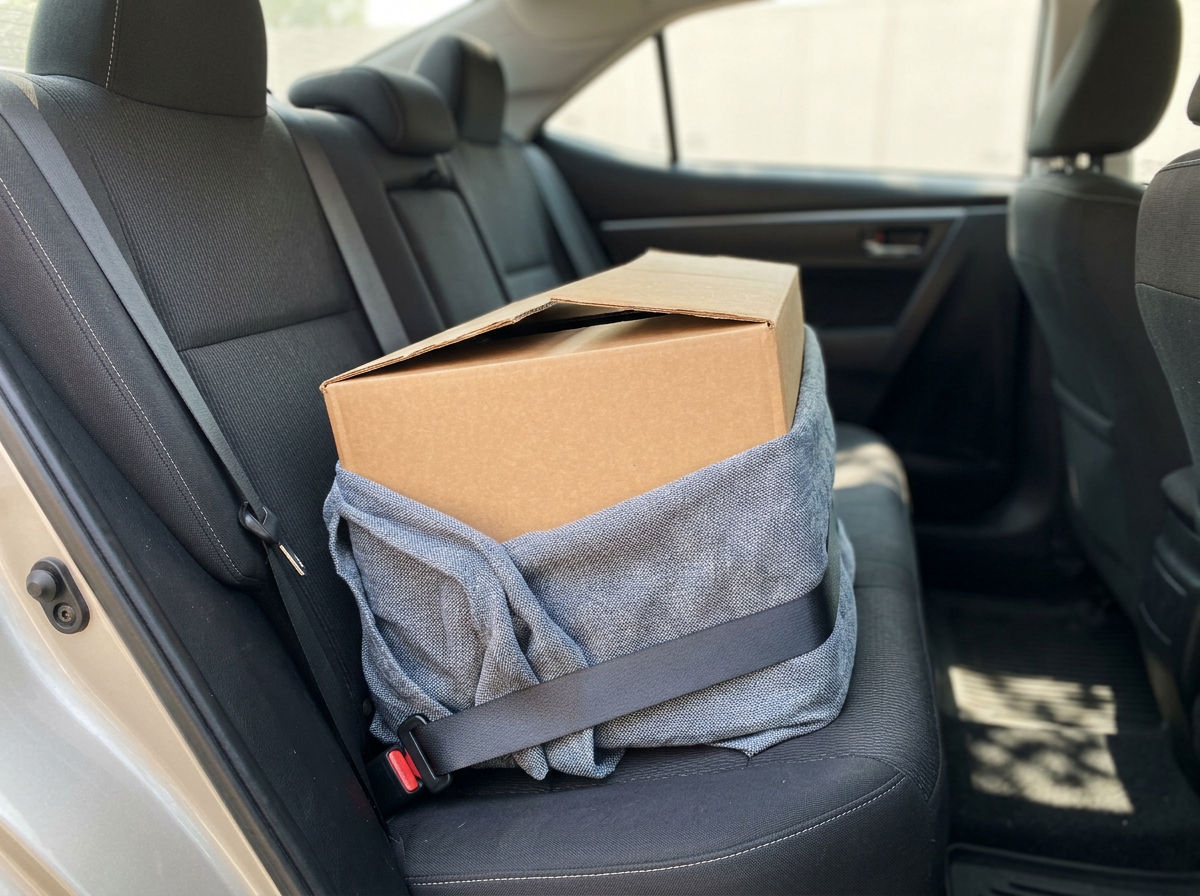
Transport the bird in the same box you've been keeping it in. Don't transfer it to a new container right before a car trip unless necessary. Keep the car warm, drive smoothly, and keep the radio off. Don't open the box repeatedly to check on the bird during transport. The less disruption, the better.
They have the training, permits, species-specific knowledge, and equipment to give it the best chance of survival. The most helpful thing you can do from the moment you find a newly hatched bird is stabilize it, minimize handling, avoid feeding it incorrectly, and move quickly to get it into professional hands, exactly the approach covered in our guide on how to take care of a bird for beginners. That's genuinely the best care you can provide.
FAQ
What should I do if I’m unsure whether the bird is a hatchling or a fledgling?
Do a quick, non-handling check from a short distance. If it is featherless or nearly featherless and has closed eyes, treat it as a hatchling needing urgent warmth and minimal handling. If it is fully feathered, alert, and hopping or perching, assume fledgling and avoid picking it up, since parents are likely nearby.
If I can put the chick back in a visible nest, is that always better than keeping it warm in a box?
If the nest is within safe reach and you can return the chick without prolonged searching or risking yourself, putting it back is often best. If you cannot locate the nest, can’t reach it safely, or it is clearly displaced, switch to the warm, quiet box plan immediately and contact a licensed rehabilitator.
How do I know the chick is warm enough without stressing it?
After you set up heat, observe for signs like reduced cold behavior and relative stillness. The article suggests feeling warmth after 20 to 30 minutes, but you can also confirm the heat setup uses a warm side and a cooler side so the chick can move away if it is too warm.
Can I use a heat lamp instead of a heating pad?
Avoid heat lamp setups unless a rehabilitator specifically advises them. Lamps can create uneven heating and raise overheating risk, especially if the chick moves closer to the light or if the container materials insulate too well. A LOW heating pad under half the box is safer for temperature control.
What if the box gets too humid or condensation forms?
Aim for moderate humidity, around 50 to 70 percent, without saturating materials. If you see heavy condensation or wet bedding, remove the damp paper towel and replace it with fresh, dry lining so the chick stays warm and the environment stays breathable.
Should I cover the box completely to trap heat?
Keep it mostly closed, but not airtight. The ventilation holes matter for airflow, and too little airflow can worsen moisture and breathing conditions. A mostly closed shoebox with small side holes and dim, quiet conditions is the practical balance.
Is it safe to give the chick “just a drop” of water if it seems thirsty?
No, not unless a licensed rehabilitator told you exactly what to give and how to administer it. Tiny amounts given by dripping can still cause aspiration because the airway and esophagus positioning makes misdirected liquid easy.
What if the chick is gaping and seems like it wants food?
Gaping can indicate responsiveness, but it does not mean feeding is safe or appropriate. A too-cold or weak chick may gape and then stop, which can be a warning. Continue warming and keep the feeding decision for the rehabilitator’s instructions.
Can I feed it with something “easy,” like bread or milk, to keep it alive?
Do not. Foods and feeding methods that seem harmless to humans can cause severe injury, especially aspiration or digestive problems. If you have not received species-appropriate guidance, the safest interim step is warmth, humidity, cleanliness of the lining, and quick professional contact.
What should I do if the chick has a visible injury or stuck debris on its skin?
Do not bathe it or get it wet. If there is obvious foreign material, you can remove debris carefully with a slightly damp cotton swab on the visible area, but do not scrub or soak. If it appears injured, treat it as urgent and prioritize transport to a rehabilitator.
How often should I check on the chick once it’s in the box?
Check gently every 30 to 60 minutes as observation only, not interaction. If it feels cold despite your heat setup, act immediately by improving warmth rather than spending time changing food, water, or handling.
Should I keep the chick warm during transport, and how should I handle the car trip?
Yes. Transport it in the same box, keep the car warm, drive smoothly, and avoid repeated opening of the box. Keep the radio off and minimize movement so the chick remains stable and does not get chilled or stressed.
Do I need to remove all soiled bedding right away?
Yes, replace soiled paper towel lining promptly to reduce infection risk. Do not clean the chick aggressively, and avoid getting water or bath-like moisture on its body.
What information should I have ready when I call a wildlife rehabilitator?
Be ready with your exact location, how you found the bird and what the surroundings were like, a clear description (featherless or feathered, eyes open or closed, approximate size), whether you see injuries, what you have already done (especially warmth setup), and how long you have had it.
If I can’t find a licensed rehabilitator quickly, what is my safest priority?
Stabilize first. Keep the chick warm and in a quiet, dim, mostly closed ventilated box, maintain appropriate humidity, do not feed or water without instructions, and continue calling. The goal is to prevent cold, dehydration, and aspiration risk until professional care is available.
Next Article
How to Take Care of a Bird for Beginners: What to Do Now
Step-by-step first aid for injured or orphaned birds: safety, housing, warmth, feeding basics, and when to call a pro