If you've found a little bird and you're not sure what to do, here's the short answer: don't panic, don't feed it, keep it warm and quiet, and call a licensed wildlife rehabilitator as fast as you can. That one sentence covers about 90% of what you need to do right now. The rest of this guide fills in the details so you can act confidently and give that bird the best possible chance.
How to Take Care of a Little Bird: First Aid Steps
Marcus Holloway
23 Mar 2026
Step 1: Figure out what you're actually dealing with
Before you touch the bird or do anything else, take 30 seconds to assess the situation. The right response depends entirely on whether the bird is injured, sick, orphaned, or simply a young bird doing what young birds normally do outside the nest.
Is it actually a baby?
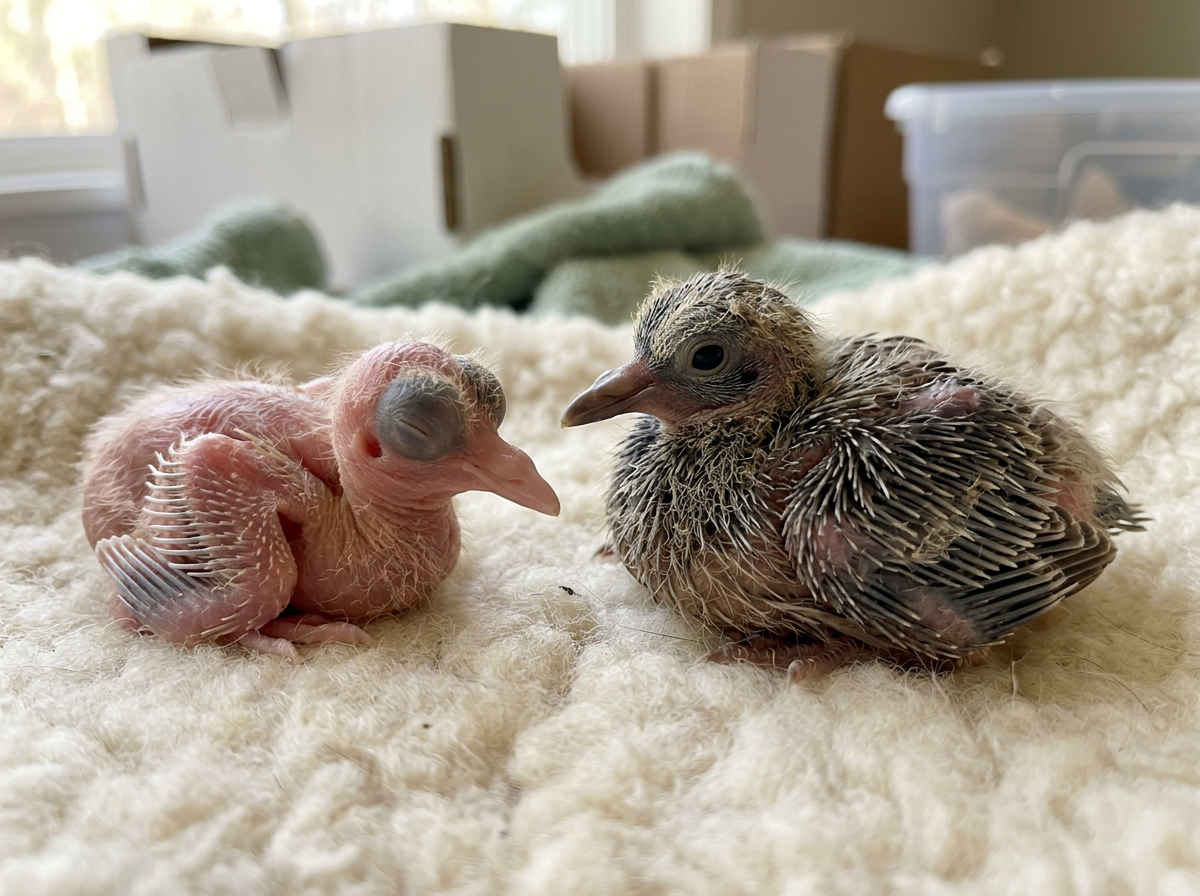
The first thing to figure out is the bird's developmental stage. This matters more than most people realize, because it changes everything about whether the bird needs your help at all.
- Hatchling or nestling (no feathers, or only sparse pin feathers, eyes closed): This bird has definitely fallen or been displaced from its nest. It cannot survive on its own and needs help.
- Fledgling (mostly feathered, hopping around, may have a short tail): This is a normal stage of development. Fledglings leave the nest on purpose and their parents are usually still feeding them nearby. A fledgling on the ground is not automatically an orphan.
- Adult or juvenile bird (fully feathered, clearly not a baby): If it can't fly or seems disoriented, it is likely injured or sick and needs professional attention.
Is it injured, sick, or orphaned?
A fledgling hopping on the ground with bright eyes and no visible wounds is probably fine. Don't rush to rescue it. Watch from a distance for 30 to 60 minutes to see if a parent comes back. However, any bird, regardless of age, needs immediate help if you see obvious signs of injury or illness.
- Visible bleeding, a dangling wing, or a leg that won't bear weight
- Eyes closed, head tilted, or the bird is lying on its side
- Labored or open-mouthed breathing (when the bird is not overheated)
- A cat or dog brought it to you, even if you see no wound (cat bites inject bacteria and are almost always fatal without antibiotics)
- The bird is cold, limp, or unresponsive to your approach
- A nestling (no feathers) that is on the ground and the nest cannot be found or reached
If the bird hits any of these criteria, it needs professional care, not just temporary comfort at home. Your job is stabilization and getting it to a rehabilitator, not long-term treatment.
How to handle the bird without making things worse
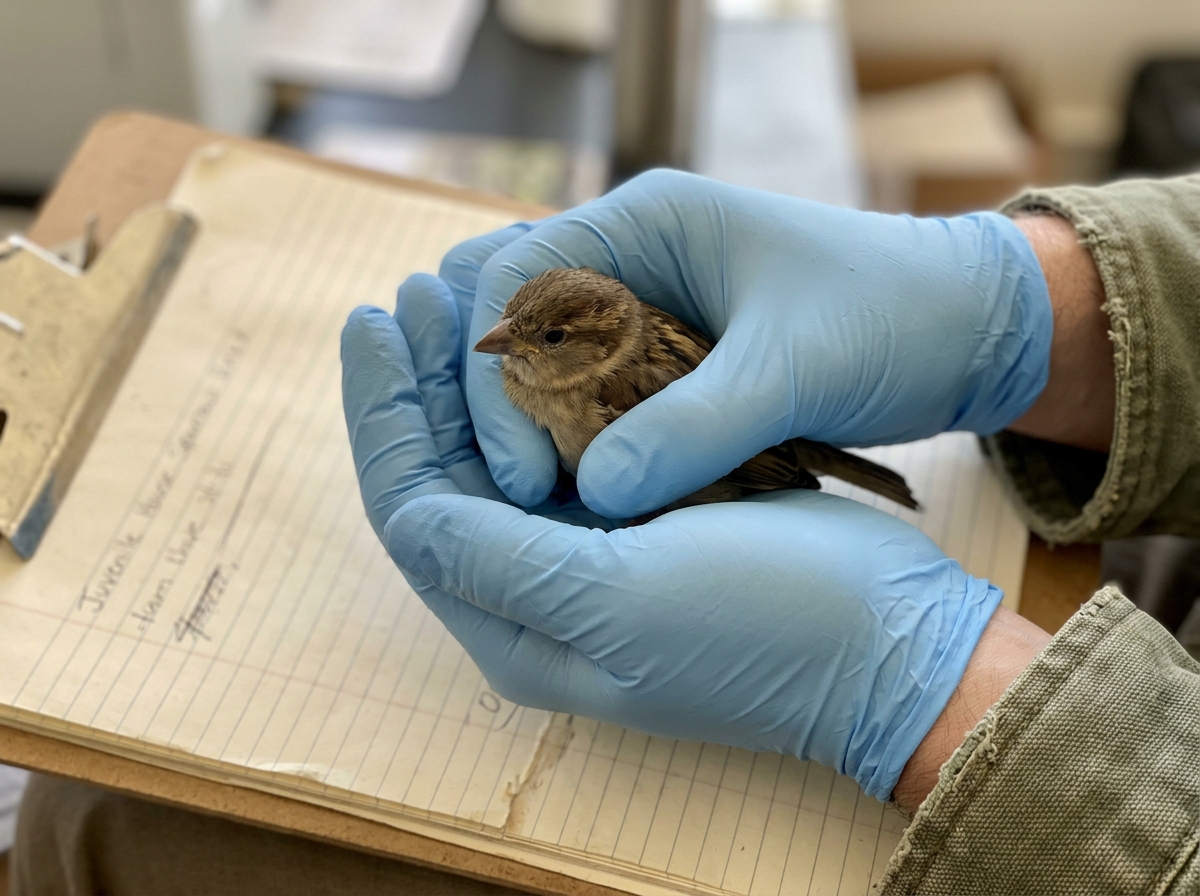
Birds go into shock easily. Stress alone can kill a small bird that is already compromised. So the goal when handling is to be calm, quick, and minimal. Pick the bird up firmly but gently with both hands, cupping it so its wings are against its body and it can't flap or fall. If you have thin gloves, use them, both for your protection and to reduce the scent transfer that can stress the bird.
Once the bird is contained, stop handling it. Don't keep picking it up to check on it, don't let children hold it, and don't try to examine it beyond the initial triage. Every time you handle the bird, you are adding stress. Place it in a container and leave it alone until you can get it to a professional.
One myth worth busting: touching a baby bird will not cause its parents to abandon it. Birds have a very limited sense of smell. If you find a nestling and can locate and safely reach the nest, put it back. Returning the bird to its nest is always the best outcome when it's possible.
Setting up a safe temporary space
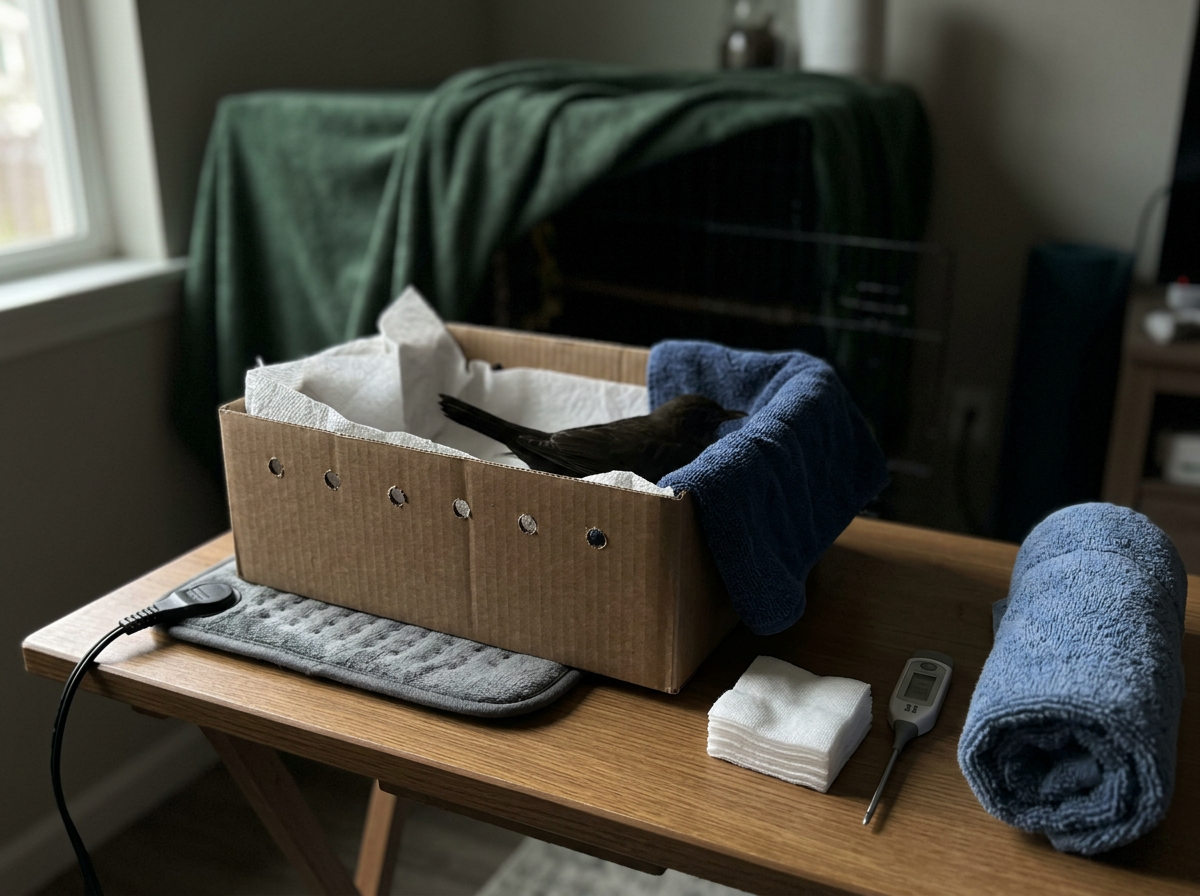
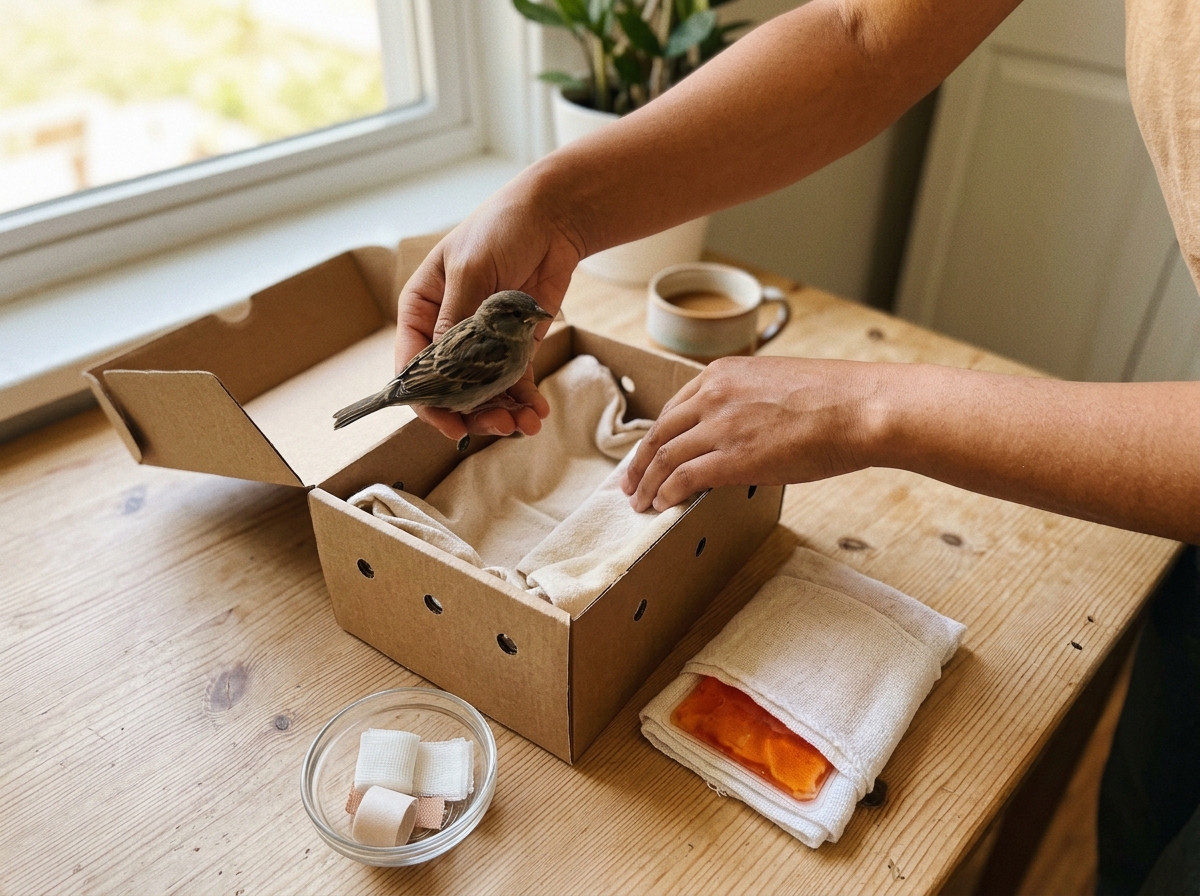
You need a container that is secure, ventilated, and easy to close. A cardboard box with small air holes punched in the sides works well. A plastic bin with a lid that has ventilation gaps is also fine. Don't use a wire cage, because a small or injured bird will damage itself trying to escape through the gaps.
Line the bottom and add some warmth
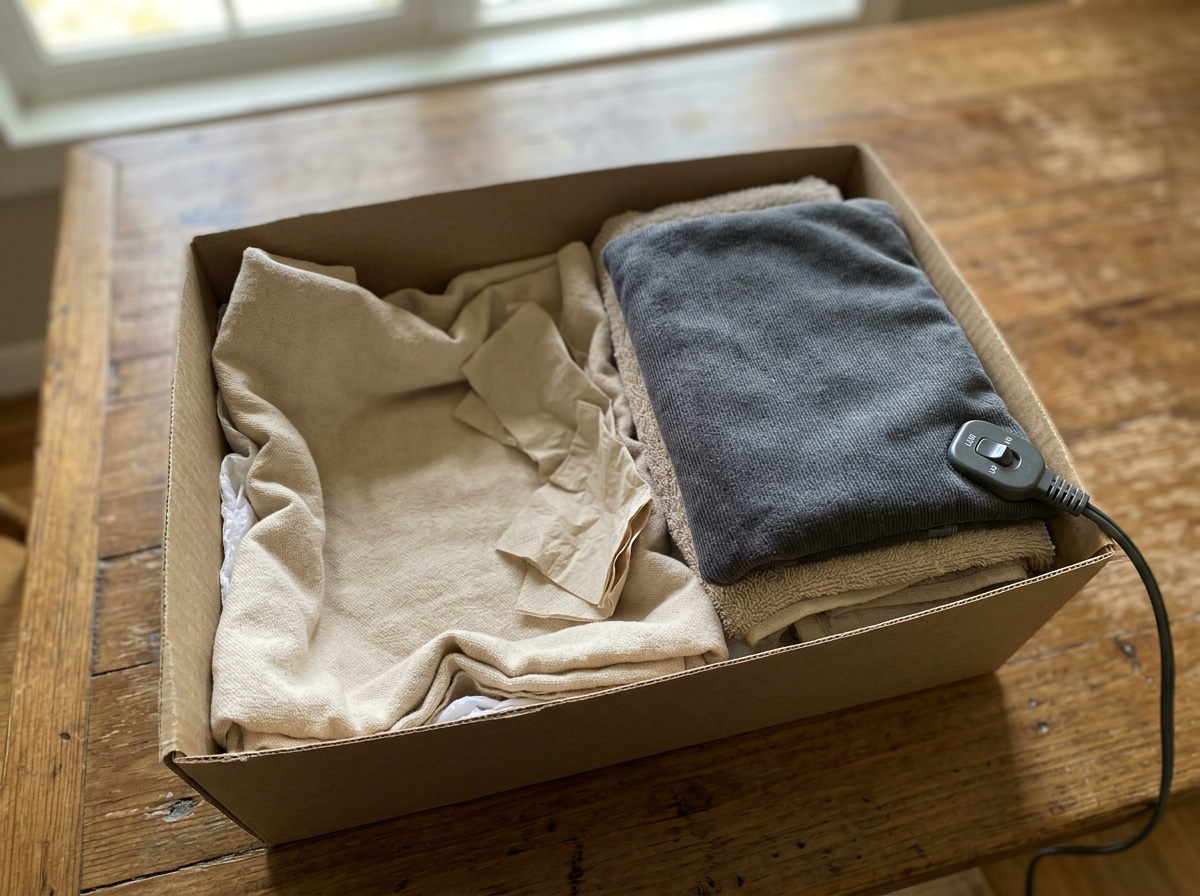
Line the bottom of the box with a soft, unfrayed cloth or crumpled tissue. Avoid anything with loose threads or loops that can catch tiny toes. If the bird is a nestling, you can create a makeshift nest using a small container like a margarine tub lined with tissues and placed inside the box.
Warmth is critical, especially for young or injured birds. A bird that is cold to the touch needs gentle external heat. Place a hand warmer or a sock filled with dry rice (microwaved for about 60 seconds) wrapped in a thin towel next to, not under or on top of, the bird. The bird needs to be able to move away from the heat source if it gets too warm. A heating pad set to low placed under half the box works the same way.
Watch for overheating. Signs include open-mouthed panting, lying flat with the neck stretched out, or wings held away from the body. If you see these signs, remove the heat source immediately and let the box cool down slightly.
Dark, quiet, and away from people
Once the bird is in the box, put the box somewhere dark, quiet, and away from household activity. A bathroom, laundry room, or quiet corner works. Keep pets and children away. Don't play music near it or talk loudly. The goal is to reduce stimulation to almost zero while you arrange transport to a rehabilitator.
Feeding and hydration: what to give, what to skip
This is where most well-meaning people accidentally cause harm. The rule from virtually every wildlife rehabilitation authority is the same: do not give food or water to an injured or orphaned bird unless a licensed wildlife rehabilitator has specifically told you to and told you how. The USFWS, Audubon, Wild Bird Fund, Washington DFW, and dozens of state and local wildlife agencies all say the same thing.
The reason is not arbitrary. Baby birds have a reflex to gape (open their mouths) and can easily inhale water or liquid food into their lungs, which causes aspiration pneumonia and is often fatal. Even adult injured birds in shock have compromised swallowing reflexes. Feeding or watering a bird that isn't ready for it is one of the most common causes of preventable death in rescued birds.
Common things people try to give that can seriously harm a small bird include bread, cow's milk, sugary drinks, worms forced into the beak without guidance, and any liquid dripped into the mouth. None of these are appropriate, and several are actively dangerous.
If a wildlife rehabilitator has told you that you'll be caring for the bird for an extended period before you can get it to them, and only then, they will give you species-specific instructions. Until that conversation happens, nothing goes in the bird's mouth.
Basic first aid: what helps and what hurts
Most small-bird first aid is about not making things worse rather than actively treating injuries. There are a few things you can do and a longer list of things to avoid.
If the bird is bleeding
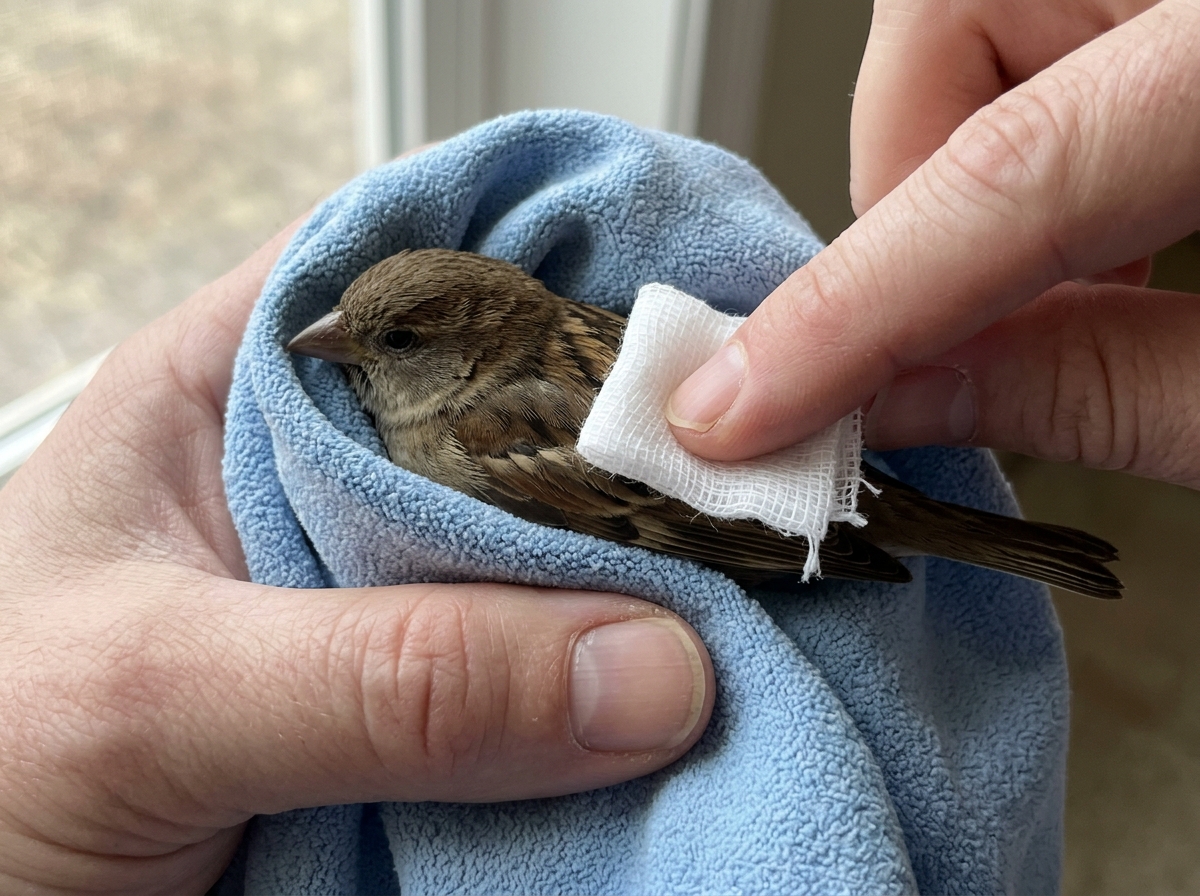
Apply gentle, direct pressure to the wound using a clean cloth or gauze. Hold it steady for a few minutes. Do not use hydrogen peroxide on an open wound, as it damages tissue and slows healing. Avoid strong antiseptics like undiluted betadine directly in a wound for the same reason. If bleeding is severe and won't stop, that bird needs a vet immediately, not home first aid.
If the bird is in shock
A bird in shock will look limp, may breathe rapidly or barely at all, and won't respond normally to your presence. Keep it warm, keep it still, keep it dark and quiet. Do not force it to move, do not give it anything to eat or drink, and do not try to stimulate it by handling it repeatedly. Warmth and darkness are genuinely therapeutic for a bird in shock.
If the bird seems dehydrated
Signs of dehydration include sunken eyes, skin that doesn't spring back when gently pinched, and lethargy. Even knowing this, don't try to give fluids yourself. Attempting to drip water into a small bird's beak is extremely high-risk. This is a situation where the only right answer is getting the bird to professional care quickly.
The short do's and don'ts list
| Do this | Don't do this |
|---|---|
| Keep the bird warm, dark, and quiet | Feed or water the bird without rehab guidance |
| Apply gentle pressure to bleeding wounds | Use hydrogen peroxide or undiluted antiseptic on wounds |
| Use a ventilated, secure cardboard box | Use a wire cage or open container |
| Place heat source next to (not under) the bird | Use a heat lamp or heating pad directly under the bird without a buffer |
| Call a wildlife rehabilitator as soon as possible | Attempt to treat broken bones or deep wounds at home |
| Return a nestling to its nest if you can reach it | Force-feed or drip liquid into the bird's beak |
| Minimize handling after initial containment | Let children or pets near the bird |
When to call a wildlife rehabilitator or vet right now
If any of the triage signs above are present, stop reading and make the call. Wildlife rehabilitators are licensed specifically to care for wild birds, they have the species-appropriate knowledge, equipment, and food that a small bird needs to survive. This is not a situation where waiting and watching is a good strategy.
Call immediately if the bird was caught by a cat or dog (even with no visible wounds), if it is bleeding and the bleeding isn't stopping, if it cannot stand or hold its head up, if it is a featherless nestling and you cannot return it to the nest, or if it has been in your care for more than a couple of hours without professional guidance.
How to find a rehabilitator fast
- Search 'wildlife rehabilitator near me' or 'licensed bird rehabilitator [your city/state]'
- Call your state's fish and wildlife agency, they maintain lists of permitted rehabilitators
- Use Animal Help Now (ahnow.org) to find emergency wildlife resources by location
- Contact your local humane society or animal control, they can usually refer you
- Call a local veterinary clinic, even if they don't treat wildlife they will often know who does
How to transport the bird safely
Use the same ventilated box you've already set up. Make sure the lid is fully closed and secured before you put it in your car. Place the box on the seat or floor so it won't tip or slide. Keep the car quiet, avoid loud music, and drive calmly. Don't open the box during transport to check on the bird. The less stimulation during the trip, the better. If it's cold outside, warm your car before putting the box in.
When you arrive, let the rehabilitator know everything you observed: where you found the bird, what condition it was in, how long you've had it, and whether you gave it anything. That information helps them triage it faster.
A note on different types of small birds
The care steps above apply broadly to most small wild birds you're likely to encounter, songbirds, sparrows, robins, wrens, and similar species. If you've found a young waterfowl like a duckling or gosling, or a shorebird, the same core rules apply (warm, contained, no food or water, call a rehabilitator), but these species have additional specific needs that make professional guidance even more important.
If you're dealing specifically with a bird that has no feathers at all, or one that was just hatched, we cover those situations in more detail in our guides on caring for nestling birds and newly hatched birds. Similarly, if you've identified the bird as a fledgling, that situation has its own specific considerations worth reading about. For anyone who ends up caring for a bird for longer than a few hours under rehabilitator guidance, our beginner bird care guide covers the basics of ongoing temporary care. how to take care of a newborn bird without feathers
The most important thing you can do right now
Finding a hurt or struggling little bird is stressful. It's natural to want to do something, to feed it, comfort it, keep it close. The hardest part of this advice is that the most helpful thing you can do is also the most counterintuitive: contain the bird, keep it calm and warm, and then hand it off to someone with the training to actually save it. If you’re looking for beginner-level guidance overall, see how to take care of a hatchling bird Your job in this situation is triage and transport, and you can absolutely do that well. how to take care of a newly hatched bird
FAQ
A young bird is hopping on the ground, how do I know if it is actually in trouble?
If the bird is fully feathered and alert but sitting on the ground, you should watch from a distance first, 30 to 60 minutes, to see if a parent returns. If it becomes more lethargic, has visible injury, or you cannot identify its age clearly, switch to containment and call a wildlife rehabilitator.
What kind of container is safest for a little bird, and how should I set ventilation?
Cardboard boxes are fine, but make sure the air holes are smaller than the bird could fit its head through. Also avoid stacking or covering the box in a way that blocks airflow, since overheating risk increases when ventilation is poor.
If I touch the bird only briefly, will it still be stressed?
Yes, it is possible for a bird to be harmed by contact even if you do everything “gently,” mainly because stress can worsen shock. Minimize handling to the initial triage, then place it in the box and leave it alone until transport.
Can I use a heating pad or hand warmer directly under the bird?
Do not use an electric heating pad directly on the bird. Use low heat under half the box or a hand warmer or warm sock next to the bird, wrapped so there is no direct contact. The bird should be able to move away from the heat if it is too warm.
How can I tell if the bird is getting too warm?
Common overheating signals include open-mouthed panting, lying flat with the neck stretched out, or holding wings away from the body. If you see any of these, remove the heat source immediately, keep the bird in a dark quiet area, and proceed to get professional help.
What should I do if the bird is bleeding?
For first aid, you can stop bleeding with gentle, steady pressure using clean gauze or cloth for a few minutes. If bleeding does not slow or stop, treat it as urgent, and contact a vet or wildlife rehabilitator immediately rather than continuing at home.
The bird looks hungry, can I give it water or food “just a little”?
In most cases, do not offer water or food, even if the bird seems hungry. The only exception is if a licensed wildlife rehabilitator explicitly tells you to feed, and provides species-specific amounts and methods.
What if I already gave the bird a drink by mistake?
You can stop the risk by avoiding any liquids to the mouth entirely, because aspiration can happen with very small amounts. If the bird looks droopy, has abnormal breathing, or you suspect it got liquid in its airway, contact a wildlife rehabilitator urgently for triage guidance.
Do I need to call right away if a cat or dog caught the bird, even without visible injuries?
If the bird was brought indoors by a cat or dog, call immediately even if it seems uninjured. Mouth bacteria and tissue damage can be present without obvious wounds, and rehabilitators (or a vet) need to evaluate it promptly.
What changes when the little bird has no feathers at all?
If it has no feathers or was just hatched, the “watch and wait” approach for fledglings does not apply. Contain it warm and quiet in an appropriate nest setup only if you cannot return it immediately, and seek guidance from a licensed rehabilitator right away.
What if I cannot get the bird back to the nest safely?
If you cannot locate and safely reach the nest, do not keep attempting rescues in a way that prolongs searching. Contain the bird, keep it warm, and contact a rehabilitator. Time matters, especially for nestlings and birds that are not fully feathered.
What should I do if transport is delayed for more than a couple of hours?
When transport takes longer than a few hours or you cannot reach help quickly, stop trying to “improvise” feeding. Keep it contained, warm, dark, and quiet, then call back for interim instructions that match the bird’s species and developmental stage.
How should I prepare information for the rehabilitator when I drop the bird off?
Avoid loud conversation, music, and repeated box opening. When you arrive, share exactly where you found it, how long it was in your care, its condition on discovery, and whether you handled or attempted any feeding.
Next Article
How to Nurse a Bird Back to Health Step by Step
Step-by-step first aid, warmth, handling, feeding, recovery setup, and when to get help for injured or orphaned birds.