If you've just found an injured bird, here's the short answer: contain it gently, keep it warm and dark and quiet, skip the food and water for now, and get it to a wildlife rehabilitator or avian vet as soon as you can. That's the core of it. Everything below explains how to do each of those steps safely and why the limits matter. how to nurse a bird
How to Care for an Injured Bird at Home: First Aid to Help
Marcus Holloway
23 Mar 2026
First: assess the situation before you touch anything
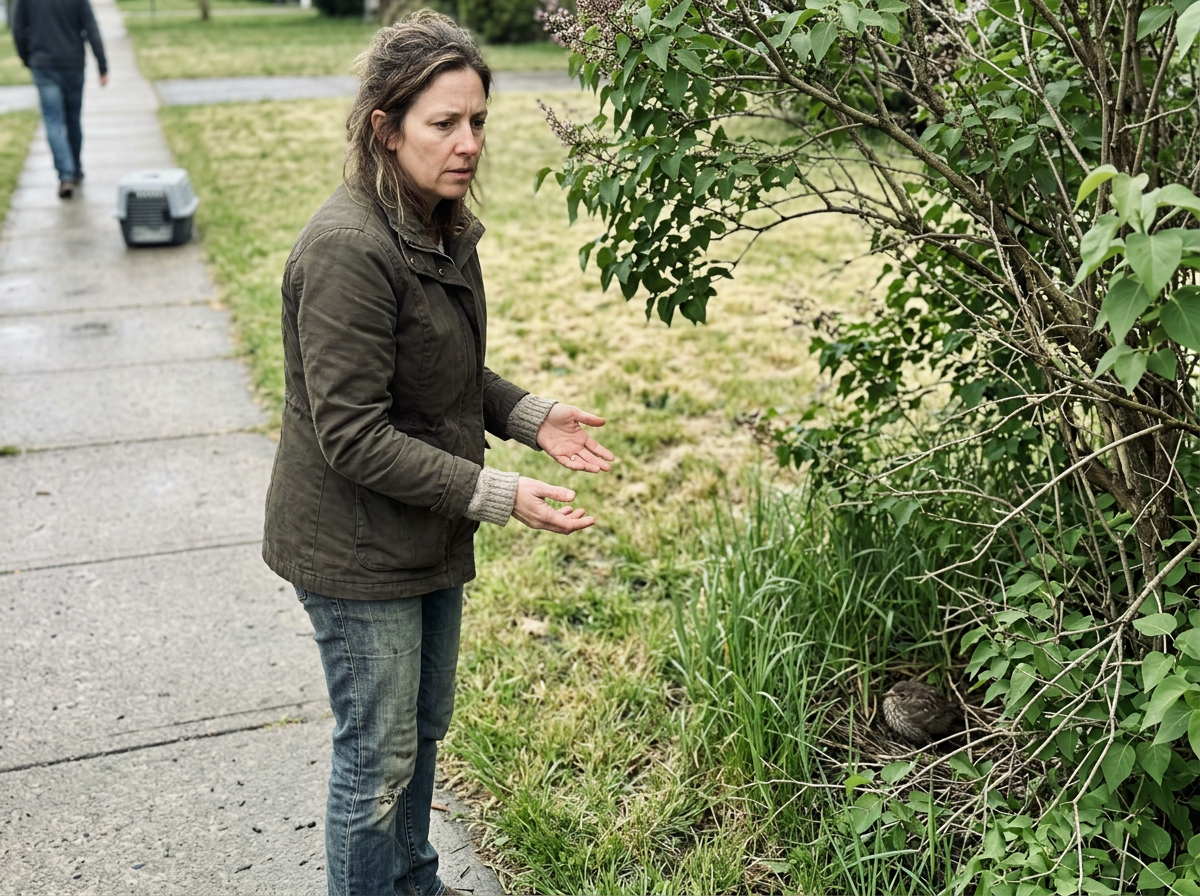
Before you pick the bird up, take thirty seconds to look at the scene. Is the bird in immediate danger from a road, a cat, a dog, or extreme weather? If yes, you need to act. If not, watch for a minute or two first. Some birds, especially fledglings (juveniles with feathers but short tails), are supposed to be on the ground. Tufts Cummings School and the Wildlife Center of Virginia both point out that fledglings hop and run on the ground for several days as a normal part of development. Scooping up a healthy fledgling and taking it inside is one of the most common mistakes people make.
Signs a bird genuinely needs help include: it's featherless or has closed eyes (a nestling that has fallen), it's bleeding or has a visible wound, a wing is drooping or held at an odd angle, it's been caught by a cat or dog (even with no visible injury, cat saliva carries bacteria that are rapidly fatal to birds), it's been hit by a car, or it's lying on its side and can't right itself.
Also protect yourself. The CDC recommends washing your hands thoroughly with soap and water after any contact with a wild bird, and keeping your own pets away from the area. Wildlife can carry diseases and parasites that transfer to people and other animals. Thin gloves or a towel between your hands and the bird help with both your safety and the bird's stress level.
How to pick up and hold an injured bird safely
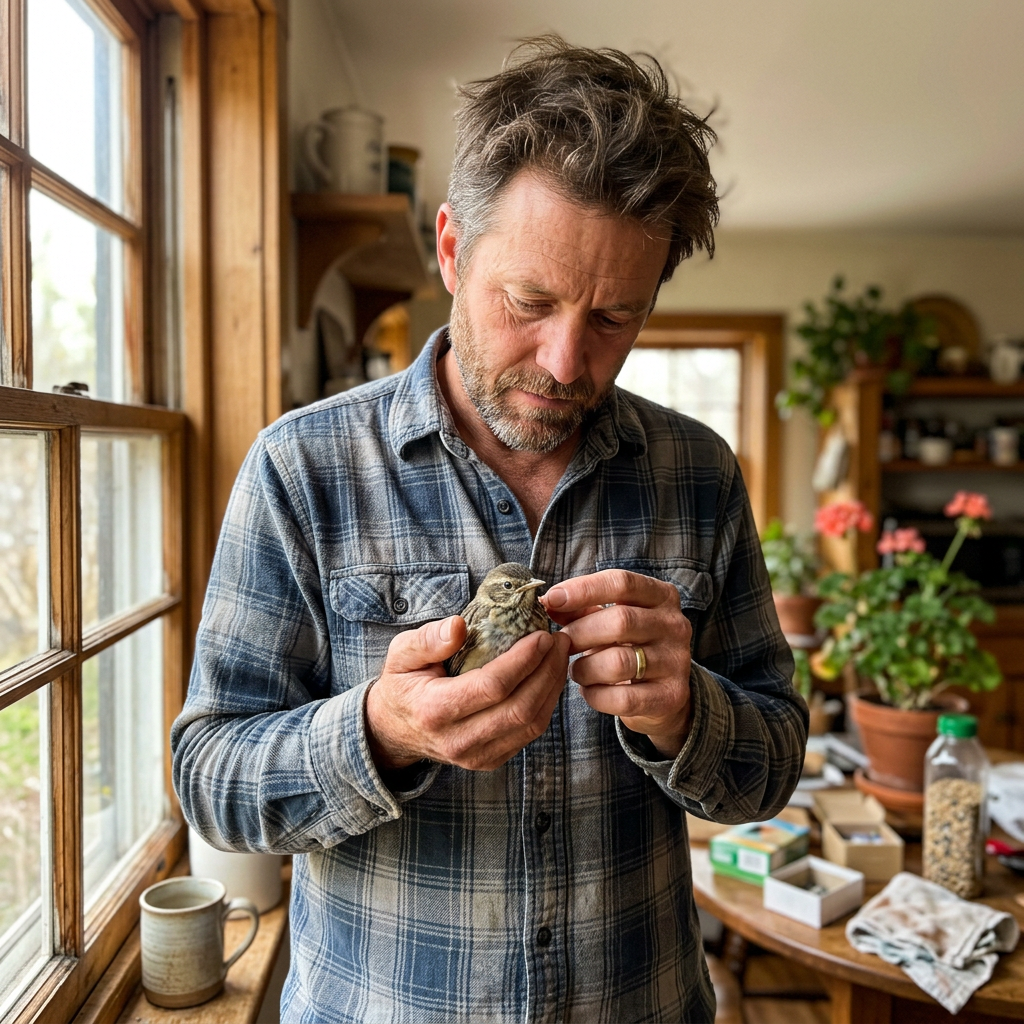
The goal when handling an injured bird is to keep it as calm and secure as possible while minimizing your own risk. Use a light towel, a cloth, or thin gloves. Never grab at the bird from above since that mimics a predator strike and sends the bird into panic. Instead, drape the towel gently over the bird, then cup your hands around the body from the sides.
Hold the bird's body snugly but not tightly. Birds can actually suffocate if you squeeze their chest, because they breathe by expanding their ribcage. Think firm but gentle, like cupping water in your hands. Keep the wings folded against the body so the bird can't flap and injure itself further. For larger birds like pigeons or doves, tuck the bird against your body with one arm and use your other hand to hold the wings in.
Small songbirds are fragile. Keep your grip loose enough that you could feel the bird breathing, and transfer it into a box as quickly as possible. The less time it spends in your hands, the better.
Be aware that some birds defend themselves. Raptors (hawks, owls) use their talons, not their beaks. Herons and egrets strike at eyes. If you're dealing with a larger bird, use a thicker blanket and be more cautious. When in doubt, call a wildlife rehabilitator or animal control first and let a professional take over.
Setting up a safe temporary home: warmth, dark, and quiet
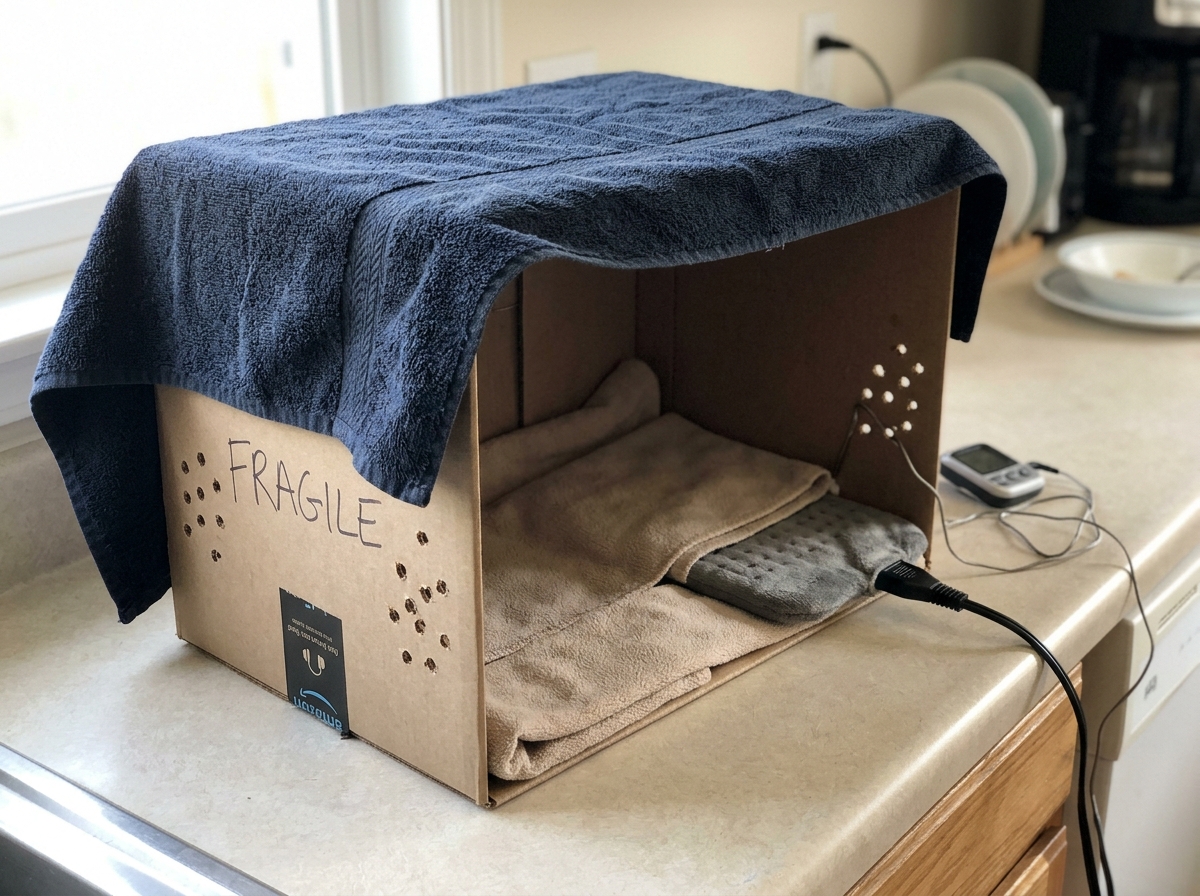
Once the bird is contained, your job is to create conditions that reduce stress and prevent the bird from getting worse while you arrange professional care. This is temporary stabilization, not treatment.
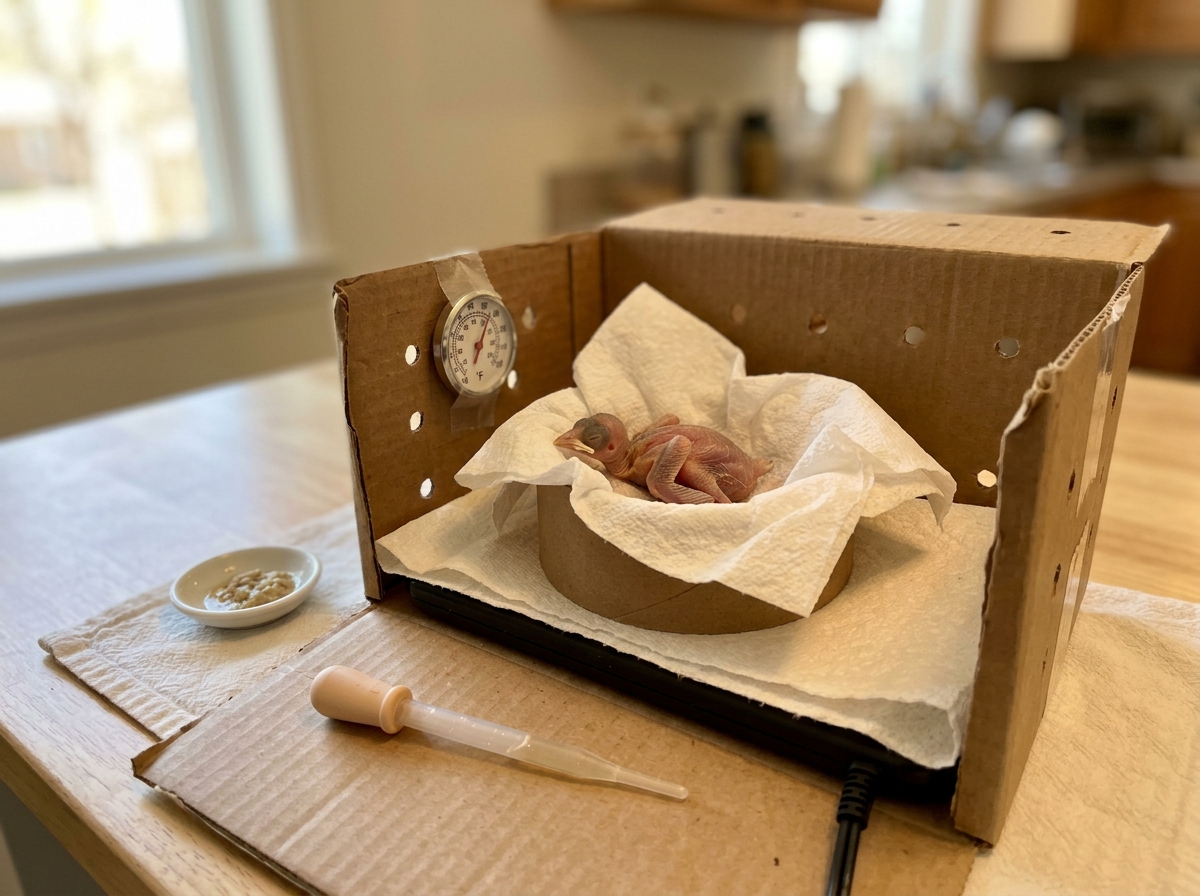
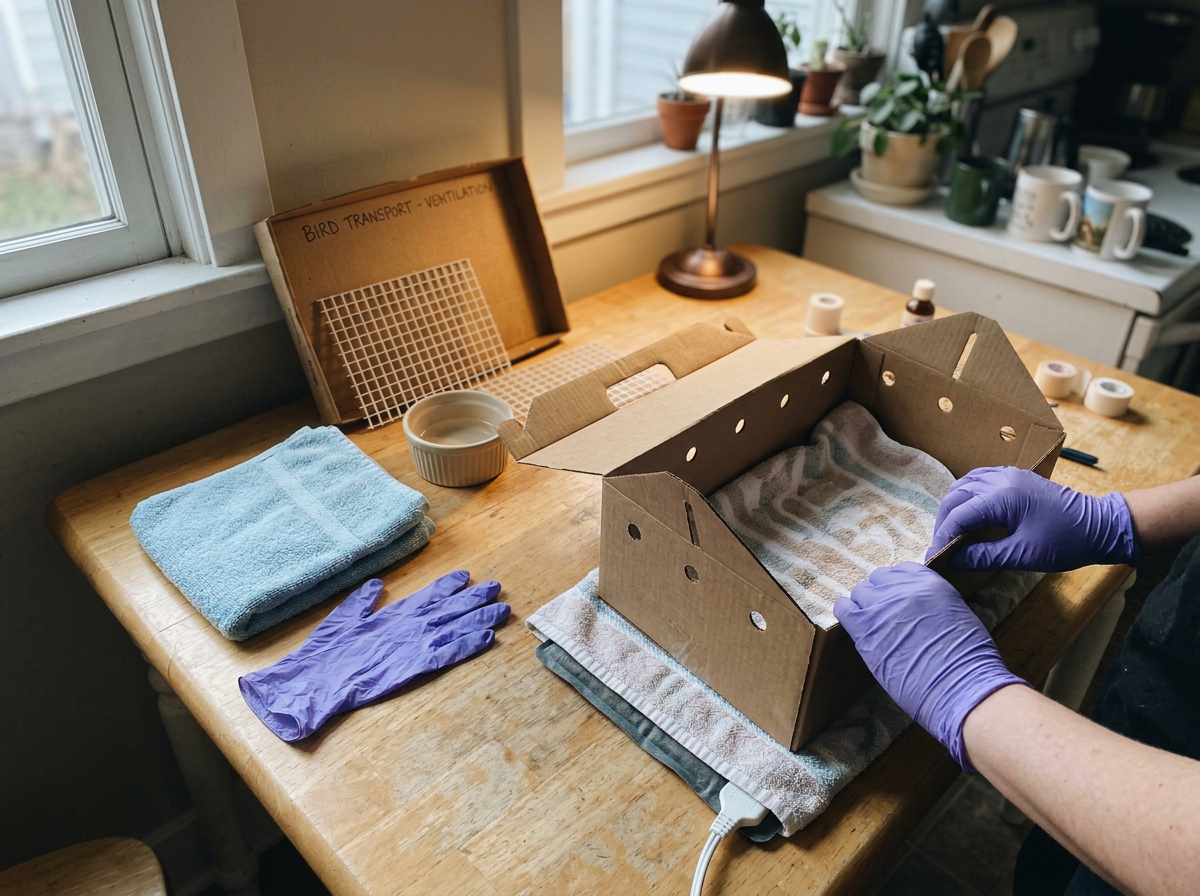
Use a cardboard box with a lid, or a pet carrier. Line the bottom with a folded towel or paper towels so the bird has something to grip. Poke small holes in the sides for ventilation but keep them small enough that the bird can't get a wing caught. Do not use a wire cage because the bird will injure itself trying to escape.
Darkness is one of the most effective ways to calm a bird. Place the box in a quiet room away from children, other pets, and noise. Cornell Wildlife Hospital specifically recommends keeping the bird away from children and pets and in a dark, quiet, warm area. Think Wild's FAQ suggests that even one hour of quiet dark rest can make a meaningful difference for a stunned or mildly injured bird.
Warmth matters, especially for unfeathered baby birds or any bird that is in shock. An unfeathered nestling loses body heat very fast. You can use a heating pad on its lowest setting placed under half of the box (not the whole bottom, so the bird can move off the heat if needed), or a hot water bottle wrapped in a washcloth. Bi-State Wildlife Hotline recommends 30 to 60 minutes of gentle warmth for cold baby birds before any transfer. Do not use a heat lamp or a light bulb pointed at the bird. That creates unpredictable, intense heat and the light itself stresses the bird.
Feathered adult birds in shock also benefit from warmth, but they regulate temperature better than nestlings. A room-temperature dark box is usually sufficient for them.
What not to do (and why these mistakes are so common)
This section matters because the instinct to help can lead to actions that actually harm the bird. Here are the most important things to avoid.
- Do not give food or water. This is the single most repeated piece of guidance from every major wildlife organization. Cornell's Wildlife Hospital, the American Bird Conservancy, the Wildlife Center of Virginia, Think Wild, and HumaneVMA all say the same thing: do not feed or water an injured bird unless a licensed rehabilitator has specifically told you to. The reason is aspiration. A stressed or injured bird can inhale liquid into its lungs, and baby birds aspirate especially easily. Wild Nest Bird Rehab explicitly warns against giving anything via dropper or syringe for this reason.
- Do not force food or liquid into the bird's beak. The Wildlife Welfare bird care guide states clearly that special tools and training are required to feed a bird safely. A well-meaning person forcing a dropper into a bird's beak can cause immediate, fatal harm.
- Do not feed earthworms or random insects. Even if a bird seems to be begging, the wrong food causes serious digestive problems. Earthworms can carry parasites harmful to birds.
- Do not keep the bird in a bright, noisy environment. Light and noise are stressors that keep the bird in a state of panic, worsening shock and increasing the risk of injury from thrashing.
- Do not put an unstable bird in a water dish. If the bird can't hold itself upright, it will fall in.
- Do not put the bird outside in direct sun or wind to 'let it recover.' Exposure makes shock worse.
- Do not assume a bird that flew away is fine. The American Bird Conservancy notes that even a bird that appears to fly away after an injury may still need medical care.
- Do not try to splint a broken wing yourself. Improperly applied splints cause more damage. This requires professional hands.
Feeding and water basics: the very limited exceptions
The standard guidance from nearly every wildlife organization is to withhold food and water until you have spoken to a licensed rehabilitator. That said, some situations come up where you need to understand the basics before you can reach someone.
Baby birds (nestlings and fledglings)
Unfeathered nestlings and very young fledglings need warmth far more urgently than food. A cold baby bird cannot digest food at all. Warm it first. If you have reached a rehabilitator and they walk you through an emergency feeding, they will tell you exactly what to use and how. Without that guidance, do not attempt to feed until you know what to feed an injured bird. The aspiration risk is real and fast.
If a rehabilitator is hours away and they specifically advise an emergency feeding, moist (not liquid) food like a small piece of moistened dog kibble or a tiny piece of moist cat food can sometimes be used for insect-eating birds under direct professional instruction. This is a last resort with professional guidance, not a general recommendation.
Small injured adult birds
For adult birds, the same rule applies: no food or water without a rehabilitator's go-ahead. If a bird is alert, upright, and able to move on its own but is just recovering from a window strike, for example, it does not need food during the brief time it spends in your care. A window-strike bird often recovers within an hour in a dark, quiet box and can be released.
For more on what to feed specific types of birds once professional guidance is in place, that guidance is covered in detail in the feeding-focused section of this site.
When you need professional help (and how to get it fast)
Home care is stabilization only. It buys the bird a few hours of safety while you arrange real help. Most injured birds need medical treatment that you simply cannot provide at home, and the American Bird Conservancy is direct about this: the majority of injured wild birds require professional care at a wildlife rehabilitation center.
Get help immediately if you see any of these
- Active bleeding that won't stop
- A broken or drooping wing or leg
- Cat or dog bite or scratch, even with no visible wound
- The bird is unresponsive or unconscious
- Featherless nestling (eyes closed) found on the ground with no accessible nest
- Signs of illness: discharge from eyes or beak, labored breathing, seizure-like trembling
- Parent bird has not returned to the nest for more than half a day (Wildlife Center of Virginia uses this as the threshold for calling for advice)
How to find a rehabilitator or avian vet
In the United States, the U.S. Fish and Wildlife Service maintains guidance on where to find licensed wildlife rehabilitators. You can also search the National Wildlife Rehabilitators Association or the Wildlife Center of Virginia's online directory. Many states have a wildlife hotline you can call. Your local animal shelter or humane society can often point you to the right contact. When you call, have the following ready: the species if you know it, where you found the bird, what you observed (injury type, behavior), and how long you've had it.
Transporting the bird
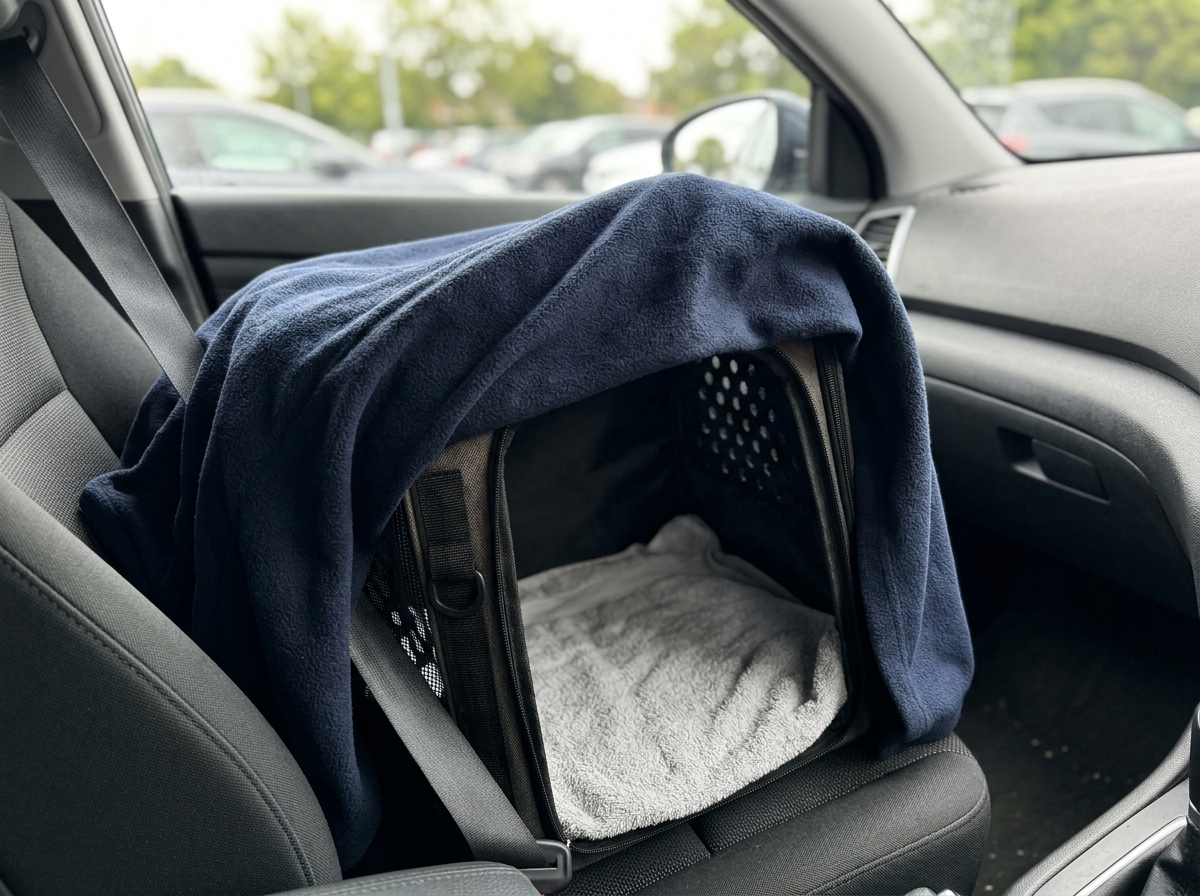
Keep the bird in the dark, ventilated box for the entire journey. Put the box on the seat or floor where it won't slide or tip. Keep the car quiet: no loud music, no A/C vent blowing directly on the box. Do not take the bird out to check on it during the drive. The less interaction, the better. If the trip is longer than an hour, call ahead to the rehab center and ask if they have any specific instructions.
A quick reference: what to do vs what to skip
| Action | Do it? | Notes |
|---|---|---|
| Contain bird in ventilated dark box | Yes | Cardboard box with towel lining and small air holes |
| Keep warm (especially nestlings) | Yes | Heating pad on low under half the box, or wrapped hot water bottle |
| Keep quiet and dark | Yes | Away from pets, children, noise, and light |
| Give food or water | No | Aspiration and injury risk; only if a rehabilitator instructs you |
| Splint a broken wing yourself | No | Causes more damage; leave for professionals |
| Use a wire cage | No | Bird will injure itself trying to escape |
| Wash hands after contact | Yes | CDC recommendation for disease prevention |
| Call a wildlife rehabilitator or avian vet | Yes, urgently | Most injured birds need professional medical care |
| Release immediately if the bird seems better | Only if a window-strike bird fully recovers in under an hour | For other injuries, still get a professional assessment |
The most important thing to remember is that your role right now is to stabilize, not to heal. Keeping the bird safe, warm, dark, and quiet while you get it to the right hands is genuinely the best thing you can do, see also how to make an injured bird comfortable. The rehab professionals and avian vets have the tools, training, and legal permits to take it from there. For more detail on overnight care, including what to do with an injured bird overnight, keeping a bird comfortable, or what to expect during nursing and recovery, those topics are covered in the related guides on this site.
FAQ
Should I keep an injured bird in a box or can I use a countertop container like a laundry basket?
Use a lidded cardboard box, pet carrier, or similar container with ventilation holes. Avoid open baskets or anything the bird can see through clearly, because it increases panic and flapping. If you use a hard carrier, line the bottom with soft grip material (towel or paper) and secure the lid to prevent slipping or tipping during transport.
What if the bird is feathered but its eyes are closed, is that an emergency right now?
Yes. Closed eyes with fluffing, inability to right itself, or obvious lethargy usually means shock or serious injury. Keep it warm (if cold to the touch) and in a dark, quiet box immediately, then contact a wildlife rehabilitator as soon as possible. Do not “wait and see” if it cannot look alert or is weak when handled gently.
Can I give water by offering a drop on the beak if it looks thirsty?
Do not. For wild birds, giving water without a rehabilitator’s instructions increases choking and aspiration risk, and some injuries cause dehydration management that should be handled medically. Until you speak to a professional, focus on warmth, darkness, and quiet only.
How do I know if the heating pad or hot water bottle is too hot?
Test it with the back of your hand before placing it near the bird, and use low heat. The setup should let the bird move away from warmth, so place heat under only part of the box. If the bird is overheating, it may pant or lie away from the heat, and you should reduce or remove the heat immediately.
Should I cover the box completely with a towel to make it darker?
You can increase darkness, but make sure there is airflow. Avoid fully sealing the container so ventilation is blocked. A dark room plus an unsealed lid with side holes is usually safer than wrapping the box tightly.
What should I do if the bird is bleeding but I cannot reach help right away?
Keep the bird in the dark, minimize handling time, and maintain appropriate warmth based on whether it is a nestling or feathered. Avoid applying ointments or bandaging unless a rehabilitator tells you to, because improper materials can trap infection or restrict breathing.
Is it okay to release the bird if it seems better after an hour in the box?
Not automatically. A window strike or mild shock can improve quickly, but you still should coordinate with a rehabilitator, especially if the bird had trouble flying, was found on the ground, or shows any ongoing imbalance or abnormal behavior. If the bird was a true window strike and is fully alert and able to move normally, release guidance may be different, so confirm locally when possible.
What if I’m not sure whether it’s a fledgling or a nestling?
Look at the tail and feather development. Fledglings generally have feathers and short tails and are often meant to be left where they are unless they are in immediate danger. Nestlings are typically featherless or nearly featherless, and they need warmth and urgent professional help if they are out of the nest.
Do I need gloves, and can I just use a regular towel?
A towel alone is often fine, but thin disposable gloves can help reduce direct contact and contamination risk. The key is to minimize stress by gently draping and cupping from the sides, and to wash your hands thoroughly with soap and water after handling regardless of whether you wore gloves.
Should I clean the wound or remove debris from the bird’s feathers?
Generally no. Cleaning a wild bird’s wound at home can worsen bleeding, introduce infection, or stress the bird. Instead, contain it, keep it warm and dark, and let professionals handle examination and any cleaning.
What if the bird got attacked by a cat or dog but doesn’t look visibly injured?
Treat it as serious. Cat saliva bacteria can be rapidly fatal even when external wounds are minimal. Keep the bird contained and contact a rehabilitator urgently for guidance and treatment planning.
How long can I keep the bird at home before transport becomes unsafe?
Aim to minimize time in home care and contact help immediately. If transport delays happen, continue keeping it warm (only as appropriate), dark, and quiet. For longer delays, call ahead so the rehab center can advise on holding conditions and whether they want you to come in sooner or adjust warmth.
Next Article
How to Care for a Newborn Featherless Bird: Step-by-Step
Step-by-step care for a featherless newborn bird: rescue, warmth targets, safe feeding, cleaning, monitoring, and when t